The 5-4-3-2-1 Carry-On Formula — Pack Smarter, Not Harder
The 5-4-3-2-1 carry-on formula: 5 tops, 4 bottoms, 3 layering pieces, 2 shoes, 1 toiletry bag. A minimalist packing system that fits everything in one carry-on.
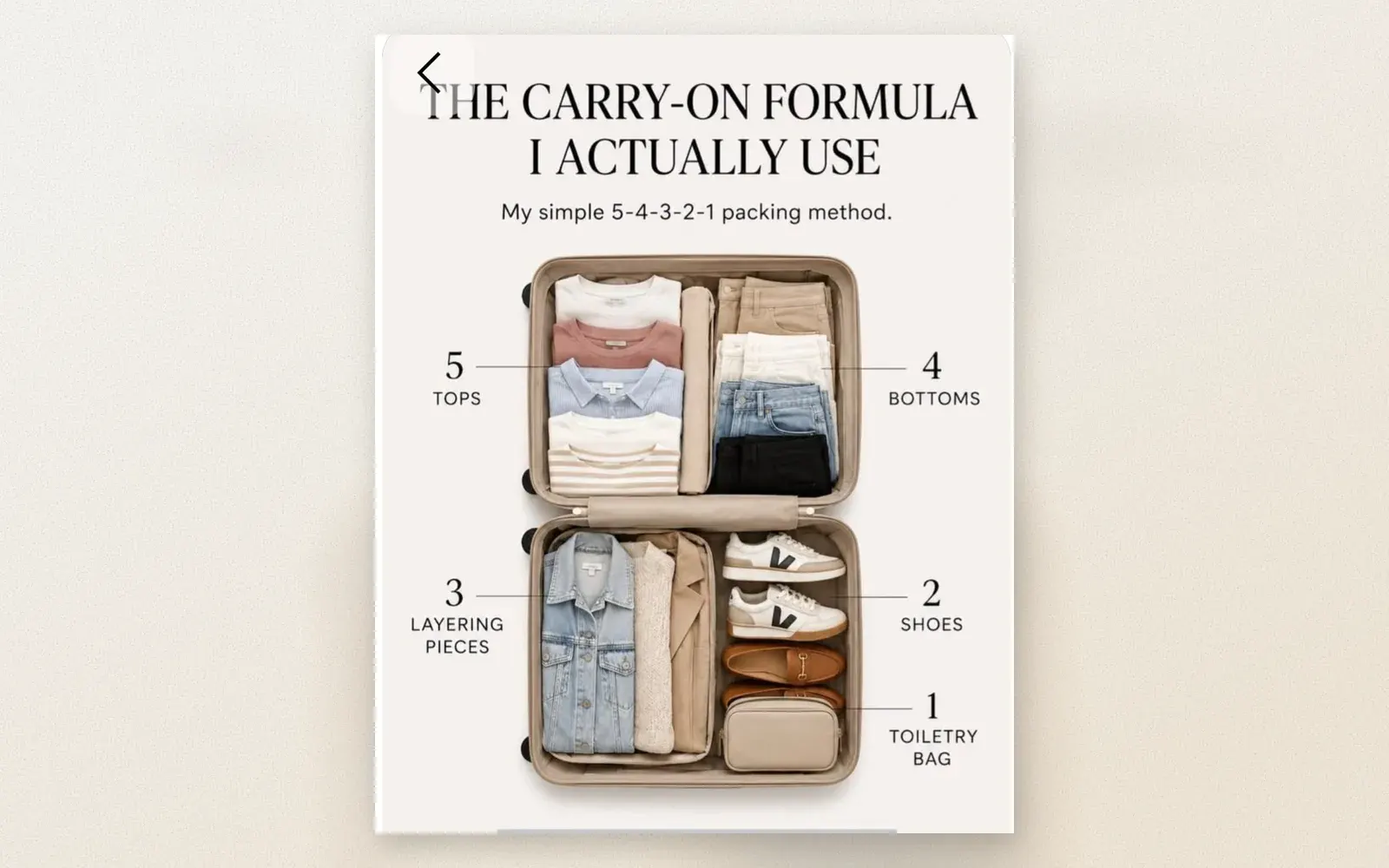
Most packing advice is vague — “pack light,” “bring versatile pieces,” “don’t overpack.” The 5-4-3-2-1 Carry-On Formula is different. It gives you exact numbers: 5 tops, 4 bottoms, 3 layering pieces, 2 shoes, and 1 toiletry bag. That’s 15 clothing items total — enough for a week of travel without checking a bag. We tested this formula across five trips to see if the math actually works.
🏷 Where to buy Carry-On Packing Essentials Available on Amazon.de — search for packing cubes, toiletry bags, and shoe bags to organize the 5-4-3-2-1 system
The Formula — What Each Number Means
The 5-4-3-2-1 system assigns a specific count to each clothing category. The numbers aren’t arbitrary — they’re based on how often each item type gets worn and how many variations you need for mix-and-match outfits.
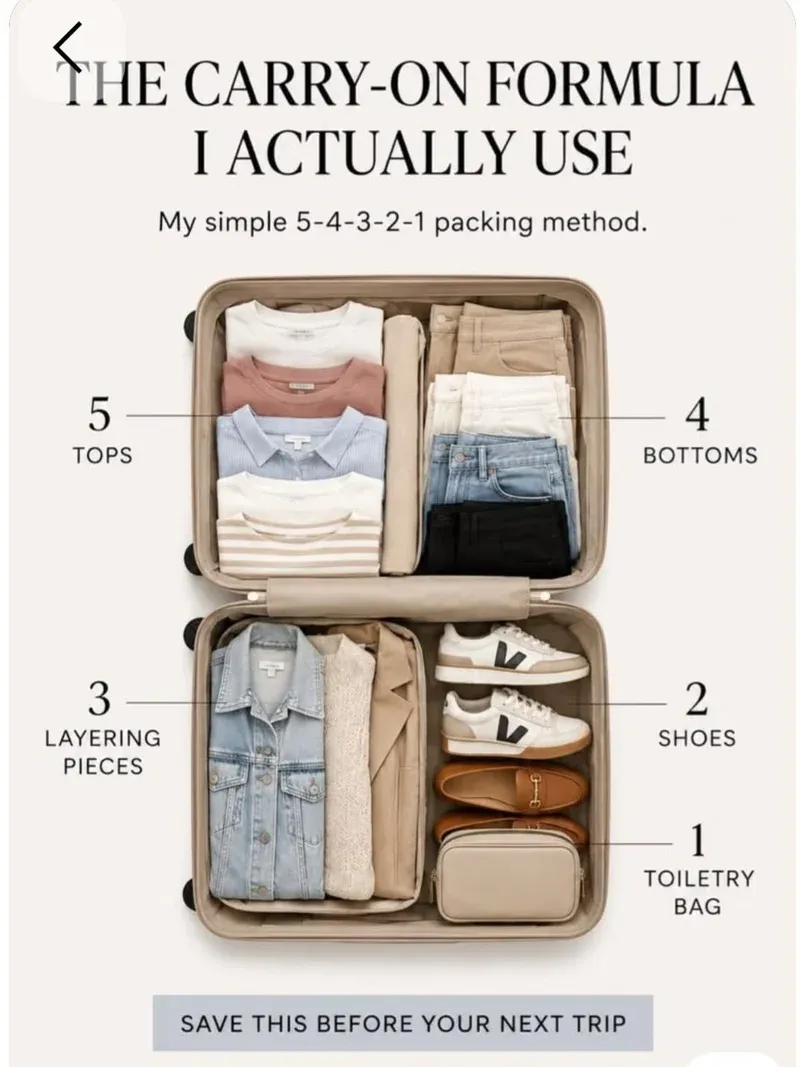
5 Tops — t-shirts, blouses, and casual shirts. Five tops give you one per day for a week, with two days of rewearing favorites. Choose neutral colors that pair with every bottom: white, black, grey, navy, and one accent color.
4 Bottoms — jeans, shorts, skirts, or trousers. Four bottoms mean you can wear each piece 1–2 times before washing. Dark jeans work for casual and dressy occasions. Shorts handle warm weather. One pair of trousers or a skirt covers dinners and cultural sites.
3 Layering Pieces — jackets, cardigans, sweaters, or vests. Three layers handle temperature changes — a denim jacket for cool mornings, a cardigan for air-conditioned museums, a sweater for cold evenings. Layering is how you adapt to unpredictable weather without packing a winter wardrobe.
2 Shoes — walking shoes and one other option. Two shoes maximum. Walking shoes handle sightseeing, casual dinners, and most situations. The second pair — sandals, loafers, or dress shoes — covers what walking shoes can’t. A third pair is almost never necessary.
1 Toiletry Bag — travel-size everything in one compact bag. Shampoo, conditioner, toothbrush, toothpaste, skincare, makeup, medications. One bag means one item to grab at security, one item to unpack at the hotel, and one item to repack for departure.
Why This Formula Works
The math is simple: 5 + 4 + 3 + 2 + 1 = 15 items. A standard carry-on holds roughly 40 liters. Fifteen clothing items plus shoes and toiletries use about 25–30 liters, leaving room for souvenirs on the return trip.
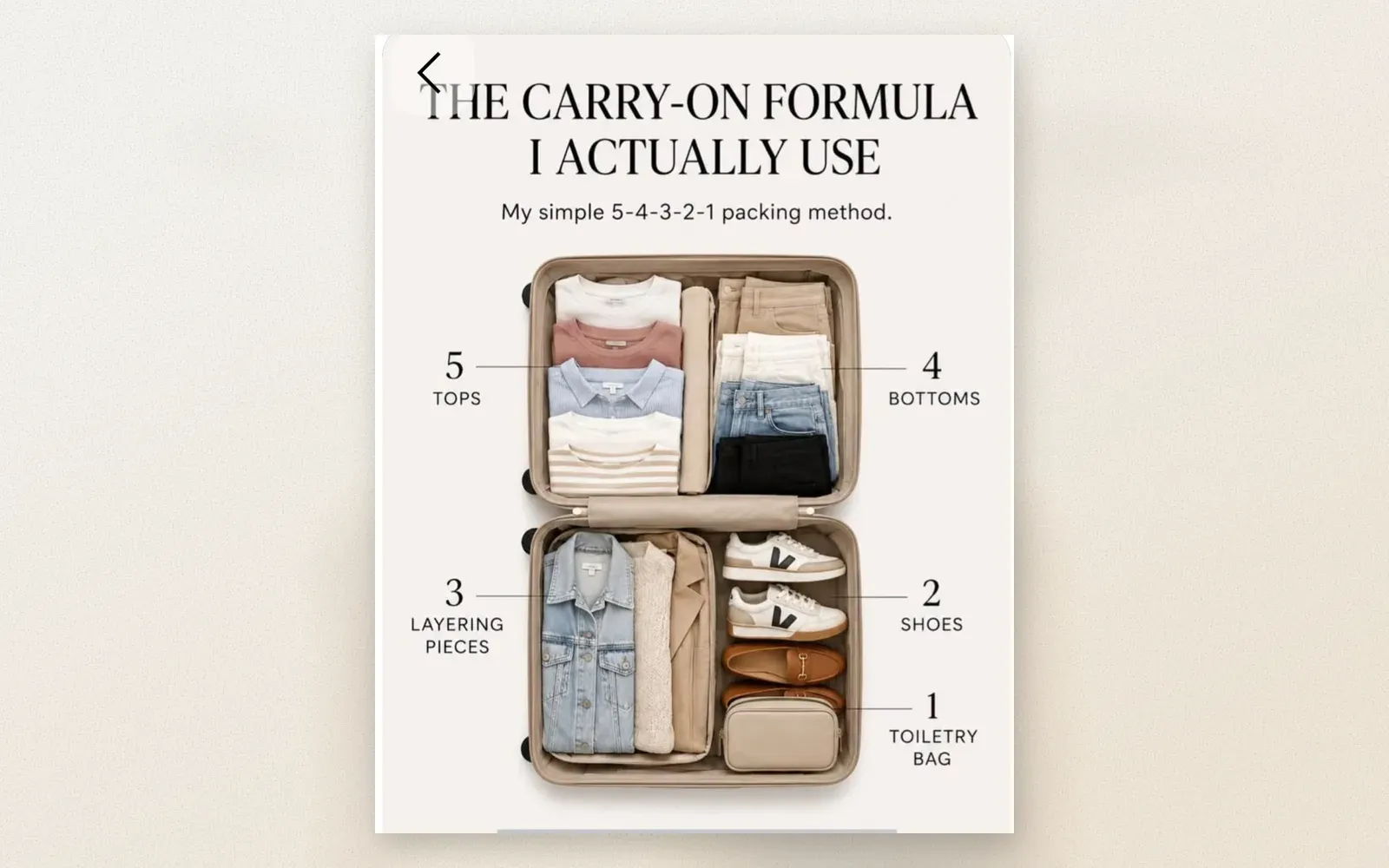
The formula also forces intentional choices. You can’t pack 10 tops because the formula says 5. You can’t pack 4 pairs of shoes because it says 2. This constraint eliminates the “just in case” pile that doubles most travelers’ luggage weight.
The color coordination is built into the formula. Five neutral tops pair with four neutral bottoms, creating 20 possible outfit combinations from 9 items. Add three layering pieces and you have outfits for every temperature and occasion — without repeating the same look twice.
How to Adapt the Formula for Different Trips
The 5-4-3-2-1 formula is a baseline. Adjust the numbers based on trip length, destination, and activities.
Weekend Trip (2–3 days): Reduce to 3-2-2-2-1. Three tops, two bottoms, two layers, two shoes, one toiletry bag. Eight items total.
Week-Long Trip (7 days): The standard 5-4-3-2-1. Fifteen items total. Rewear favorites, wash once mid-trip if needed.
Two-Week Trip (14 days): Expand to 7-5-4-2-1. Add two more tops and one more bottom. Pack a laundry bag and plan one wash day.
Cold Destination: Adjust layers up, shorts down. 5-3-4-2-1. Five tops, three bottoms (no shorts), four layers, two shoes (boots + casual), one toiletry bag.
Beach Destination: Adjust layers down, add swimwear. 5-3-2-2-1. Five tops, three bottoms (shorts + skirt), two layers (light jacket + cover-up), two shoes (sandals + walking shoes), one toiletry bag.
The Packing Technique — How to Fit It All
The formula gives you numbers. The packing technique makes them fit.
Roll, Don’t Fold: Every top and bottom rolls into a compact cylinder. Rolling compresses clothes by 30% compared to folding and eliminates hard crease lines. The five tops roll into a row on one side of the suitcase. The four bottoms roll into a row on the other side.
Layering Pieces Fold Flat: Jackets, cardigans, and sweaters fold once lengthwise and lay flat across the top of the rolled items. Their bulk fills the gap between the two sides.
Shoes Go Sole-to-Sole: Place the two pairs sole-to-sole in the bottom corner. Stuff socks or small items inside shoes to use every centimeter.
Toiletry Bag in the Front Pocket: The one toiletry bag sits in the front pocket or in the gap between shoes and suitcase wall. It’s the most accessible item — you’ll want it during security screening.
Who Should Use the 5-4-3-2-1 Formula?
Minimalists who want a clear, repeatable system. The formula removes decision fatigue — you don’t wonder “is this enough?” because the numbers answer the question.
Business travelers benefit from the discipline. The formula prevents overpacking suits and formal wear while ensuring enough casual options for downtime. The color coordination means every top works with every bottom — no outfit planning required.
For first-time carry-on-only travelers, the formula proves that a week of travel fits in one bag. The constraint is liberating — once you realize you don’t need 14 outfits, packing becomes faster, lighter, and less stressful.
Verdict
✅ Pros of the 5-4-3-2-1 Formula:
- Exact numbers eliminate guesswork — no “pack light” vagueness
- 15 items create 20+ outfit combinations through color coordination
- Forces intentional packing — no “just in case” items
- Adaptable to trip length, destination, and season
- Fits in a standard carry-on with room for souvenirs
❌ Adjustments for Different Needs:
- Cold destinations: increase layers, decrease bottoms
- Beach destinations: decrease layers, add swimwear
- Business trips: substitute dress shirts for casual tops
- Two-week trips: expand to 7-5-4-2-1, plan laundry day
- Families: each person gets their own 5-4-3-2-1 count
🏷 Where to buy Carry-On Packing Essentials Search for packing cubes, toiletry bags, and shoe bags on Amazon.de to organize the 5-4-3-2-1 system
FAQ
How many total items does the 5-4-3-2-1 formula use?
Fifteen clothing items total: 5 tops, 4 bottoms, 3 layering pieces, 2 shoes, and 1 toiletry bag. That fills about 25-30 liters of a standard 40-liter carry-on, leaving room for souvenirs.
How do I adapt the formula for a weekend trip?
Reduce to 3-2-2-2-1 for a 2 to 3 day trip: three tops, two bottoms, two layers, two shoes, and one toiletry bag. Eight items total handle most weekend scenarios.
Is rolling or folding better for the 5-4-3-2-1 system?
Roll every top and bottom into compact cylinders, which compresses clothes by 30% compared to folding. Layering pieces fold once lengthwise and lay flat across the top of the rolled items.
How do I adjust the formula for cold weather?
Increase layers and decrease shorts: 5-3-4-2-1. Five tops, three bottoms without shorts, four layers, two shoes including boots, and one toiletry bag. The layering pieces handle temperature changes without a winter wardrobe.
Does the formula work for business travel?
Yes, substitute dress shirts for casual tops and add formal shoes as the second pair. The color coordination ensures every top works with every bottom, eliminating outfit planning while maintaining professional appearance.

Continue reading
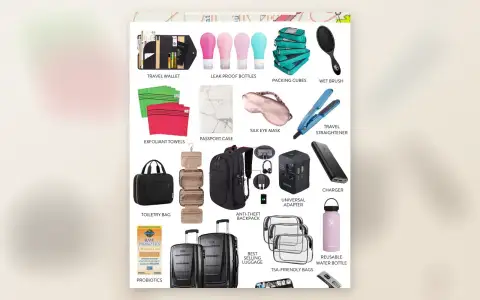
Amazon Travel Must-Haves — 20 Products That Make Every Trip Easier
Amazon travel must-haves: 20 essential products from packing cubes to anti-theft backpacks, leak-proof bottles to electronics organizers. Everything you need for smoother travel.
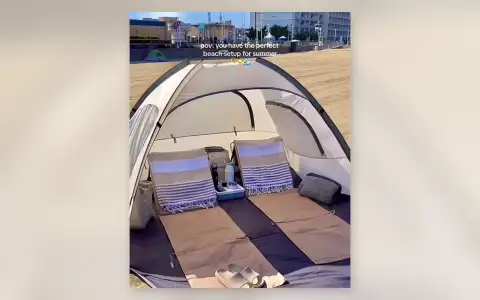
Beach Tent Cabana — The Perfect Summer Setup for Sand, Sun, and Shade
Beach tent cabana review: a large open-front shelter with extended floor, sand stakes, and UPF 50+ protection. Turns any beach spot into a private lounge.
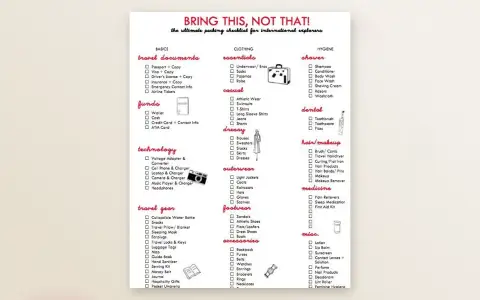
Bring This, Not That — The International Packing Checklist That Actually Works
Bring This Not That packing checklist: every category for international travel — documents, clothing, hygiene, technology, gear. What to pack and what to leave behind.