Clip-On Pot Strainer: Drain Pasta Without a Colander
Clip-on pot strainer review: a silicone snap strainer that clamps to any pot rim and drains pasta, ground beef fat, or canned food in place. What the 21.89 euro Netrox does well and where it slips.
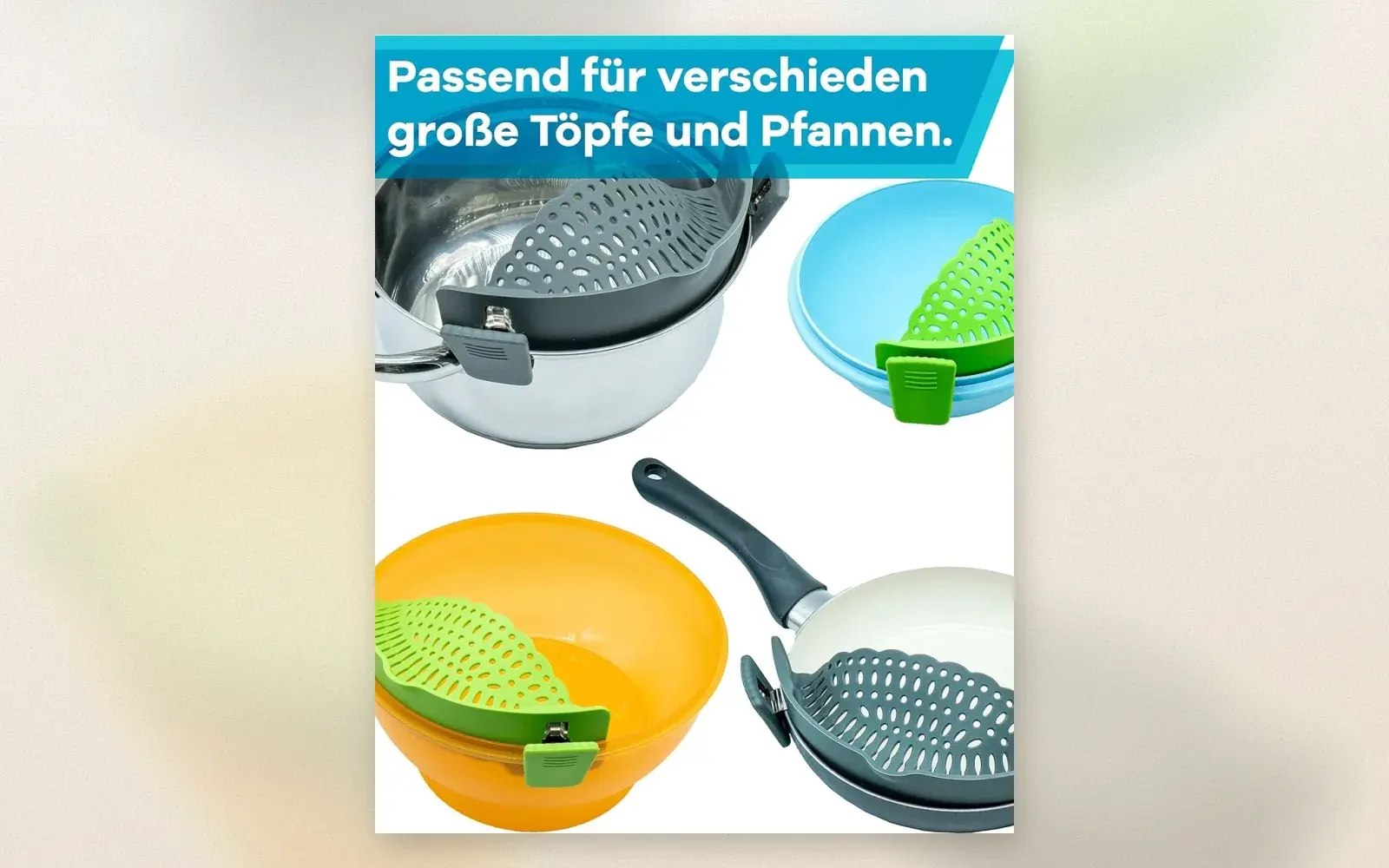
Every pasta night ends the same way: a pot of boiling water, a heavy colander fished out of the cupboard, and the two-handed juggle of pouring four liters of water and a kilo of noodles across a gap without losing dinner. The clip-on pot strainer in the photo deletes that ritual. A grey silicone half-sieve snaps onto the rim of the pot you already cooked in; you tilt the pot over the sink, water drains through the slots, and the food stays where it is. One tool, zero extra washing-up, and no second hot pot to catch.
If you want the same function for less money, the budget route is a two-pack. The Performore version costs around 10 euros, holds a 4.2 star rating from 243 buyers, and uses the same clip-jaw principle, though the silicone is a grade softer and the jaws feel less confidence-inspiring on heavy pots.
How a Snap Strainer Actually Works
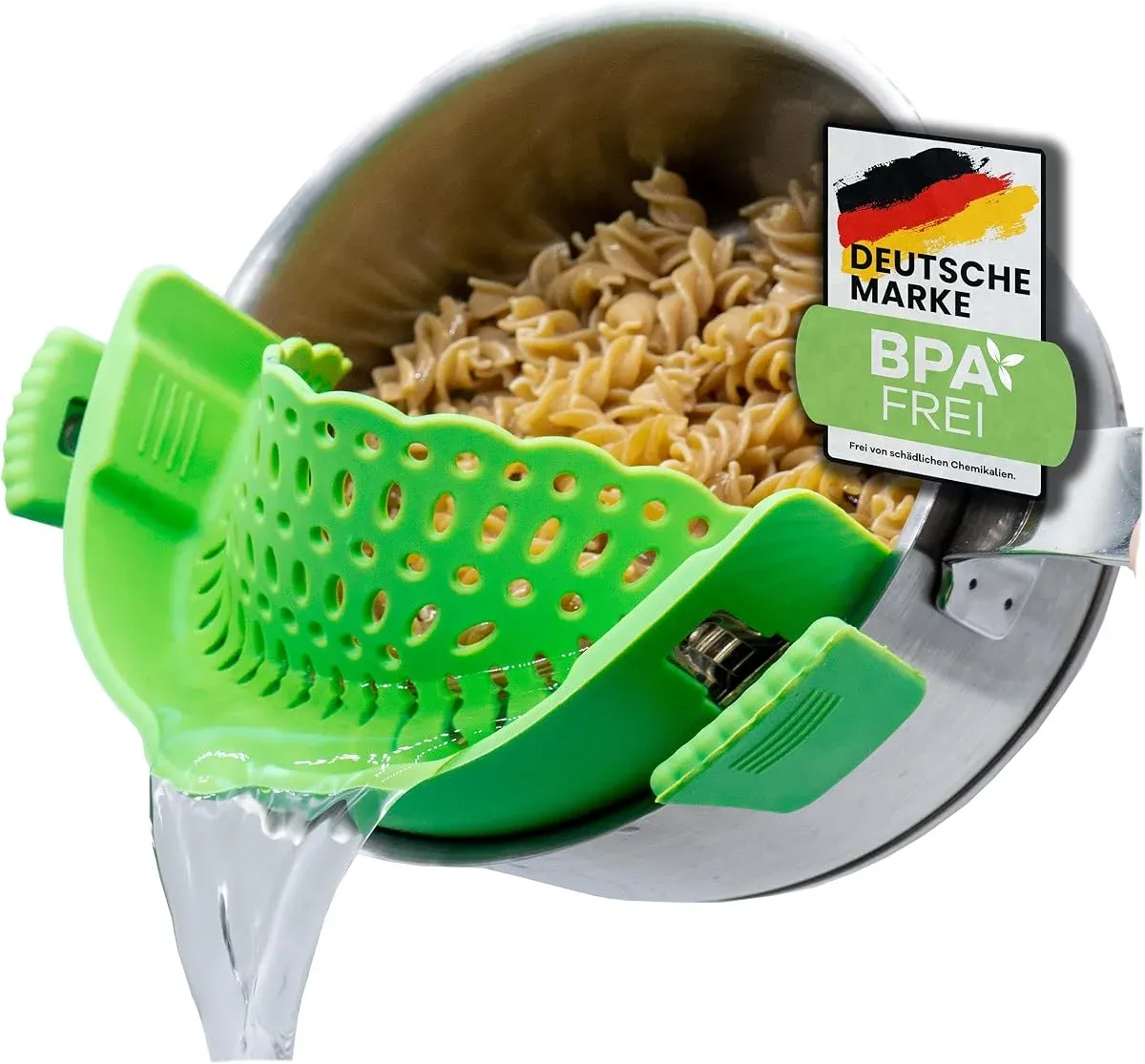
The design is two parts: a perforated silicone half-moon that does the straining, and two clip jaws that do the holding. You press the jaws over the pot rim, squeeze the spring clips until they bite, and the strainer sits locked across the rim like a drawbridge. Tilt the pot and gravity does the rest: water flows out through the slots, pasta and vegetables stay in. The clip mechanism is what separates a snap strainer from the cheap “hold it against the rim yourself” versions, because a tilted pot of hot pasta water is not something you want to steer with one hand while the other hand pinches a loose sieve.
The silicone is the second win. It flexes to seat on slightly uneven rims, it does not conduct heat the way a steel colander does, and it does not clang, scratch nonstick rims, or chip. The Netrox version uses BPA-free silicone and the whole unit goes in the dishwasher, so the greasy ground-beef fat that would coat a mesh colander rinses off without a fight.

Where It Beats a Colander
The space argument comes first. A proper colander is one of the bulkiest single-purpose items in a kitchen drawer, and it exists for about forty seconds per meal. The snap strainer does the same job as a flat silicone disc the size of a dessert plate, stored in a drawer slot or hung on a hook. In a small kitchen, an RV, a student dorm, or a camper van, that difference alone sells the product.
The safety argument is quieter but bigger. Draining with a colander means transporting a pot of scalding water across a gap, two hands occupied, steam in your face, one slip from a burn. The clip-on keeps the pot at the stove: you tilt a few degrees, the water leaves, nothing heavy travels. For anyone who has ever juggled a pasta pot with a towel wrapped around the handle, this is the feature.
The third win is draining fat from ground meat. With a colander you pour the whole pan content across and then have to scrape the meat back into the pan. With the snap strainer you crack the lid open over the sink or a can, the fat drains, the meat stays. Anyone who cooks burgers or bolognese weekly will use the tool for this more than for pasta.
Honest Limitations
Small food escapes. The slot pattern holds noodles, potatoes, and ground meat, but rice, orzo, and quinoa find their way through. Fine grains still need a proper fine-mesh sieve, and this tool does not pretend otherwise.
Very full pots test the clip grip. The jaws hold a rim confidently up to roughly a two-thirds-full large pot; beyond that, the torque of a heavy tilt makes the strainer walk. Pour in two stages for a full eight-liter stockpot of spaghetti.
Non-round rims are the weak spot. A square glass roasting pan or a lipped sheet pan gives the round jaws only one gripping line, and the seal is mediocre there. Round pots and pans, which is ninety percent of stovetop draining anyway, work exactly as advertised.
The pin below shows the strainer mid-drain on a steel pot, which is the pose you will see ninety percent of the time in a working kitchen.

The fit range is wider than the marketing suggests: pots, pans, and mixing bowls all clamp, as long as the rim is round and the wall is not thicker than the jaw opening.
Verdict
✅ Pros
- Drains pasta, vegetables, and ground-meat fat in the pot you cooked in, no transfers
- Clip jaws lock the strainer on the rim: one hand steers the tilt, nothing loose to hold
- Flat silicone disc storage instead of a bulky colander in the cupboard
- Dishwasher safe, no hinges or seams to trap food
- 4.5 stars from 2,565 buyers for the Netrox version at 21.89 euros
❌ Cons
- Rice, orzo, and other fine grains slip through the slots
- A completely full heavy pot makes the clip walk; drain in two stages
- Square and irregular rims grip poorly; round pots only, practically speaking
- Costs more than a basic colander, which still does the same job if space is no issue
🏷 More clip-on strainers Snap Strainers on Amazon → · Pot Strainers →
🇩🇪 This article is also available in Deutsch:
Read in Deutsch →
FAQ
What is a clip-on pot strainer?
A half-moon shaped silicone sieve with two jaws that clamp onto the rim of a pot or pan. You tilt the pot over the sink and the water drains through the sieve while pasta, vegetables, or ground meat stay inside. It replaces the second big pot a traditional colander needs.
Does it fit all pots and pans?
The clip jaws open wide enough for most round pots, saucepans, and frying pans. Round rims clamp cleanly; very thick or irregular rims sit less securely. Square roasting pans are the shape it handles worst because the jaw only grips one straight edge at full pressure.
Is it heat resistant?
The silicone body and BPA-free plastic jaws are rated for boiling-water temperatures without issue. Draining pasta or blanching vegetables is exactly its job. It is not an oven tool: do not clamp it on bakeware that comes out of a hot oven.
How do you clean a snap strainer?
Rinse it under the tap or put it in the dishwasher; it is top-rack safe. Because it is one flexible piece with no hinges, no food traps survive a rinse. Let it dry flat or hanging and it stores in a drawer.
Can you drain ground beef with it?
Yes, and it is one of the best uses. The fine slots hold back the meat while hot fat drains into the can or sink below. Fewer burns than wrestling a heavy pan of grease toward a colander, and no separate sieve to wash.
Is a clip-on strainer worth it?
Yes, if your kitchen lacks space or you drain often. Around 20 euros buys a tool that ends the colander juggle, and the Netrox version holds a 4.5 star rating from 2,565 buyers. If you only drain pasta twice a year, a classic colander still does the same job.

Continue reading

Toastabags: The Reusable Toaster Sleeve That Ends the Cheese-Drip Scrape
Grilled cheese straight in the toaster sounds like a hack until the cheese hits the heating elements. The Toastabag sleeve keeps the whole sandwich contained, and it costs less than the bread you ruin without it.
Double-Dish Snack Bowl: One Bowl for the Snack, Another for the Shells
Double-dish snack bowl review: an inner bowl for nuts and olives, an outer ring that catches the shells and pits. No more saucer clutter on the coffee table.

Mini Donut Factory: The Countertop Machine That Bakes Donuts for You
Mini donut factory machines bake a conveyor of fresh donuts without a deep fryer. What the retro model in the viral photo costs, which versions are real, and what to expect from the donuts.