Dreo Pedestal Circulator Fan: The Quiet Air Mover That Cools a Room Without AC
A round white pedestal circulator aimed across a tiled floor. What the Dreo DC fan does at 28 dB, where the 27 metre throw reaches, and when it is worth 90 euros.
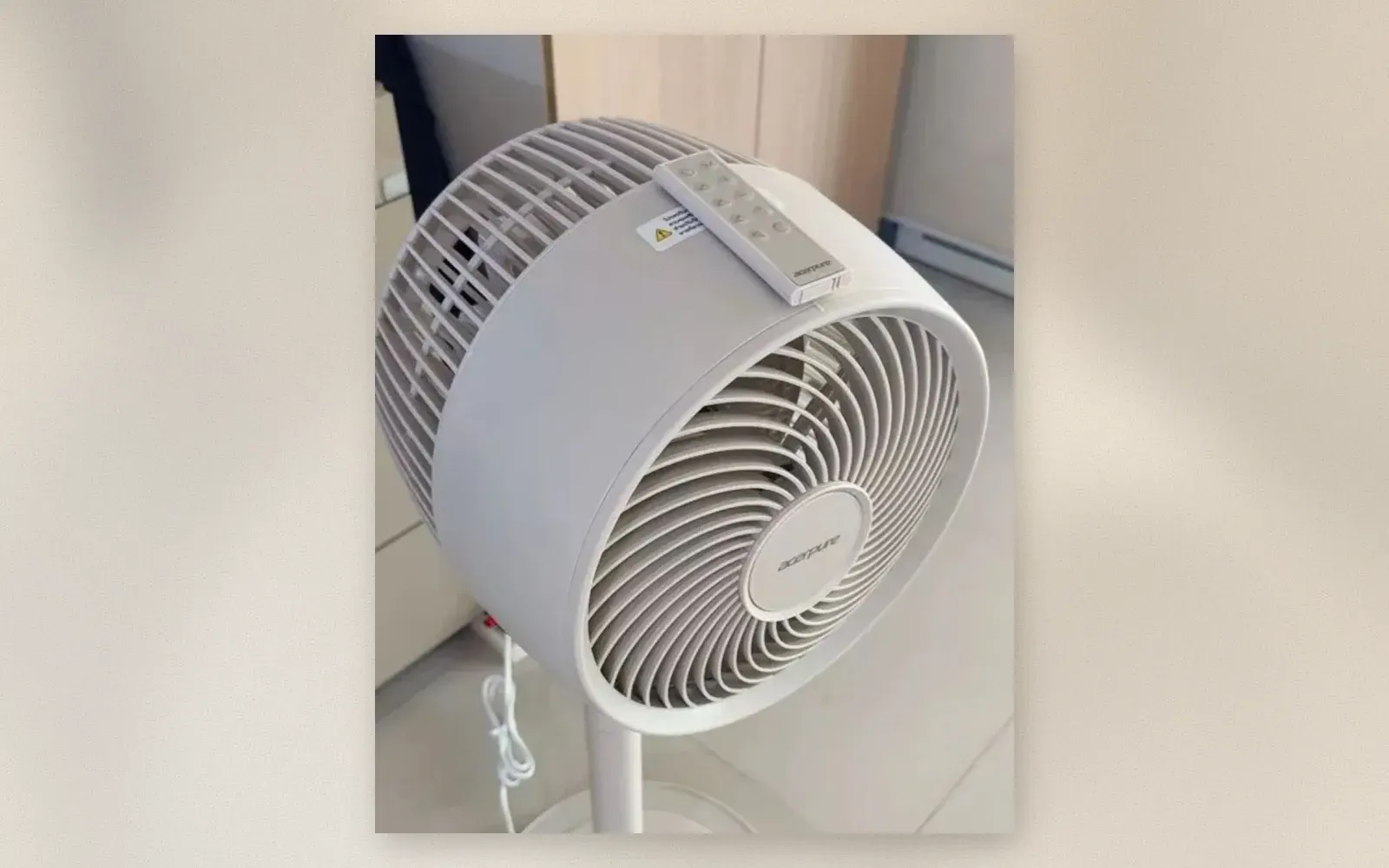
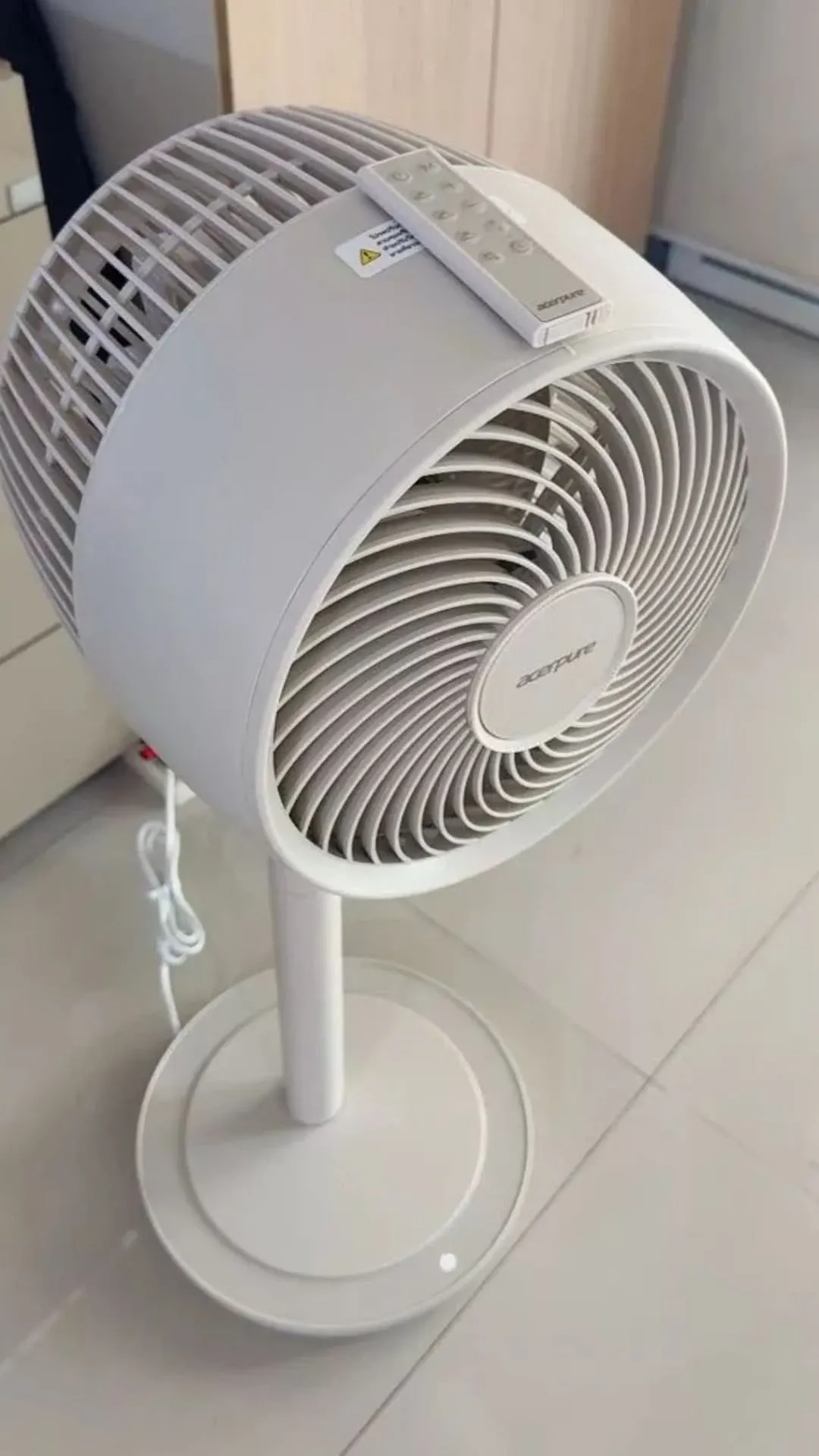
Every apartment has the one corner where air does not move. The air goes stale by early evening, and the standard pedestal fan pointed at the sofa solves the sofa and nothing else. The fan in this photo takes a different approach: instead of standing in the middle of the room aiming at people, it sits at the edge of the room, a white round head on a slim column, pitching a stream of air across the tiles along the wall until the whole room’s air turns over. It is a circulator, not a blower, and that difference decides which problems it fixes.
Handmade alternative: Check on Etsy →
What the Fan in the Photo Does Differently
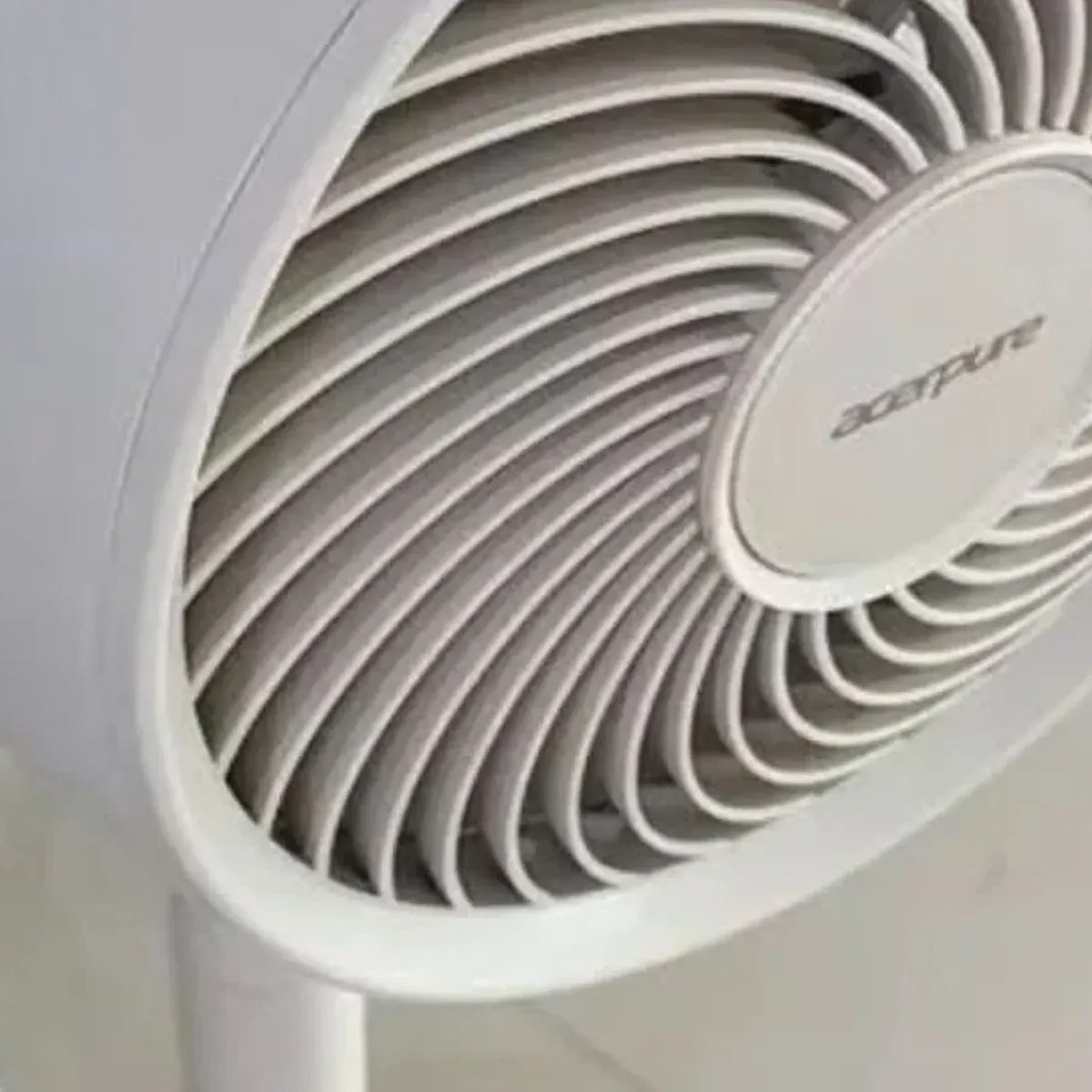
Three details separate this machine from the classic 30 euro pedestal fan. First, the head: a dense spiral grille around an 8 blade wheel with stator fins behind it, the same arrangement a wind tunnel uses, which is how the Dreo turns a 36 watt motor into a 27 metre throw. A normal fan spreads wind in one cone; this one drags a column of air that still has direction at the other side of the room. Second, the display built into the fan’s neck: 8 speeds, 3 modes including natural wind and sleep mode, set from the panel, the remote, or the app. Third, the little round puck sitting next to the base in the product gallery: that is an aroma pad carrier, a fragrance foam you drop oil onto, mounted behind the grille so every breeze smells like the oil you chose.
Daily Use: How It Runs Through a Real Evening
The realistic evening sequence looks like this: 30 minutes before bedtime you park it at the bedroom door aimed along the hallway, speed 4, swing on, and the 26 to 27 Celsius stuffiness is gone by the time you actually go to bed. You drop it to speed 2 in sleep mode, when the fan ramps down itself and 28 dB stays under the level of breathing. In the morning the same machine doubled as a Kitchen helper points the air toward the hallway to push cooking air out the window. The one habit worth learning: aim it at the wall or ceiling, not directly at the bed. Circulators were never meant to blow on skin; the perceived temperature drop comes from the whole room moving.
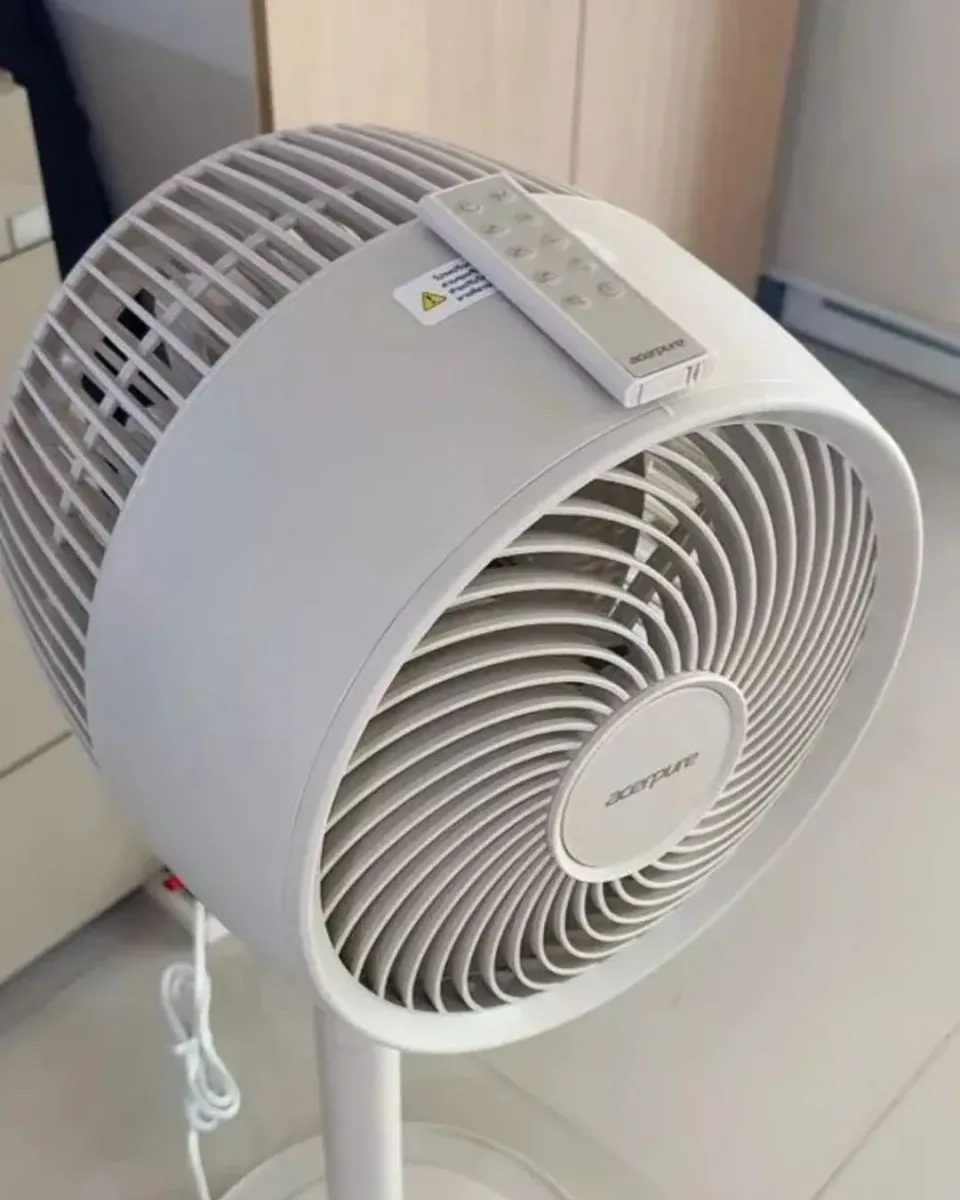
The honest limits: the tilt is manual 105 degrees, so dialing the angle in needs both hands. The 90 degree swing is horizontal only, no vertical oscillation. And the aroma puck is small: a few drops of oil last one night, so the scent feature costs you a bottle of oil per month if you use it nightly.
How Much Does a Dreo Circulator Fan Cost?
The tested 90 to 106 cm white version with remote sits at 89.99 euros on Amazon.de, the price for the improved 2026 version with the DC motor. Dreo sells cheaper variants (a shorter 81 cm model and older 8 speed revisions) in the 60 to 80 euro range, and the Smart version with RGB light and app control sits at 109.99 euros. The electrical cost is negligible, about 36 watts at maximum, but the real money question is the cheaper models: older Dreo circulators and generic brands run AC motors that cost less upfront and are audibly louder from speed 3, which is sleep-defeating for a bedroom appliance.
The measure worth doing before ordering: your window recess. The whole fan is a 41 cm disc on a 96 to 106 cm column; at that footprint it fits any normal bedroom corner, but a wall of pitched roofline at 85 cm height will clip the head, and the honest answer is to measure the niche first.
Verdict: Is the Dreo Pedestal Circulator Worth It?
The number that earns the money: 28.2 dB with a 27 metre reach. No classic pedestal fan at any price offers that pair, which is exactly what a bedroom or home office wants on a July night. Space is one clean 41 cm disc, the build is 6 kg with a steady round base, and the remote plus sleep mode mean the last thing you touch at night is the remote. What the price does not buy: no cooling below ambient temperature, no vertical swing, and no direct wind on skin, because that is not the job it is built for. As a room air engine it is currently the most convincing quiet option between 60 and 110 euros on Amazon.de.
✅ Pros
- 28.2 dB on the low speeds, sleeps quieter than breathing
- 27 metre air throw turns a whole room’s air over
- 8 speeds plus sleep and natural modes with remote and app
- DC motor at about 36 watts costs one cent per hour at full speed
- Aroma pad mount puts scent in the airflow, not in the room
❌ Cons
- 89.99 euros is a steep step up from a 30 euro pedestal fan
- Manual 105 degree tilt only, no vertical auto swing
- Moves air, cannot drop room temperature like an AC
- Aroma foam needs fresh oil drops every night you want scent
FAQ
Is a circulator fan better than a normal pedestal fan?
Yes, for whole-room comfort. A normal pedestal fan only pushes air at one person; a circulator like this Dreo spins the entire room's air, so the temperature evens out instead of cooling one chair. The trade-off is wind strength on your skin: at the same speed, a classic pedestal fan feels stronger up close, because it wastes less air on the room.
How loud is a 28 dB fan in practice?
Around the level of whispering or a quiet library. On speed 1 to 3 you sleep with it comfortably; on speed 6 and up it becomes a normal white-noise appliance around 40 dB. The honest number: the 28.2 dB spec applies to the low speeds, and the highest of the 8 speeds is room-audible but steady.
Does an air circulator replace an air conditioner?
No. It moves air, it does not remove heat. In a 26 Celsius room the Dreo makes you feel a few degrees cooler on the skin and stops the stuffy-corner problem in about 10 minutes, but it cannot cool the air below the outside temperature. It is the answer for three seasons and a placeholder in heat waves.
How much electricity does it use?
The DC motor draws about 36 watts at full speed, which is roughly one cent per hour on German household tariffs, and noticeably less on low speeds. Over a whole cooling season it costs less than one tank of petrol, and it consumes nothing on standby.
Can children or pets tip it over?
Not easily. The round base is 41 cm wide and the whole unit weighs about 6 kg, so a walking toddler who pulls the pole only wobbles it. The grille gaps are too narrow for small fingers, and the head sits at 96 to 106 cm, above most toddler reach once the column is extended.

Continue reading

Bamboo Fluted Monitor Stand With Drawer Review: The Pill Riser That Hides Desk Clutter
A bamboo fluted monitor stand with a sliding drawer lifts the screen to eye level, swallows pens and cables behind a ribbed pill-shaped front, and turns a wavy desk into a tidy one for around 50 euros.

Pink Pegboard Vanity Wall: The Beauty Storage Idea That Ends the Cluttered Dresser
A cream pegboard wall holding a perfume shelf, headphone hooks, and jewelry pockets. What this beauty wall gets right and where the plastic store-bought version differs.
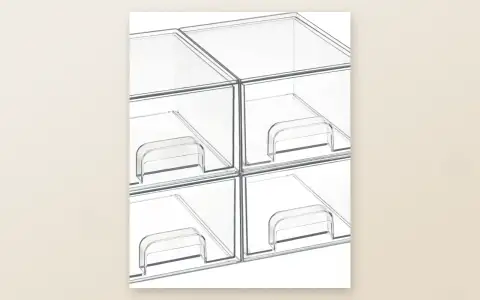
Stackable Under Sink Drawers: The Clear Acrylic Box System That Tames a Vanity Cabinet
Transparent acrylic drawer cubes you stack into a mini tower: what the Vtopmart 4 pack actually delivers for 26.99 euros, and where the cubes run out of room.