Entryway Shoe Cabinet — Tilted Shelves, Mirror, and Mid-Century Style
Entryway shoe cabinet review: a mid-century modern storage unit with tilted shelves, blue accent doors, full-length mirror, and bench seating. Holds 20+ pairs.
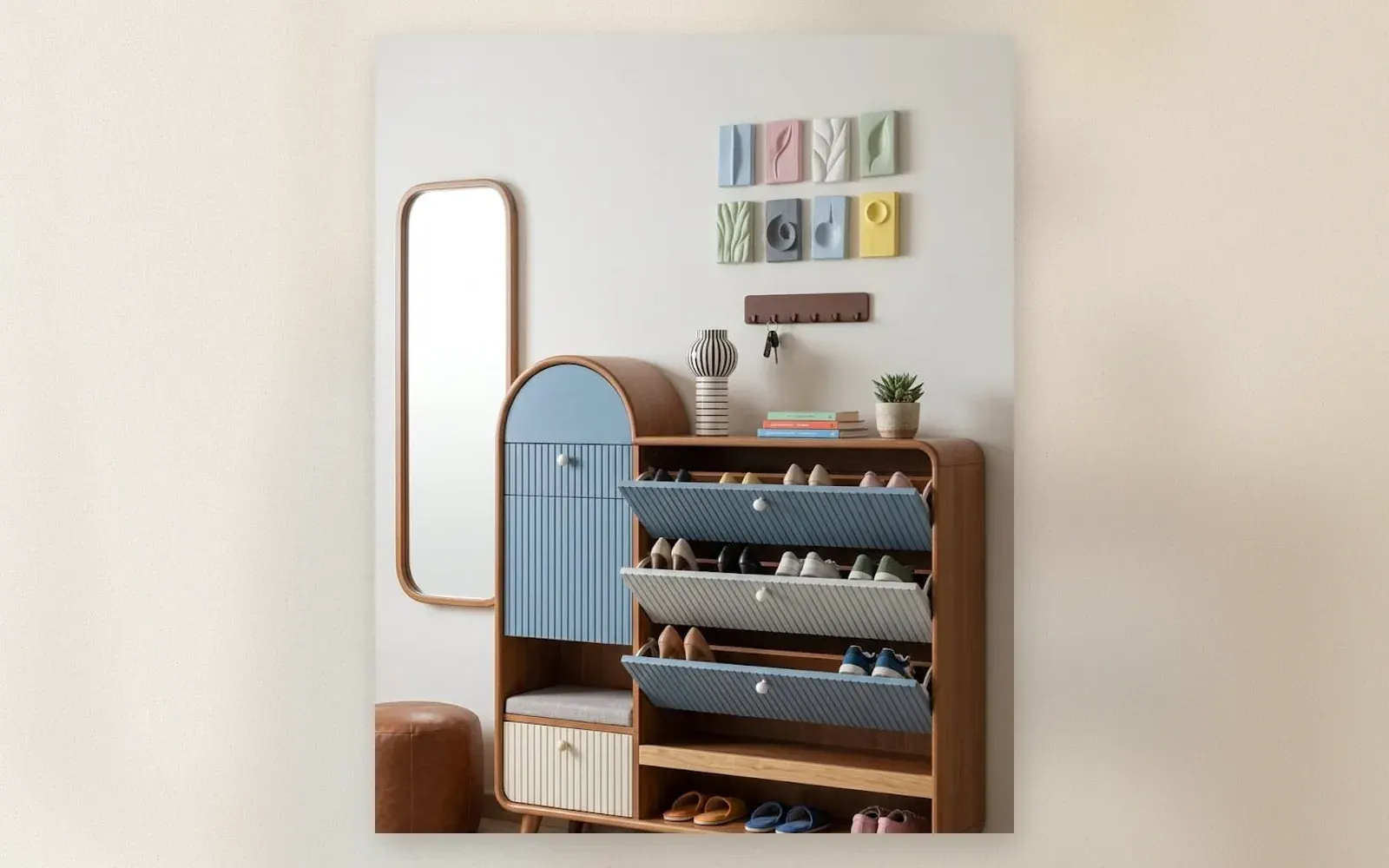
Most shoe storage is ugly. A wire rack by the door, a pile by the couch, or a closet floor that smells like a locker room. The Entryway Shoe Cabinet solves this with furniture that looks intentional — a mid-century modern wooden unit with tilted shelves, blue accent doors, a full-length mirror, and bench seating. It holds 20+ pairs of shoes behind closed doors while looking like a design piece, not a storage solution.
🏷 Where to buy an Entryway Shoe Cabinet Available on Amazon.de (Schuhschrank kippbar), Wayfair, and furniture retailers — search for “Schuhschrank kippbar Spiegel” or “tilted shoe cabinet mirror”
How does an entryway shoe cabinet work?
The cabinet is a vertical wooden unit — typically 100–120 cm tall, 60–80 cm wide, and 20–30 cm deep. The front features 3–4 tilted compartments that flip open like drawers. Each compartment holds 4–6 pairs of shoes at an angle, using gravity to keep them in place while maximizing vertical storage.
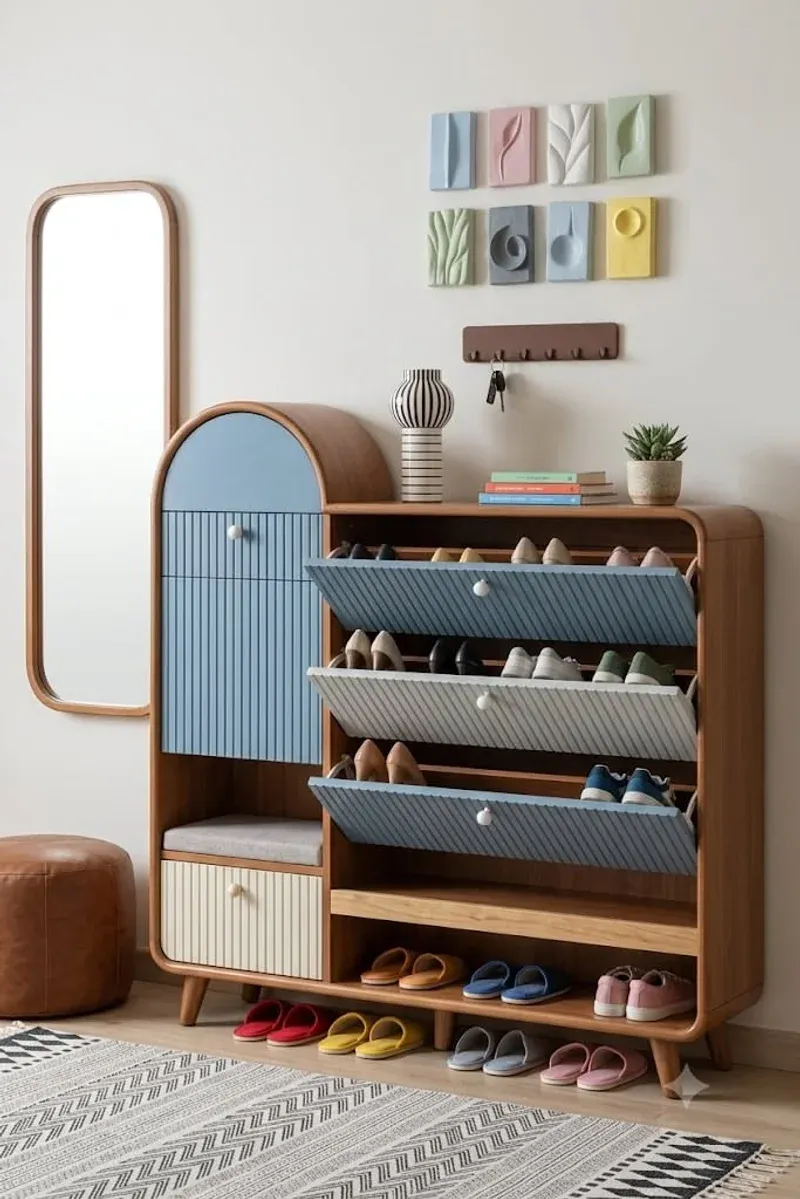
The tilted design is the key innovation. Instead of flat shelves where shoes stack on top of each other, each compartment angles shoes so they display and store simultaneously. You see every pair when you open the drawer — no digging through a pile to find the right shoes.
The blue accent doors on the model shown are decorative panels with a ribbed texture that add visual interest. When closed, the cabinet looks like a decorative sideboard. The full-length mirror on the left wall completes the entryway setup — check your outfit before leaving without moving to another room.
The bench seating on the lower section provides a place to sit while putting on shoes. The padded cushion is removable for cleaning, and the storage underneath holds frequently used shoes or seasonal items.
Is an entryway shoe cabinet practical?
The capacity surprises most buyers. The 3–4 tilted compartments hold 12–18 pairs of shoes. The bottom open shelf adds space for 4–6 more pairs — slippers, sandals, or shoes you wear daily. Total capacity: 16–24 pairs, depending on shoe size and compartment configuration.
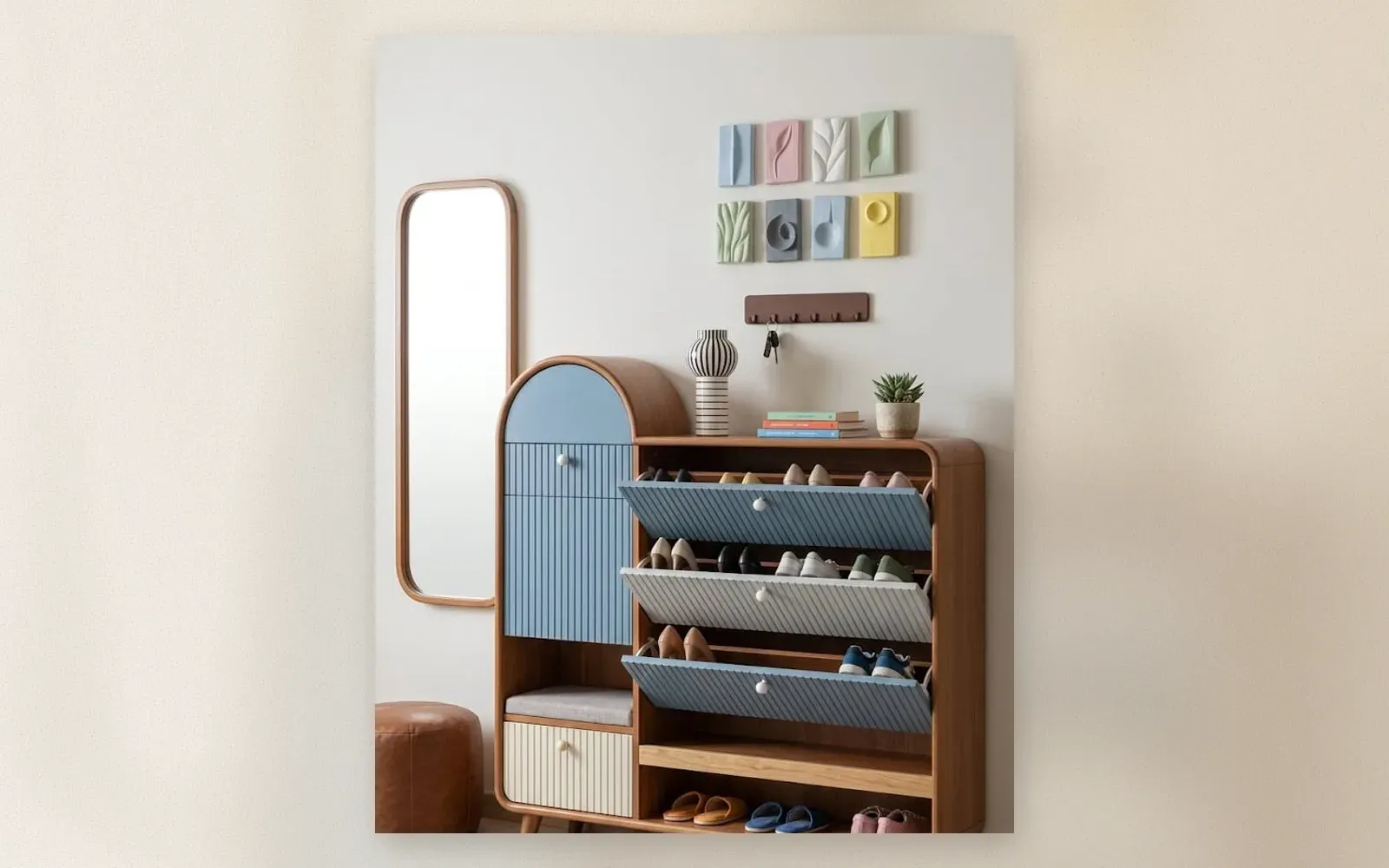
The tilted compartments protect shoes from dust and compression. Unlike open racks where shoes collect dust and get crushed by items stacked on top, the closed cabinet keeps each pair in its own slot. Leather shoes, sneakers, and heels all maintain their shape.
The depth — 20–30 cm — fits standard entryways without blocking doorways. For narrow hallways, the slim profile is essential. For wide foyers, the cabinet becomes a focal point rather than a wall-hugger.
The wooden finish resists fingerprints and scratches better than high-gloss alternatives. The mid-century design — tapered legs, rounded edges, warm wood tone — complements both modern and traditional interiors. It doesn’t scream “shoe storage” — it reads as a design piece that happens to hold shoes.
Who should buy an entryway shoe cabinet?
Anyone with more than 8 pairs of shoes and an entryway that isn’t a walk-in closet. The cabinet eliminates the shoe pile that accumulates by the front door — the visual clutter that makes a home feel disorganized before you even step inside.
For families, the cabinet becomes a shared shoe station. Each person gets a compartment — kids’ shoes on the lower shelves, adults’ shoes on the upper ones. The bench seating means no one has to balance on one foot while putting on shoes.
For renters, the freestanding design means no wall mounting required. You place it against the wall, and it stays put. When you move, you take it with you — no holes, no damage, no landlord complaints.
For small apartments where the entryway doubles as the living room, the cabinet disguises shoe storage as furniture. Guests see a stylish sideboard with a mirror, not a shoe rack. The design integration is the product’s strongest selling point.
Verdict
✅ Pros:
- Tilted compartments show every pair at a glance — no digging
- Holds 16–24 pairs depending on configuration
- Mid-century design looks like furniture, not storage
- Full-length mirror and bench seating complete the entryway
- Freestanding — no wall mounting required
❌ Cons:
- Tilted compartments don’t accommodate very tall boots
- Depth may not fit extremely narrow entryways
- Blue accent doors may not match all interior color schemes
- Bench cushion may compress over time with heavy use
- Assembly required — multiple components to connect
🏷 Where to buy an Entryway Shoe Cabinet Search “Schuhschrank kippbar Spiegel” or “tilted shoe cabinet mirror” on Amazon.de, Wayfair, or furniture retailers
FAQ
How many pairs of shoes can the entryway shoe cabinet hold?
The 3 to 4 tilted compartments hold 12 to 18 pairs, and the bottom open shelf adds space for 4 to 6 more. Total capacity is 16 to 24 pairs depending on shoe size.
Does the cabinet require wall mounting?
No. The cabinet is freestanding and sits against the wall on its own legs. No drilling or wall anchors are needed, which makes it renter-friendly.
Will tall boots fit in the tilted compartments?
Standard shoes, sneakers, and heels fit well, but very tall boots may not fit inside the tilted compartments without removing a shelf or using the open bottom section.
Is the mirror included with the cabinet?
Yes. The full-length mirror is built into the left side of the unit and is included with the cabinet.
What are the dimensions of the entryway shoe cabinet?
Typical models are 100 to 120 cm tall, 60 to 80 cm wide, and 20 to 30 cm deep, which fits most standard entryways without blocking doorways.

Continue reading
4 Must-Have Home Essentials I Can't Live Without
Four home essentials that made the cut: a rolling plant stand cart, a spinning bookshelf tower, no-saw baseboard trim, and a nesting coffee table.

Wooden Plant Stand Cart: 5-Tier Rolling Shelf for Indoor and Outdoor Gardens
Wooden plant stand cart review: a 5-tier dark-stained rolling shelf with angled tiers and casters. Mobile garden storage for patios, balconies, and living rooms.

Rotating Bookshelf Tower: 360° Spinning Storage That Saves Floor Space
Rotating bookshelf tower review: a 4-tier wooden spinning bookcase with drawer and casters. 360° rotation, mid-century design, and real storage capacity.