Styrofoam Craft Blocks: White Polystyrene Bricks for DIY, Models, and Packaging
Styrofoam craft blocks review: white polystyrene bricks for sculpture, floral arrangements, school projects, and protective packaging. Lightweight, cuttable, and versatile.

Every craft project starts with a base. Floral arrangements need a foundation. School dioramas need structure. Fragile items need protection during shipping. Styrofoam craft blocks solve all three with the same material: white expanded polystyrene (EPS) bricks that weigh almost nothing, cut with a knife, and hold shape under paint, glue, and floral wire. We tested a set of 30 blocks across crafting, packaging, and display projects to see if the versatility holds up.
🏷 Where to buy Styrofoam Craft Blocks Buy on Amazon →
How do styrofoam craft blocks work?
Each block is a rectangular brick of expanded polystyrene: lightweight, rigid, and closed-cell. The material resists moisture, doesn’t rot, and holds its shape indefinitely. You cut it with a craft knife, serrated bread knife, or hot-wire cutter. You paint it with acrylics, glue things to it with hot glue or white glue, and pin floral arrangements directly into it with stems or wire.

The standard sizes range from 5×5×5 cm to 30×10×5 cm, with most craft packs including mixed sizes. The blocks stack easily, and the smooth surface takes paint uniformly: no primer needed for acrylics. For school projects, the material carves into terrain, mountains, and architectural models with basic tools. For floral arrangements, the blocks anchor stems at any angle without tipping.
Are styrofoam craft blocks practical?
The weight is the primary advantage. A 30×10×5 cm block weighs roughly 50 grams: light enough to hang on a wall with double-sided tape, portable enough to carry a dozen in a backpack. For shipping, the blocks cushion fragile items without adding meaningful weight to the package, which keeps postage costs down.
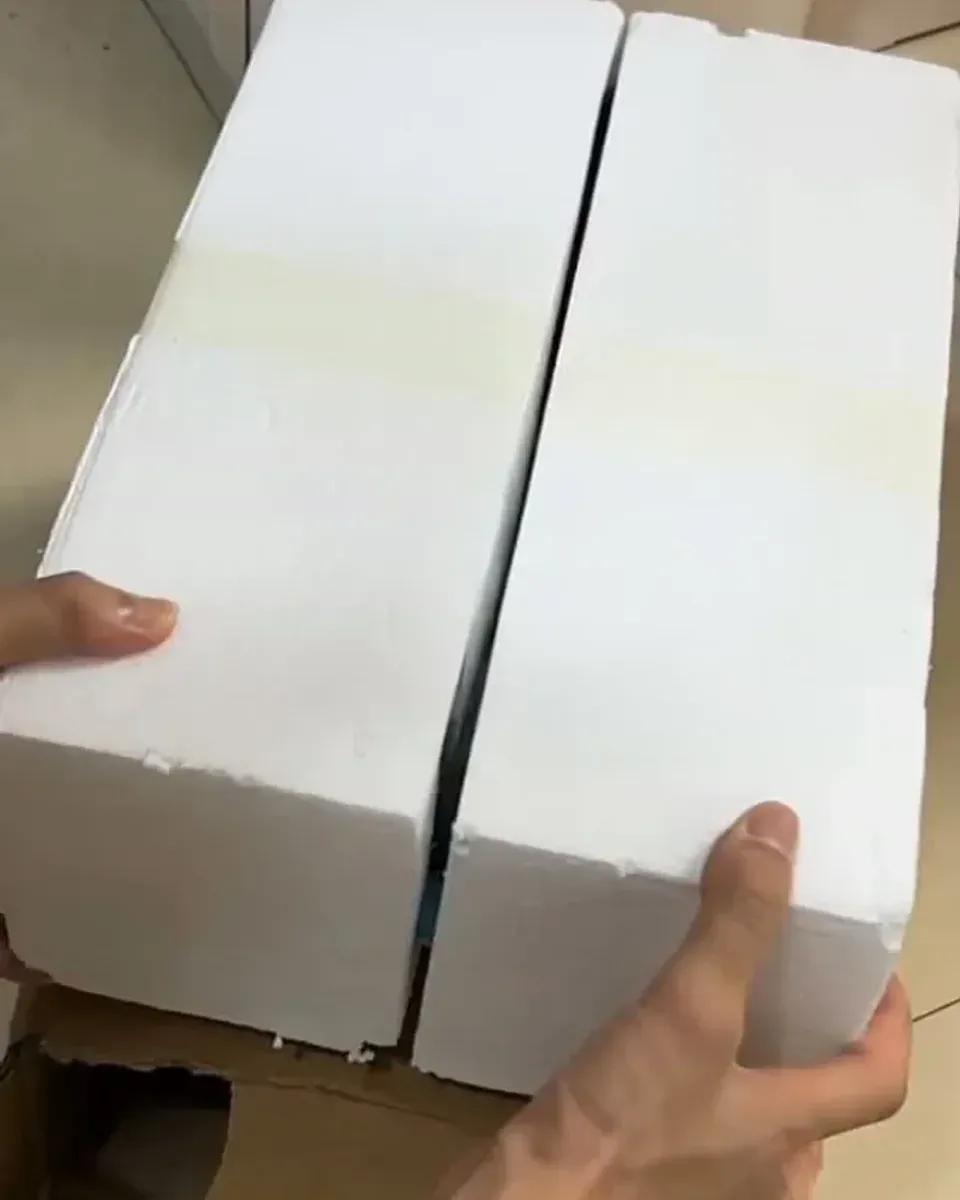
The cutting is straightforward. A sharp craft knife slices clean edges. A serrated knife creates textured surfaces for terrain models. Hot-wire cutters produce smooth curves for sculptural work. The material doesn’t crumble or flake during cutting: it separates cleanly along the blade path.
The limitation is structural. Styrofoam compresses under sustained load, so it’s not suitable for shelving or furniture. It also melts under heat: a hot glue gun works if you move quickly, but prolonged contact deforms the surface. For craft and display purposes, the material excels. For structural applications, look elsewhere.
Who should buy styrofoam craft blocks?
Teachers and parents building school projects. The blocks form the base for dioramas, volcanoes, architectural models, and science fair displays. Students carve, paint, and glue without specialized tools: a craft knife and acrylic paints are all that’s needed.
Florists and event decorators use the blocks as anchors for centerpieces, wreaths, and floral installations. The closed-cell structure holds water without dissolving, so fresh flowers stay hydrated longer than in open-cell foam. For wedding decorators, the blocks disappear inside arrangements while providing the structural backbone.
Packagers use the blocks to cushion electronics, glassware, and fragile collectibles during shipping. The blocks absorb impact without transferring force to the item inside. Unlike bubble wrap, the blocks maintain their position: they don’t shift during transit, which provides consistent protection.
Verdict
✅ Pros:
- Extremely lightweight: easy to carry and hang
- Cuts cleanly with basic tools: no specialized equipment needed
- Takes paint, glue, and floral wire without preparation
- Closed-cell structure resists moisture and doesn’t rot
- Affordable in bulk: 30-packs cost under €20
❌ Cons:
- Not structurally strong: compresses under sustained load
- Melts under prolonged heat contact
- Static cling attracts dust and small particles
- Not biodegradable: disposal requires landfill or recycling
- White surface shows marks and fingerprints easily
🏷 Where to buy Styrofoam Craft Blocks Buy on Amazon →
🇩🇪 This article is also available in Deutsch:
Read in Deutsch →
FAQ
What tools do I need to cut styrofoam craft blocks?
A sharp craft knife or serrated bread knife works well for clean cuts. Hot-wire cutters produce the smoothest curves for sculptural work. Avoid electric knives, which tend to melt the foam.
Can I paint styrofoam craft blocks with regular paint?
Acrylic paints work directly on styrofoam without primer. Spray paint is trickier because the propellant can melt the foam. Test a small area first with any paint type.
Are styrofoam blocks waterproof enough for fresh flower arrangements?
Yes. The closed-cell structure resists moisture and does not dissolve like open-cell foam. Soak the block in water before inserting stems, and it will keep flowers hydrated for several days.
Can styrofoam craft blocks be reused?
They can be reused if the project allows it. Pull out pins and wire, brush off loose paint, and the block is ready for another round. Floral foam that has been soaked is harder to reuse cleanly.
How do I dispose of expanded polystyrene responsibly?
EPS is recyclable in some areas but not biodegradable. Check your local recycling guidelines. Many craft stores accept clean styrofoam for recycling. Otherwise, it goes in landfill.

Continue reading

VOESH Vitamin C Shower Filter: Honest Review of the Clean Ocean Head Filter
A mint-green vitamin C cartridge that screws between shower arm and shower head. What the VOESH Clean Ocean filter actually does to hard water.

Nano Spray Machine K5: The Handheld Nano Mist Gun That Turns Any Bottle Into a Cloud
Nano spray machine K5 review: a cordless 380 ml mist gun that fogs sanitizer, water or toner into a cloud, has a blue light tip and three rate settings. Where it beats a spray bottle and where it does not.

Pink Gingham Duvet Cover Review: The Washed Cotton Bedding Set From Amazon
The pink gingham duvet cover is the soft washed cotton set that turns a plain bedroom into a French-cottage bed. This is what the ASHANLAN set on Amazon.de is like.