Wave Bench Reading Nook: The Curved Corner Seat That Turns Bookshelves Into a Destination
Wave bench reading nook: an L-shaped bookshelf wall with a knife-edge LED line and a curved, coffin-style bench cushion. How to recreate the three elements and what the builds really cost.
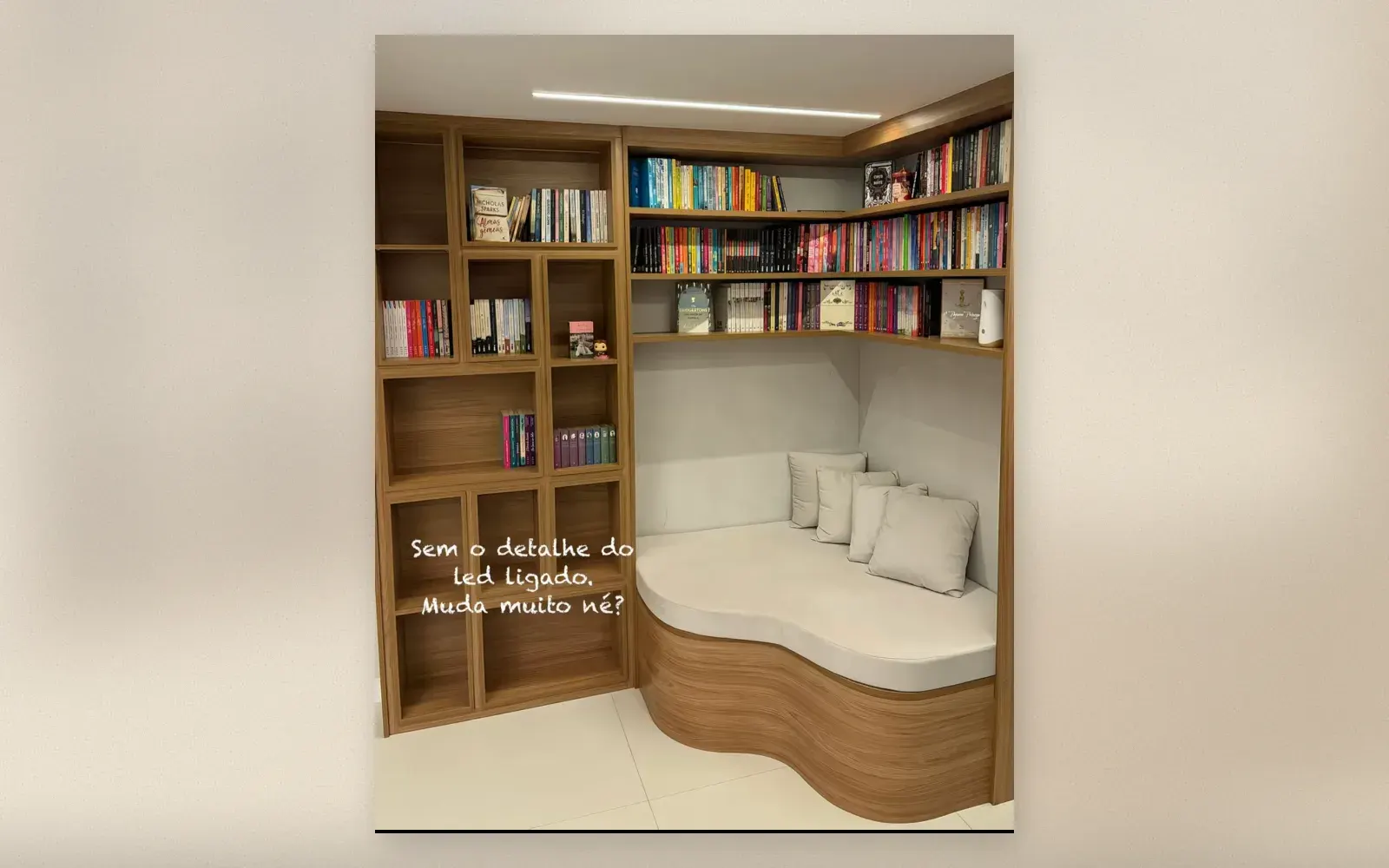
There is a reading corner that keeps coming up in interior feeds and refuses to leave your memory: two walls wrapped floor to ceiling in warm oak bookshelves, a single knife-edge of warm LED light running along the ceiling line, and instead of an armchair, a low bench that curves in a smooth wave out of the corner, wearing a thick cream cushion. Three pillows lean against the shelves. It reads like a designed library, but every single part of it is buildable in a normal living room. We break down the whole setup into its three elements, show what they cost in ready-made form, and point out the one job you honestly cannot fake from a flat-pack.
🏷 Where to buy Wave Bench Reading Nook parts LED shelf lighting on Amazon → · Check on Etsy →
The Wave Bench: Why the Curve Is the Design
The heart of the nook is the bench, and its shape is the whole trick. Instead of two straight boxes butted together in the corner, the seat sweeps out in a single continuous wave: deep where it meets one shelf wall, narrowing through an S-curve toward the other. The front band is solid wood, veneered in the same oak tone as the shelves, so the bench reads as one grown piece of furniture rather than a seat plus a planter box.
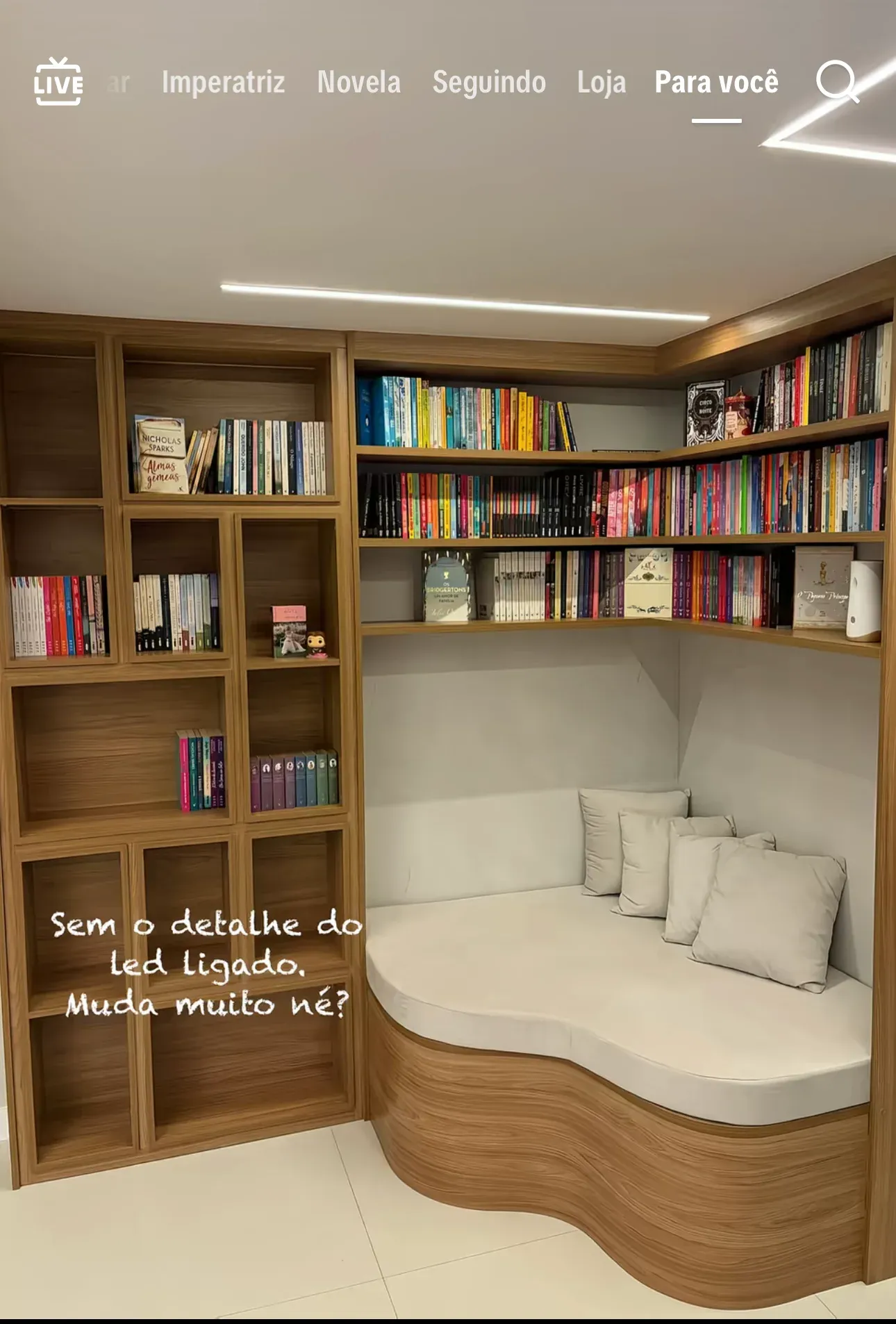
Two things make the shape believable. First, the cushion follows the curve: a knife-edge seam runs around the whole outline, and the fabric is pulled tight so the wave is visible in the upholstery, not just the wood. Second, the bench crest sits lower than the third shelf row, so the eye keeps travelling along the book wall and the wave only appears as you come closer. A flat bench in the same spot would kill the effect; the curve is what makes the corner feel designed.
Real products get you 80 percent there. Custom bench cushions sewn to your measurements exist on both Amazon and Etsy: the RXASC window-seat cushion on Amazon.de, made to order in 15 colours of chenille over high-density foam with a removable washable cover, currently shows as unavailable on its German listing, so treat the listing as a template and use the many made-to-measure bench cushion sellers in the same category instead. On Etsy, the Custom Waterproof Velvet Bench Cushion shop (listing 4597354249) sells made-to-measure window seat upholstery at 40.72 US dollars with a 4.5 star rating from 21 reviews, and the Custom Bench Cushion with colored piping (listing 4568757811) is the closest match to the reference photo’s cream geometry when you order it in an off-white and specify curved-corner cuts in the notes.
The Shelf Wall: L-Shaped Boxes, Open Fronts, No Doors

The shelves do the architectural work. The wall arrangement in the photo is an L-shape: one long run along the back wall, a second run along the side wall, meeting at a wrapped corner, all in open boxes roughly 30 cm deep. Six to seven rows climb the full height, and every box front is banded with solid veneer edge, which is the detail that separates the built-in look from furniture-grade shelf units. The bottom rows terminate in flat drawer banks that hide clutter, so the upper shelves stay purely for books and objects.
Recreating this on a budget means open shelf boxes, not a modular shelving system. Straight runs of 4 to 5 boxes are achievable with off-the-shelf oak-veneer boards and edge banding, built as simple open squares; the corner gets wrapped by running the back-wall boxes to the corner and starting the side wall with a deeper box that swallows the joint. The wave bench then sits in front, and because the seat back is only about 25 cm off the wall at its shallow end, the bench hides the lower shelf rows anyway; the shelf fronts your guests actually see start above the bench crest.
The LED Line: One Warm Knife-Edge of Light
The lighting in the photo is doing more work than anything else in the room. Along the ceiling, a single recessed LED line washes the shelf tops in warm white, and that is the part that makes people screenshot the image. The same effect is buildable without a joinery channel: 6-in-1 COB LED strip kits bundle six 1-meter warm white rolls on one 12-volt plug, each with its own touch sensor that responds through wood up to 40 mm, so you can glue each roll into a thin aluminium profile at the top edge of your topmost shelf row, point the light down onto the books, and get the hidden-line look with a box that costs 36.99 euros on Amazon.de.
It is worth being honest about the gap between that kit and the photo: the reference uses a continuous recessed channel running the full wall, so the light is one even knife-edge. A six-pack at one roll per bay gives you discrete glow zones separated by the gap between rolls; on a 3-meter wall you will see six warm pools, not one line. Two tricks close the gap cheaply. Run the rolls end to end along one continuous aluminium profile instead of per bay, banking on the 12-volt plug supplying only three rolls at full brightness per kit, and set the rolls at the front edge of the profile so the light spreads wider. For a truly continuous look you double the kit and hide the second plug behind the shelf crown; the wiring behind the books is the only visible compromise, and the shelf itself screens it.
Where the Photo Beats Ready-Made
Three things in the reference image are pure joinery, and pretending otherwise ends badly. The curved bench carcass: cutting a wave front out of solid wood with angled banding takes a carpenter with a router table, and there is no flat-pack substitute. The recessed LED channel: in a rented flat you can mount the strips under a top crown board and get 90 percent of the light, but the perfectly sharp knife-edge needs the channel. And the drawer fronts under the bench: they follow the same curve as the bench, which doubles the carpentry. Decide early which of the three you are commissioning and which you are replacing with straight lines; half-measures look fine, all three faked look cheap.
How to Recreate This Setup: Step by Step
Step 1: Pick the corner and measure the L. You need about 2 meters of run on each wall. The corner in the photo is a dead-end space next to a door, which proves the concept works in leftover corners, not just hero rooms.
Step 2: Build or order the shelf runs. Open boxes, 30 cm deep, oak or oak-veneer boards with 2 mm edge banding on every visible front. Six rows high if your ceiling is standard 250 cm, three to four rows if you want the smaller version. Leave the bottom 30 cm drawer-free; the bench will cover it.
Step 3: Add the LED line. One 6-in-1 warm white COB kit (36.99 euros on Amazon.de) gives six rolls and a plug; glue each roll into a slim top profile on the last shelf row, sensor up against the crown board so the touch dimmer works through the wood. Dim it to about 60 percent in the evening; full brightness reads as a shop display.
Step 4: Commission the wave bench box. Hand a carpenter the shape: depth 55 cm at the deepest point, crest 45 cm high including the cushion, the wave sweeping out toward the room. Straighten the back edge where the bench meets the wall; the curve belongs on the front, not the back.
Step 5: Order the cushion made to measure. Measure the finished outline, add 2 cm tolerance, specify thickness 8 to 12 cm and a non-slip base. Send the seller the bench outline as a photo or template. Expect 40 to 120 euros in EU sizing on Etsy, more for thicker foam. Order three back pillows in the same cream at the same time so the fabrics match.
Step 6: Style it. Books spine-out on rows 3 and up, one row reserved for objects with varied heights, the drawer bank under the bench for blankets. Keep the palette cream, oak and one muted accent; the LED line is the decoration, everything else stays quiet.
Who Should Build This Nook?
Readers who want a real place to sit for hours, not a photo backdrop. The wave bench puts you slightly reclined against the side shelf wall with your legs along the curve, which is more comfortable than any armchair for long reading sessions.
Small-flat owners who already burned the sofa wall on a desk or dining table. The nook takes a 2 by 2 meter dead corner and turns it into the most used seat in the house, with four meters of book storage included.
Renters with a cooperative landlord: the LED strips are removable, the cushions are furniture, and the shelf runs can be built as one combined carcass that leaves with you. The only permanent part is the bench curve, and a straight bench box is the honest fallback.
Verdict
✅ Pros of the Wave Bench Reading Nook:
- The curved bench turns a corner bookshelf into furniture people actually sit in, not just look at
- One warm LED line reads as luxury lighting and costs 36.99 euros with a 6-in-1 COB kit
- Four meters of book storage in 2 by 2 meters of floor space
- Made-to-measure cushions exist in EU sizing from 40 euros, so the shape is buildable without sewing skills
- The design is scalable: three shelf rows or six, both versions work
❌ Considerations:
- The true wave bench carcass is a carpenter job, no flat-pack substitute exists
- Six LED rolls at one per bay means six glow pools, not the photo’s continuous knife-edge
- Continuous light runs need a second kit and a hidden second plug
- The recessed channel look requires cutting into the shelf crown, semi-permanent
- Custom cushions ship in two to four weeks; order them before the bench is finished, not after
🏷 Where to buy Wave Bench Reading Nook parts COB LED Strip 6-in-1 on Amazon.de → Made-to-measure bench cushions on Amazon → · Custom Bench Cushion on Etsy →
🇩🇪 This article is also available in Deutsch:
Read in Deutsch →
FAQ
How big is a wave bench reading nook like the reference photo?
The whole corner in the photo fits inside roughly 2 by 2 meters. The L-shaped bookshelves use about 8 to 10 linear meters of shelf in six to seven rows, and the curved bench measures around 150 to 170 cm across the wave. A smaller room still works if you cut the shelf to four rows and shorten the bench to 120 cm.
How much does a reading nook with a curved bench cost to build?
With ready-made parts and a carpenter only for the wave bench box, you land around 400 to 900 euros: bookshelf wood and hardware 200 to 400, a 6-in-1 LED strip kit about 33 euros, a custom bench cushion 40 to 200 in EU sizing, plus carpenter hours for the wave carcass. The all-custom joinery version from the photo is a 2000 euro-plus job because every front band is cut at an angle to follow the curve.
Can you put a shock-mounted LED strip on an existing bookshelf without rewiring?
Yes. The 6-in-1 COB kits ship with a 12-volt wall plug, so the strips run from one socket. Each of the six rolls has its own touch sensor that works through wood up to about 40 mm thick, which is exactly how you get the hidden-line look without cutting channels.
Which bench cushion shape fits a wave bench?
A rectangular-to-order cushion cut to the bench outline works when your curve is gentle. Fully curved seat shapes need a custom maker, and that is where services like RXASC on Amazon or made-to-measure Etsy sellers come in: you send length, width and thickness and they sew the non-slip cover to match.
Is a wave bench reading nook good for small apartments?
Yes, because the two long walls carry all the storage vertically and the bench keeps the floor free in the middle of the room. It also beats a standing armchair for reading comfort, since you can stretch out along the curve and put several pillows behind your back.

Continue reading
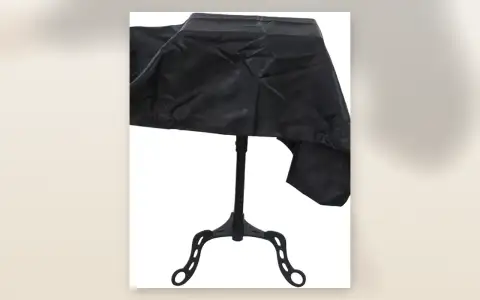
The Magnetic Cloud Levitation Look: What You Can Actually Buy for a Floating Sofa
A floating cloud sofa held up by magnets is a concept render, not a product. We look at the levitation gear you can really order in Germany, from a levitating display table to a moon lamp, and what each does for the effect.
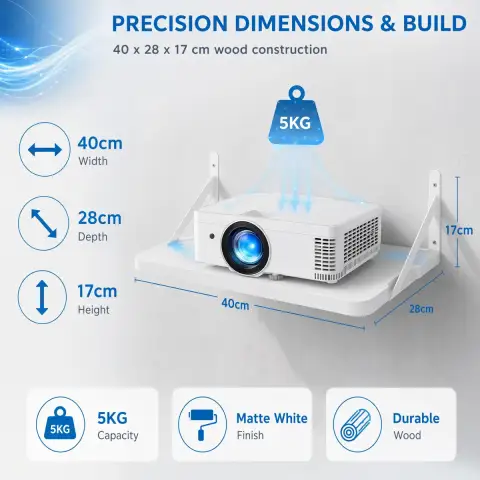
Wall Mounted Printer Stand: The Floating Shelf That Hides Your Printer and Paper
A wall mounted printer stand turns dead wall space above the desk into printer storage: wood top up, mesh shelf below for paper. What to check before mounting a printer on the wall, who it does not fit, and the best wall shelves for it on Amazon.de.
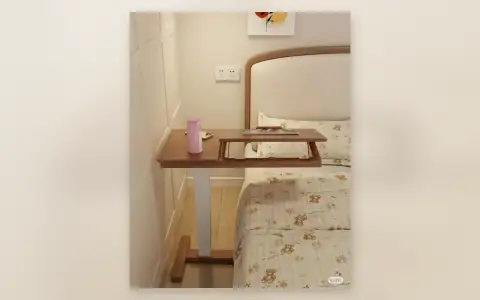
Overbed Table With Swivel Top: The Height Adjustable Bed Desk That Swings Over Your Mattress
An overbed table with a swivel top parked over the bed folds out to a laptop desk, breakfast tray and side table in seconds. Height adjustable rolling base, tilting platforms, no assembly drama.