Wire Grid Cable Management — The Secret Behind Every Clean TV Setup
Wire grid cable management review: a metal grid panel that mounts behind your TV stand, organizing power strips, cables, and adapters in one tidy space.
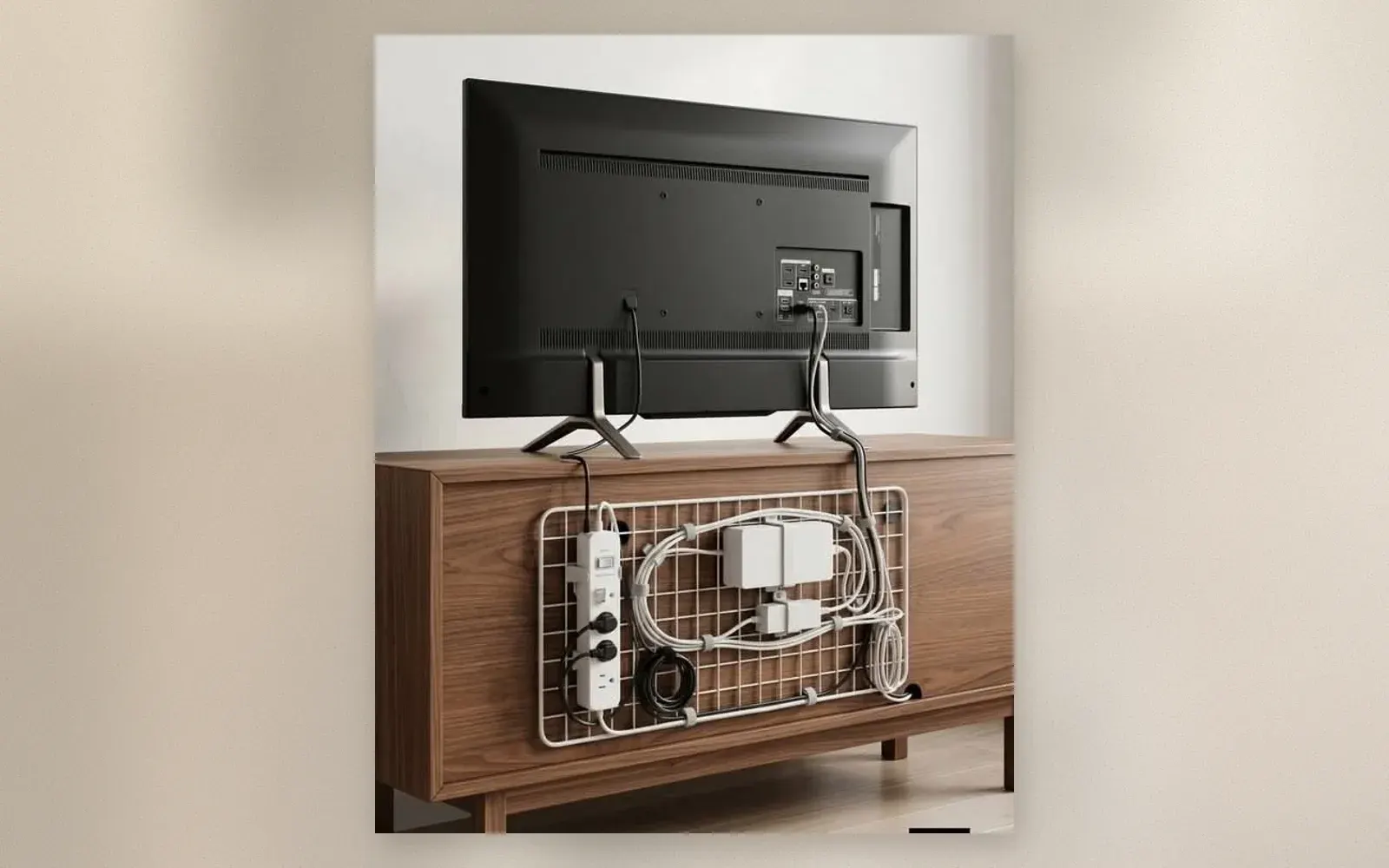
Every TV setup has the same problem: cables. Power cords, HDMI cables, adapter bricks, and charging cables cascade behind the entertainment center in a tangled mess that collects dust and collects judgment from anyone who looks behind the furniture. The Wire Grid Cable Management panel solves this by mounting a metal grid to the back of your TV stand, creating a structured framework where every cable, power strip, and adapter has a designated place.
🏷 Where to buy Wire Grid Cable Management Available on Amazon.de, IKEA (SKÅDIS), and home organizers — search for “Kabelmanagement Gitter” or “wire grid cable organizer”
How does wire grid cable management work?
The system is a metal wire grid — roughly 40×30 cm — that mounts to the back of a TV stand, desk, or entertainment center using screws or adhesive hooks. The grid’s open mesh design lets you attach cable clips, zip ties, and power strip holders at any point, creating a customized layout for your specific cable configuration.
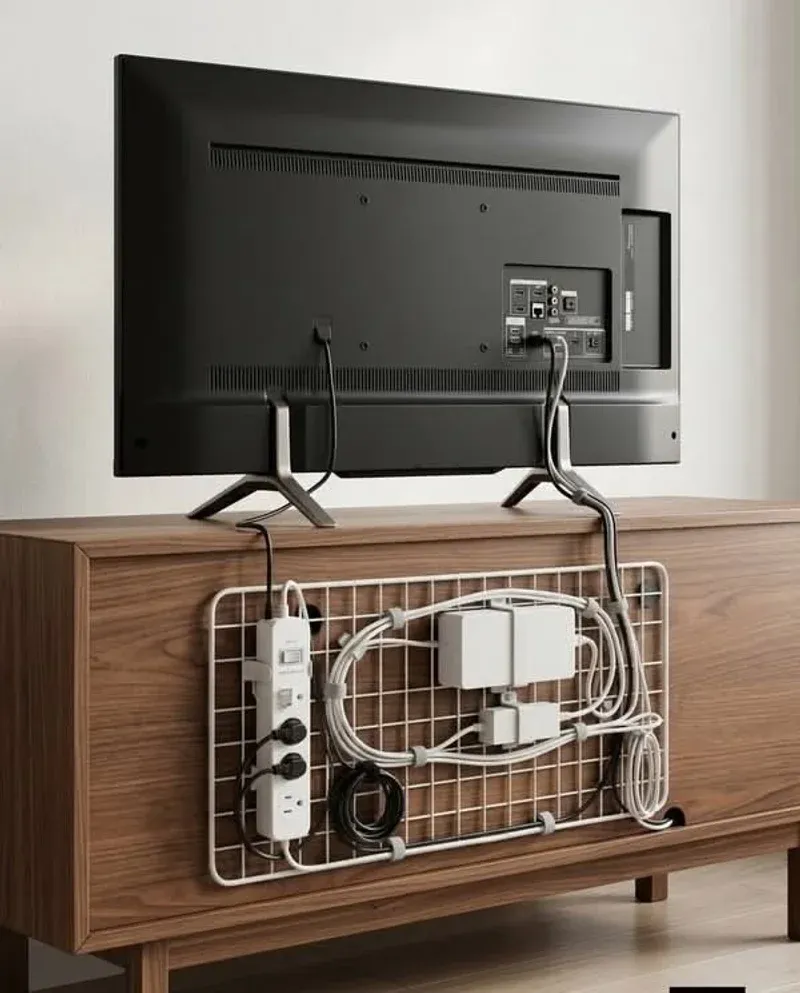
The power strip mounts vertically on the grid, keeping it off the floor and accessible for plugging and unplugging devices. Cables route through the grid’s mesh holes, held in place by clips or ties. Adapter bricks — the bulky ones that never fit in power strips — hang from the grid using hooks, keeping them organized and ventilated.
The entire assembly hides behind the TV stand. From the front, you see a clean entertainment center with no visible cables. From the back, you see a structured system where every cable has a path and every adapter has a home.
Is wire grid cable management practical?
The primary benefit is accessibility. When you need to add a new device — a game console, a streaming box, a speaker — you don’t have to untangle a cable nest. You route the new cable through the grid, clip it in place, and plug it in. The entire process takes minutes instead of the 30-minute cable excavation that most entertainment centers require.
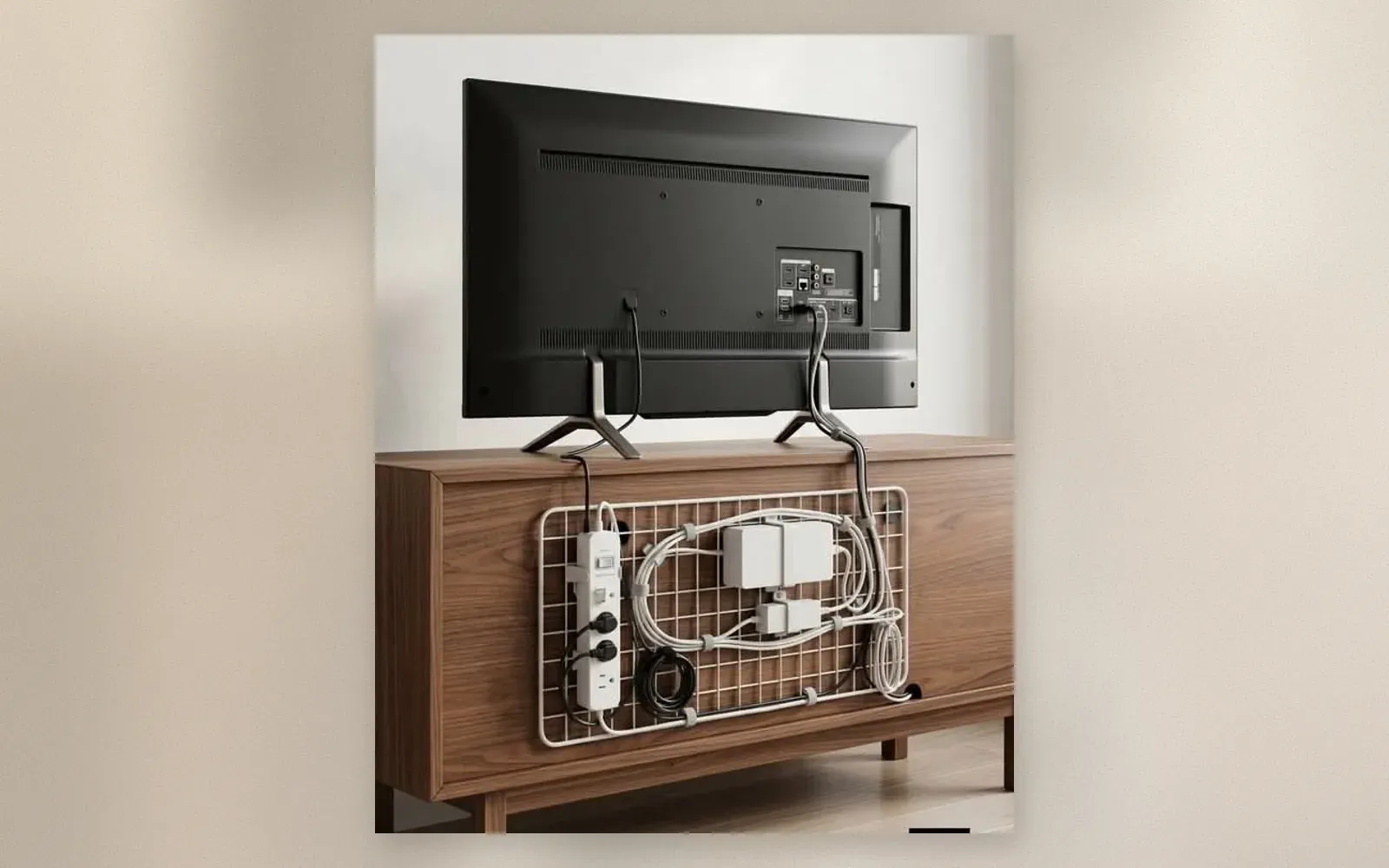
The ventilation benefit matters more than you’d think. Adapter bricks generate heat, and stacking them in a pile on the floor traps that heat. The grid mounts them with air gaps between each unit, preventing overheating and extending the life of your electronics.
The dust reduction is a bonus. Cables on the floor collect dust bunnies that accumulate until someone cleans behind the furniture — which is never. The grid elevates everything off the floor, making it easy to vacuum or wipe behind the TV stand without moving furniture.
For renters, the adhesive-hook version mounts without drilling holes. When you move, peel the hooks, remove the grid, and leave no damage. For homeowners, the screw-mounted version provides a more permanent solution that handles heavier cable loads.
Who should use wire grid cable management?
Anyone with an entertainment center that has more than 3 devices connected. The grid handles the cable chaos that accumulates behind TVs, gaming setups, and home offices.
Home offices with desks that face walls benefit from the grid mounting on the desk’s back panel. Cables route through the grid instead of dangling off the desk edge, creating a cleaner workspace that’s easier to clean under.
For families with kids, the grid keeps cables organized and out of reach. The elevated position prevents curious toddlers from pulling cables — a safety benefit that parents appreciate.
For anyone who’s ever bought a new TV and spent an hour figuring out where all the cables go, the wire grid eliminates the post-installation cable nightmare.
Verdict
✅ Pros of Wire Grid Cable Management:
- Organizes cables, power strips, and adapters in one visible system
- Elevates everything off the floor — reduces dust and improves ventilation
- Adhesive-hook version is rental-friendly — no drilling required
- Customizable layout — clips and ties position anywhere on the grid
- Makes adding/removing devices fast and painless
❌ Cons:
- Requires access to the back of furniture — not all setups allow this
- Grid size may not fit very small or very large entertainment centers
- Adhesive hooks may not hold heavy power strips on all surfaces
- Visible from the side if the TV stand doesn’t have a back panel
- Zip ties are single-use — cutting them to reconfigure generates waste
🏷 Where to buy Wire Grid Cable Management Search “Kabelmanagement Gitter” or “wire grid cable organizer” on Amazon.de, IKEA (SKÅDIS), or home organizers
FAQ
How much weight can the wire grid hold?
A screw-mounted grid handles several kilograms, enough for power strips and adapter bricks. Adhesive-mounted grids have lower limits. If your power strip is heavy, use screws for a secure hold.
Can I install the wire grid without drilling?
Yes. Heavy-duty adhesive hooks or Command strips work for lighter setups. Test the adhesive on your surface first. For heavier cable loads, screw mounting is more reliable.
What size grid do I need for a TV stand?
A 40 by 30 cm grid works for most standard TV stands. Measure the back panel of your furniture first. Some setups need a larger grid if you have many devices or bulky adapter bricks.
How do I reorganize cables on the grid?
Cut the existing zip ties, remove cables from the clips, and re-route them. Reusable cable ties or velcro straps make future changes easier than single-use zip ties.
Can I use the wire grid for a desk setup?
Yes. Mount the grid on the back panel of a desk to route monitor cables, chargers, and peripheral wires. It keeps cables off the floor and makes the workspace easier to clean under.

Continue reading

4 Must-Have Home Essentials I Can't Live Without
Four home essentials that made the cut: a rolling plant stand cart, a spinning bookshelf tower, no-saw baseboard trim, and a nesting coffee table.

Wooden Plant Stand Cart: 5-Tier Rolling Shelf for Indoor and Outdoor Gardens
Wooden plant stand cart review: a 5-tier dark-stained rolling shelf with angled tiers and casters. Mobile garden storage for patios, balconies, and living rooms.

Rotating Bookshelf Tower: 360° Spinning Storage That Saves Floor Space
Rotating bookshelf tower review: a 4-tier wooden spinning bookcase with drawer and casters. 360° rotation, mid-century design, and real storage capacity.