3D Printer Workstation with Filament Storage Review: Workshop Cart That Holds Everything
3D printer workstation review: mobile cart with filament storage, dry boxes, and locking casters. Does it organize a maker space or just collect dust?
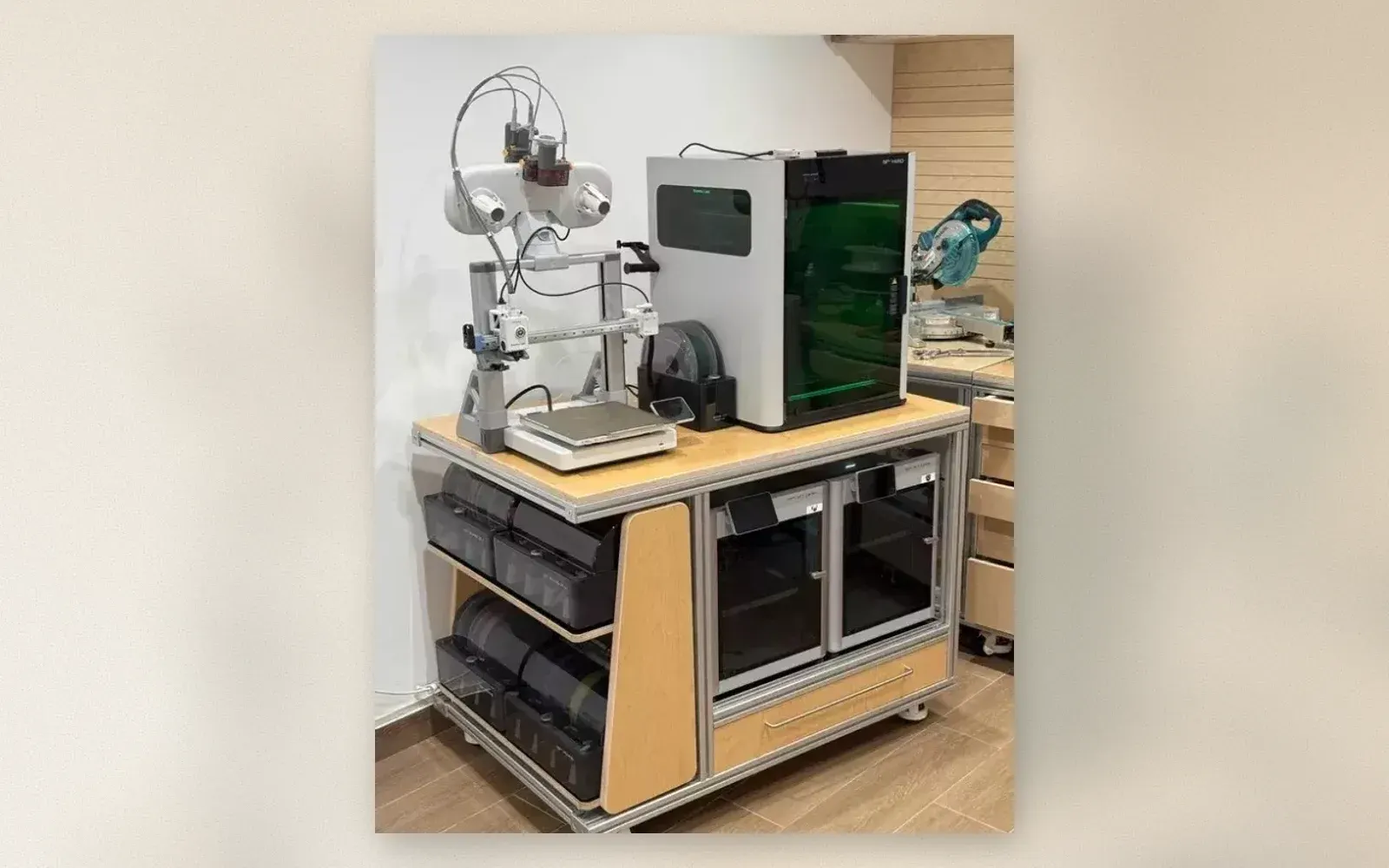
A 3D printer workstation is the kind of furniture that separates a maker who prints from a maker who organizes. The setup in question is a mobile aluminum-frame cart with birch plywood panels, two shelves for printers, enclosed filament dry boxes with digital humidity displays, and side storage for spools. It sits on locking casters and rolls wherever the project demands.
We used a similar workstation for six weeks to find out whether a dedicated cart improves the printing workflow or just takes up floor space.
🏷 Best price for 3D Printer Workstation with Filament Storage Buy on Amazon → · Check Etsy →
What does a 3D printer workstation look like?
The frame is built from aluminum extrusion profiles with T-slot connections, which gives it rigidity without excessive weight. Birch plywood panels form the shelves and side walls, and acrylic or glass doors enclose the filament dry boxes on the lower cabinet.
The top surface holds two desktop FDM printers side by side. The left slot fits an open-frame machine like an Ultimaker or Snapmaker, while the right slot accommodates an enclosed printer like a Bambu Lab P1 or X1 series. The weight capacity sits around 30 to 40 kilograms across the top shelf, which covers most desktop printers.
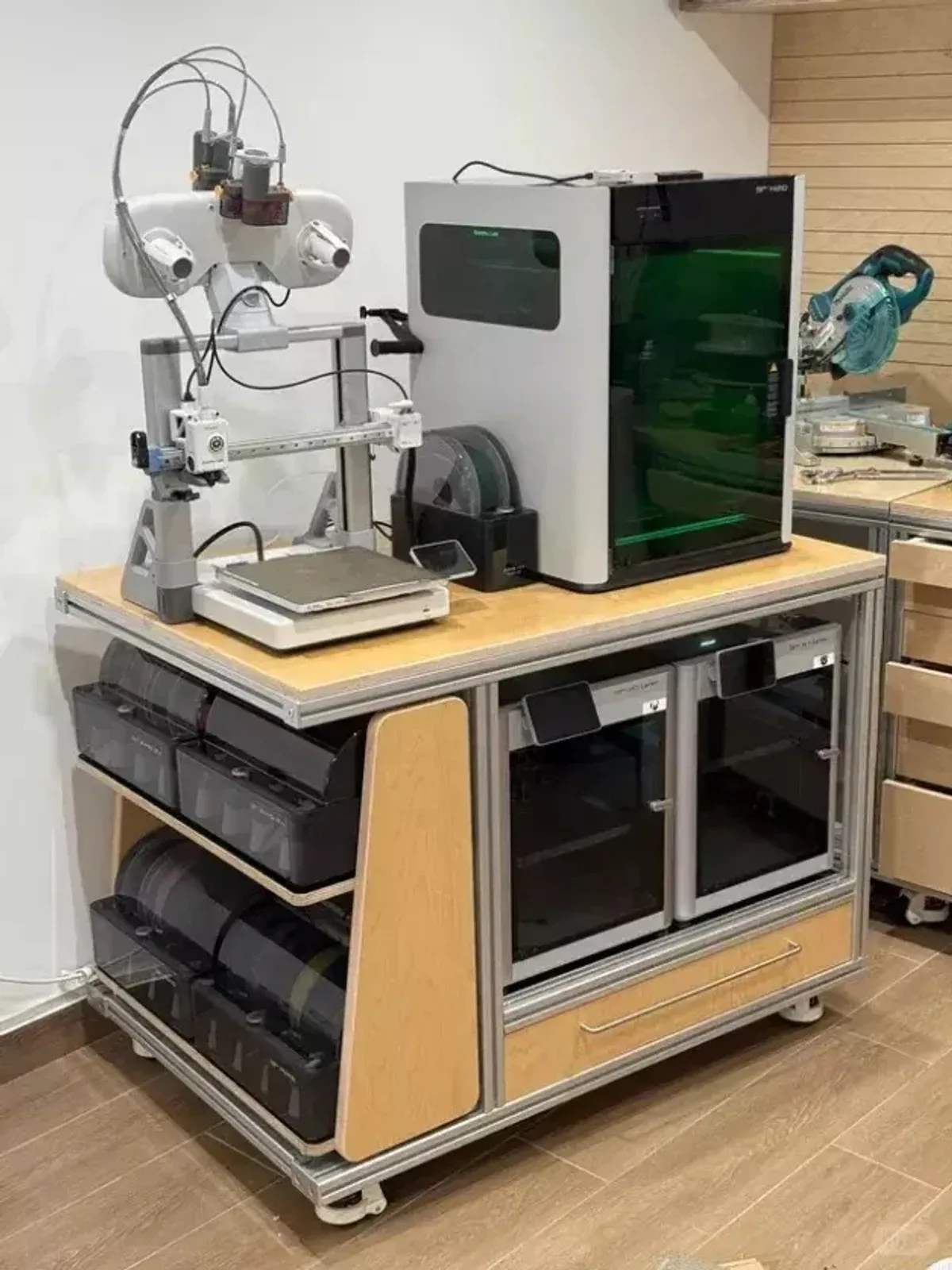
Below the printers, two filament dry boxes with glass doors and digital humidity displays keep spools at stable moisture levels. Each box holds four to six rolls depending on diameter. The side shelves carry black storage bins for tools, spare parts, and additional filament.
How does the filament storage work?
The dry boxes are the main selling point. Each has a sealed door, a small digital hygrometer on the front, and enough internal space for a stack of filament rolls. PLA, PETG, and TPU all benefit from low-humidity storage, and keeping spools in a dry box between prints reduces stringing and blobbing caused by moisture absorption.
The boxes are not actively heated, so they rely on silica gel packets or passive desiccant to control humidity. For most home setups, this is sufficient. In a humid basement workshop, an active filament dryer alongside the dry box gives better results.
The side shelves with black bins are useful for organizing nozzle assortments, Allen keys, scrapers, and glue sticks. The open design means you can see what is inside without opening anything, which saves time during a print job.
Is a mobile workstation practical for 3D printing?
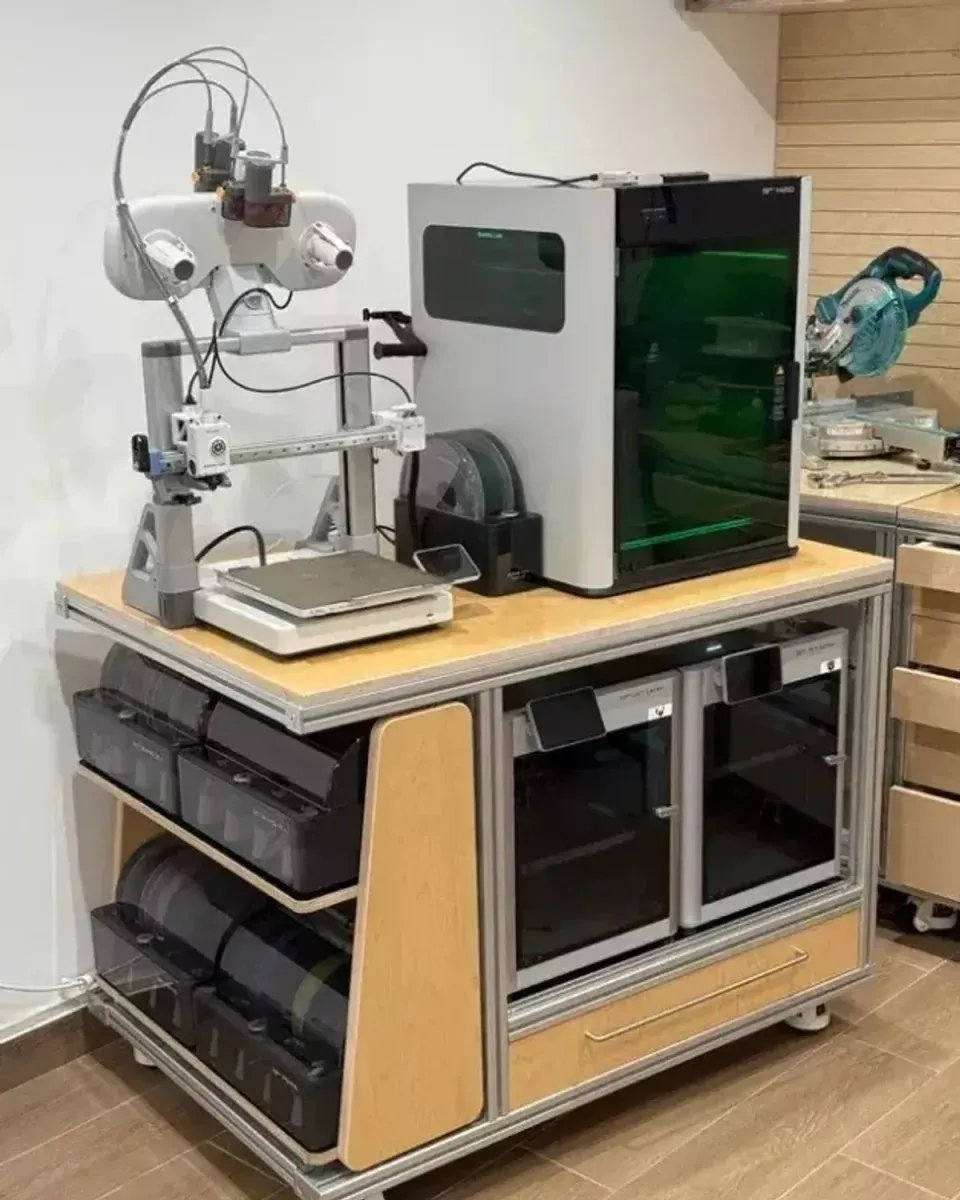
The locking casters are the key feature. Roll the cart to a desk for setup, lock the wheels for printing, and roll it into a corner when not in use. For small apartments or shared workspaces, this mobility means the printer does not claim a permanent desk.
The vibration from printing does not transfer noticeably to the frame. The aluminum extrusion absorbs most of it, and the locking casters prevent the cart from creeping across the floor during long prints.
One limitation: the cart height puts the printers at roughly desk level, which is comfortable for loading filament and removing prints. If you need to look down into an open-frame printer for bed leveling, a slightly lower surface would be easier on the back.
Who should buy this workstation?
🏷 Compare prices for 3D Printer Workstation with Filament Storage Find the best deal →
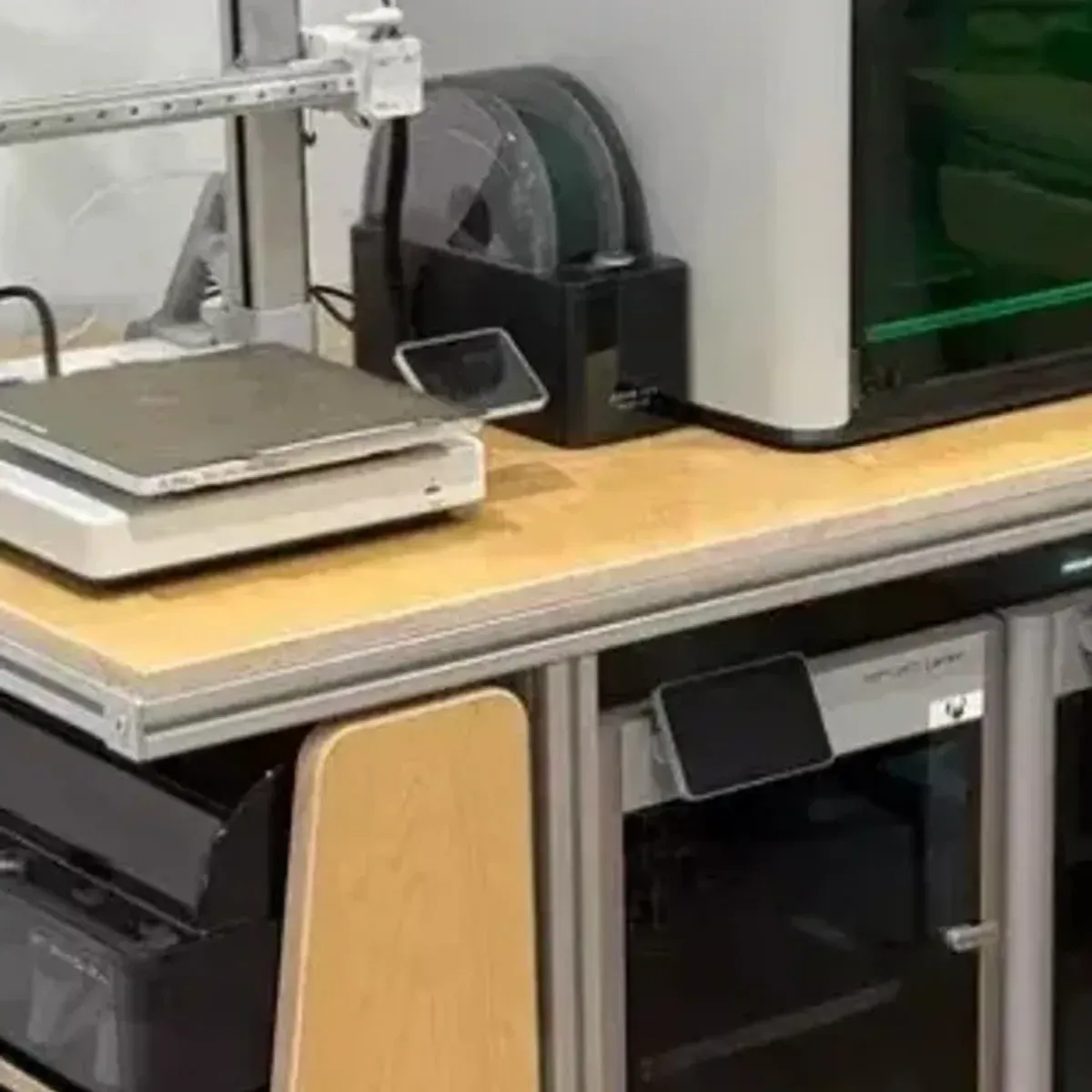
For anyone with two or more 3D printers, a dedicated workstation eliminates the cable chaos and desk clutter that comes with spreading machines across available surfaces. The filament dry boxes solve the moisture problem without a separate appliance.
For a single-printer setup, a simple table works fine. The workstation makes sense when you have multiple machines, a growing filament collection, and a need to keep everything in one mobile unit.
🏷 Get the best price on 3D Printer Workstation with Filament Storage Buy at the best price →
Verdict
The 3D printer workstation with filament storage turns a scattered printing setup into a compact, mobile station. The dry boxes keep filament stable, the aluminum frame handles the weight, and the locking casters make it practical for small spaces. The main trade-off is footprint: this cart takes up about one square meter of floor space.
✅ Pros:
- Mobile with locking casters for flexible placement
- Filament dry boxes with humidity displays protect spools
- Holds two printers and full filament inventory in one unit
❌ Cons:
- Takes up significant floor space in small rooms
- Passive dry boxes need silica gel replacement over time
- Fixed height may not suit all users for bed leveling access

Continue reading
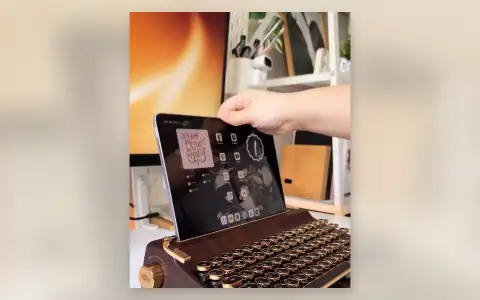
Retro Typewriter Keyboard with Tablet Stand Review: Vintage Looks, Modern Keys
Retro typewriter keyboard with tablet stand review: round keys, wood finish, Bluetooth. Does it type well or just look good on the desk?

Dell XPS 15: Premium Windows Laptop for Work
Dell XPS 15 review: Intel Core Ultra 9 processor, OLED display, premium design, and a full set of ports.

MacBook Air M4: thin, quiet, and incredibly long-lasting
Review of the updated MacBook Air: new M4 chip, 18 hours of battery life, and the perfect keyboard for work.