The Folder Pattern Archive: A 40 Binder Shelf That Tames a Sewing Pattern Stash
A metal shelf of 40 white and pink A4 lever arch binders turns a sewing pattern chaos into a labeled archive. What the setup costs and where it breaks.
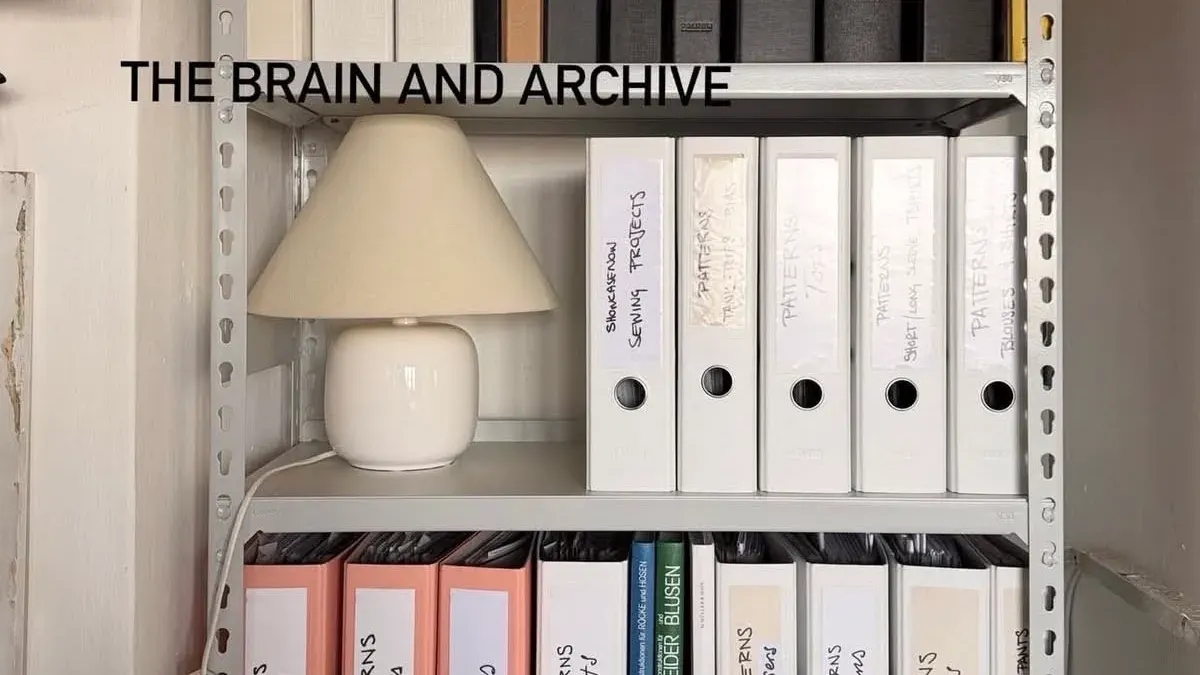
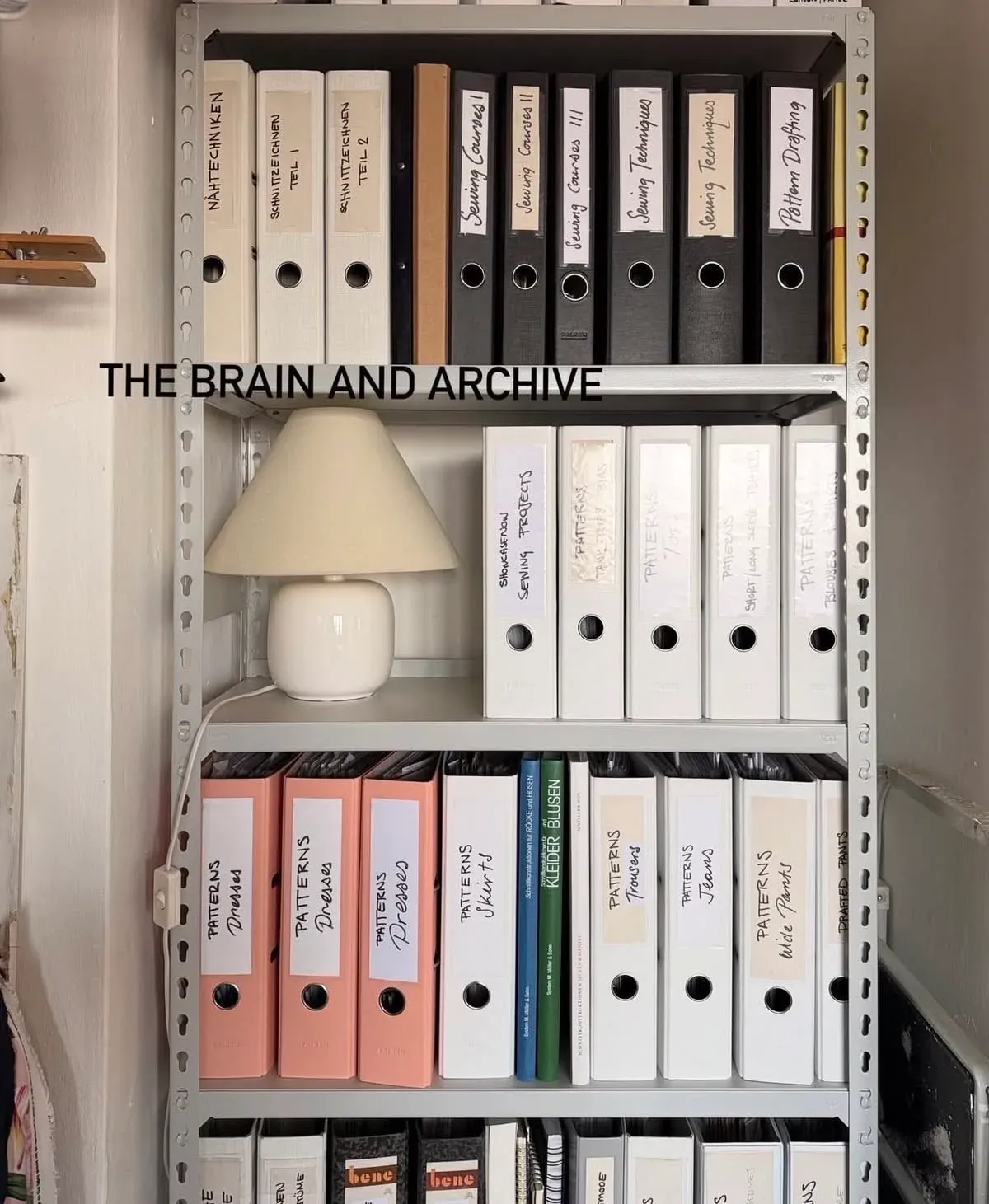
Every sewist hits the same wall: the pattern stash outgrows its drawer, envelopes tear at the corners, and the pattern you need is always at the bottom. The photo shows the escape route. A slim metal shelf, roughly 60 centimeters wide, holds 40 plus A4 lever arch binders in white, cream, and a pink row, each spine labeled by hand: sewing courses, pattern drafting, patterns dresses, patterns jeans, patterns wide pants, showcase now sewing projects. One shelf holds the whole sewing brain, and a small white lamp sits on the middle shelf so the labels stay readable after dark. This is genuinely achievable at home.
How do you store sewing patterns in a small sewing room?
The photo answers with one word: vertically. Pattern envelopes are A4 sized paper, which makes them a perfect fit for A4 lever arch binders, the same filing hardware every German office uses by the meter. Tossing patterns flat into a box works until the fourth search of the week; standing them on a shelf in labeled binders converts the stash into a lookup system. The photo archive runs about eight binders per shelf row, four rows tall on a 2 meter shelf, and every spine is readable without pulling anything out.
The system in the photo is deeper than one row of binders. The top shelf holds the theory: sewing courses I, II and III, pattern drafting, sewing techniques in cream and black spines. The middle row separates showcase projects from the pattern library, and the lamp keeps the whole row lit. The bottom rows split the actual patterns by garment type, with pink binders marking the dress patterns. That color coding is the quiet trick: pink means dresses, so the hand can find a category before the eyes do.
Which binder size fits a sewing pattern collection?
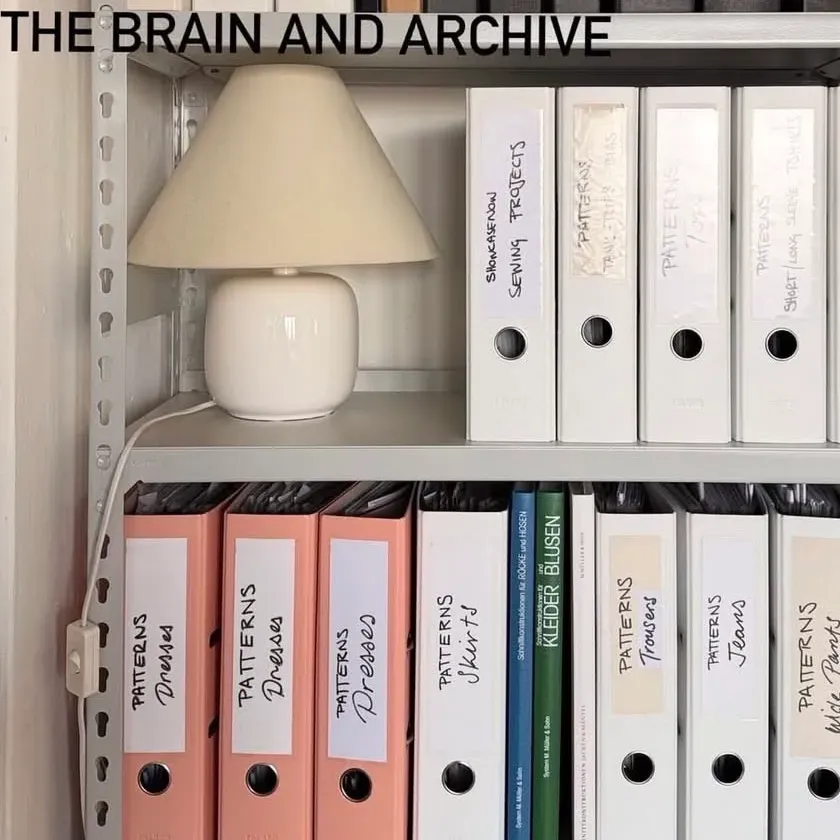
Go broad: the 80 mm spine fits up to 600 A4 sheets, while a slim 50 mm binder holds about 350. Commercial patterns like Burda or Simplicity read as 2 to 3 sheets of pattern paper folded into a paper envelope, so a full broad binder swallows roughly 60 patterns before the rings complain. The photo’s white binders visibly handle a full load of patterns per category with the rings still closing cleanly, which tells you 80 mm was the right call.
Reality check from the retail side: a single Leitz 1010 broad binder in white lists around 6.8 to 7.7 euros at German office shops, and a 10 pack lands at roughly 68 euros on Amazon.de. Budget brands drop the same white broad series closer to 35 euros for 10; the pink dress binders in the photo are the same mechanism in a pastel shell, and the color does not change the filing, but it does make the archive look like a design choice rather than an office overflow.
What goes on the binder spine labels?
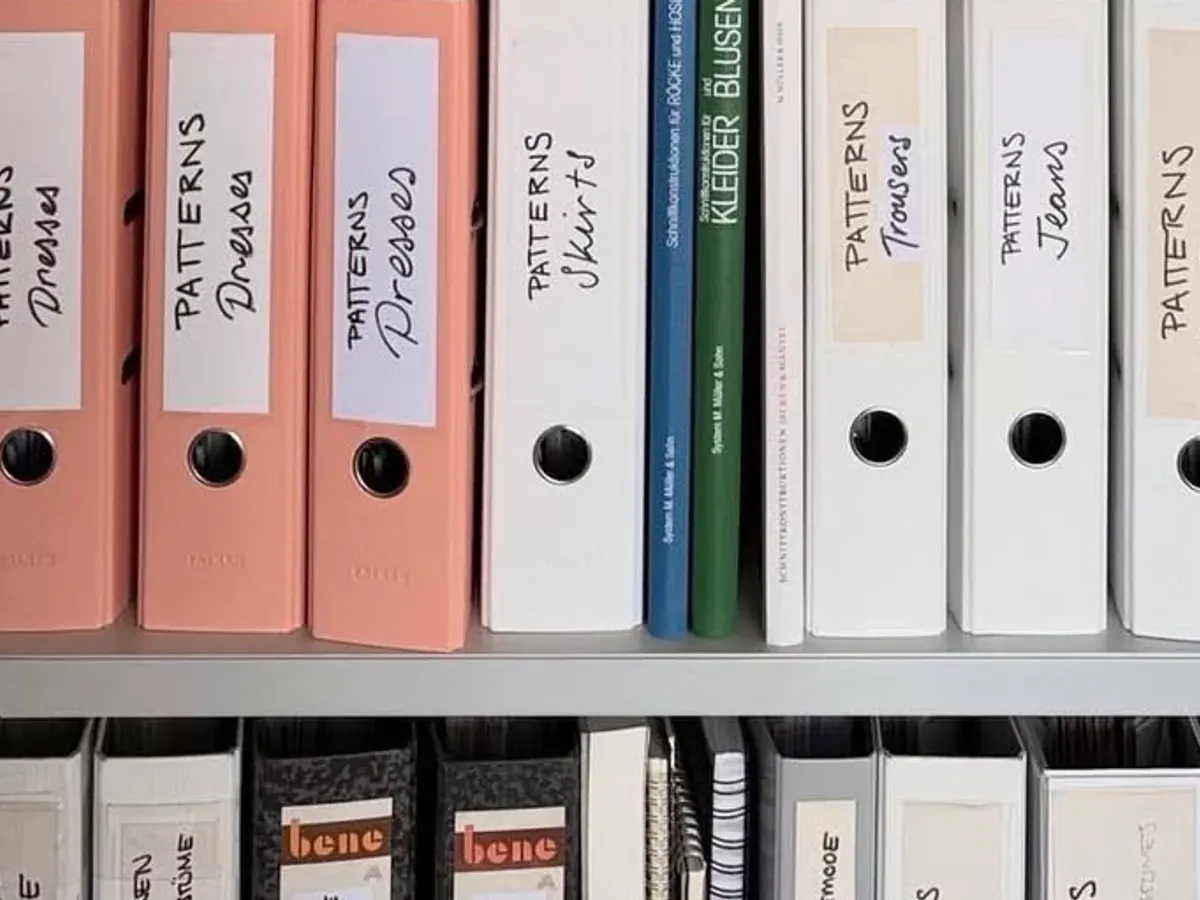
Short, garment-true words, written by hand. The photo labels read PATTERNS DRESSES, PATTERNS SKIRTS, PATTERNS TROUSERS, PATTERNS JEANS, PATTERNS WIDE PANTS, PATTERNS BLOUSES. No numbering scheme, no iconography, no printed label sheets: a replaceable spine card and a marker. That is deliberately low tech, because the whole point of the system is that a category can overflow at any time. When patterns dresses outgrows its binder, half of it moves into a fresh binder with the same label, and the archive keeps working without a migration plan.
One label rule the photo gets right: the verb phrases live at the front. SHOWCASE NOW SEWING PROJECTS marks the working row, the patterns waiting to be cut this season, separate from the deep library. That is the same trick librarians call shelf reserving: the current queue stands within arm’s reach and the archive stands further out. Your future self finds tonight’s project in five seconds instead of reconstructing a to do list from memory.
Does the shelf survive daily sewing?
The weak points are visible in the photo if you look. The shelf itself is a light double sided steel rack, the kind offices buy in bulk: it carries paper rows easily, but pushing a binder in with sideways force will bow the shelf rails over years. The fix costs nothing: file patterns with the lever closed, and pull a binder straight off the shelf from its lower edge instead of by the ring, so the mechanism stays honest for a decade. Leitz rates the 1010 series for years of office filing, and one sewist’s pattern archive is barely a rounding error against 40 envelopes of invoices.
The second honest gap: the photo binders hold envelopes, not open pattern paper. Tissue paper patterns from vintage magazines ride in the same binder inside a paper sleeve or a shipping plastic envelope, but the archive stops being a formal office shelf at that point. It works because the shelf lives inside a sewing room, away from dust and steam, and because patterns polybags keep the paper flat. Whatever you store in these binders, the 180 degree mechanism opens flat on the desk, so tracing a pattern page happens without unloading the ring set.
Should you copy the whole binder wall or start with one row?
The complete photo setup runs about 170 euros: 40 broad A4 binders at slightly over 4 euros piece, plus the shelf if you do not already own one. Starting smaller costs 35 euros: one 10 pack of broad white binders and one row of shelf, labeled by garment type, is already a working archive for about 600 patterns. The pink accent row, the lamp, and the sewing courses shelf are the second month’s work; the filing logic stays identical from one row to forty.
If, on the other hand, you sew rarely and own fewer than ten patterns, this setup is overbuilt; a document box lidded and labeled will carry that small a collection. The binder wall earns its money past about 20 patterns, when search time starts paying the bill, and most hobby sewists cross that line within two years. The photo archive belongs to someone who sews weekly, someone who found out the hard way that patterns on the floor equals patterns wasted.
Verdict
The labeled binder wall is the quiet proof of a working pattern system. Filing the pattern collection by garment type in 80 mm A4 lever arch binders, on a slim steel shelf, labels in handwriting, costs about 170 euros complete and turns the pattern stash into something like a library. The Leitz 1010 series handles decades of filing, and if you want the photo look exactly, the white and pastel color choice is the only styling decision you need to make.
The limitations are real but small: binders hold envelopes flat, not open tissue, so vintage patterns polybag first, and the shelf position matters, because a binder wall wants a dry sewing room, not a humid attic. For anyone sewing more than once a month, this is the storage upgrade worth doing first: it costs the same as one good sewing course weekend and saves the search time every single session.
Pros:
- 40 binder spines carry the whole pattern library visible and reachable in one slim shelf
- Labeled by hand: garment categories, courses, projects, no printed label system needed
- Leitz 1010 broad 80 mm binders hold about 600 sheets and open 180 degrees flat on the desk
- White and pastel color scheme keeps the archive looking designed, not office like
Cons:
- Complete 40 binder setup costs about 170 euros, more than most sewing tables
- Broad binders hold pattern envelopes flat, loose pattern paper polybags first
- The light steel shelf bows if binders get pushed sideways over the years
- Slower start: one 10 pack row alone looks office like until the second row lands
FAQ
How do you store sewing patterns in binders?
File each pattern in its envelope inside an A4 lever arch binder, one binder per category. The photo archive separates patterns dresses, patterns trousers, patterns jeans and patterns blouses into their own spines, so a specific pattern takes a minute instead of a drawer dive.
How many sewing patterns fit in one A4 binder?
An 80 mm broad spine holds roughly 600 sheets, and a commercial pattern reads 2 to 3 sheets in an envelope, so about 60 patterns per binder is the realistic number before the rings strain. Most home archives run one binder per category instead of maxing every ring.
What is the best way to label a pattern archive?
Handwritten labels on the replaceable spine cards, exactly as the photo does: PATTERNS DRESSES, PATTERNS JEANS, PATTERNS WIDE PANTS. When a category overflows, move half into a second binder and rewrite the card, no relabeling system needed.
Which binder works for pattern paper storage?
A broad A4 lever arch file with 80 mm spine and 180 degree opening. The LEITZ 1010 series holds about 600 sheets on two rings, and the opaque PP covered board keeps daylight off pattern paper, which yellowing photo copies appreciate.

Continue reading
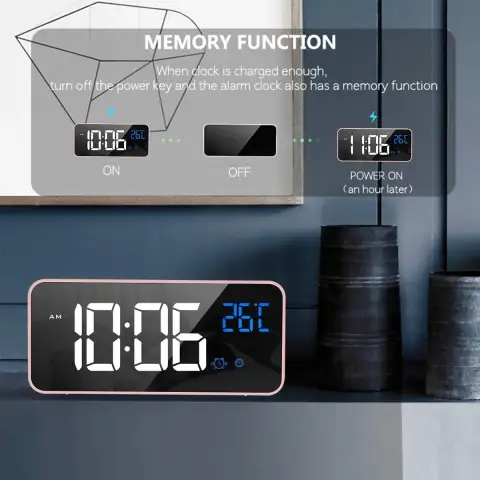
Pink LED Mirror Alarm Clock: The Bedside Clock That Doubles as a Mirror, Reviewed
The pink LED mirror alarm clock puts a 5.6 inch display behind a real mirror surface. Two alarms, four brightness levels, 22,99 euros, and one honest flaw.

Acrylic Corner Shower Shelves: The No-Drill Setup With Three Clear Shelf Turns That Holds Your Whole Routine
Three clear acrylic corner shelves glued into a shower corner carry OUAI, Sol de Janeiro and L'Occitane bottles without a single drill hole. What the adhesive actually handles.
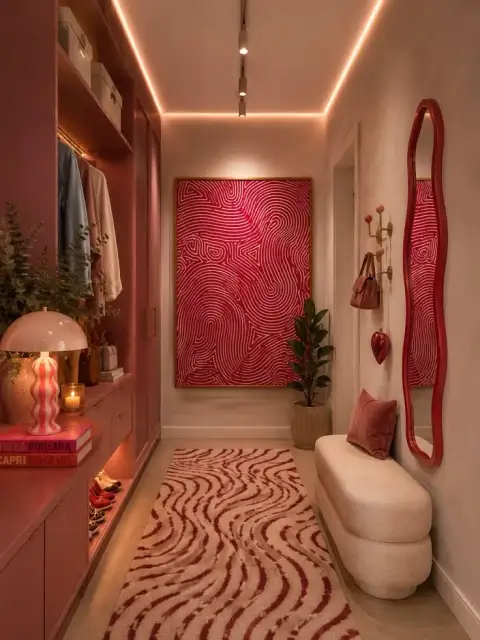
Pink Dressing Room: The LED Closet Setup That Turns One Wall Into a Boutique
A pink dressing room done right: RGBIC LED strips cove-mounted at the ceiling, a lit niche inside the closet, and warm 2700K shelf lighting that flatters every outfit.