Book Stand Reading Holder: Save Your Neck While You Read Cookbooks and Textbooks
Book stand reading holder guide: adjustable aluminum-and-wood stands with page clips that hold cookbooks, textbooks, and tablets at reading angle. Which features matter and who needs one.
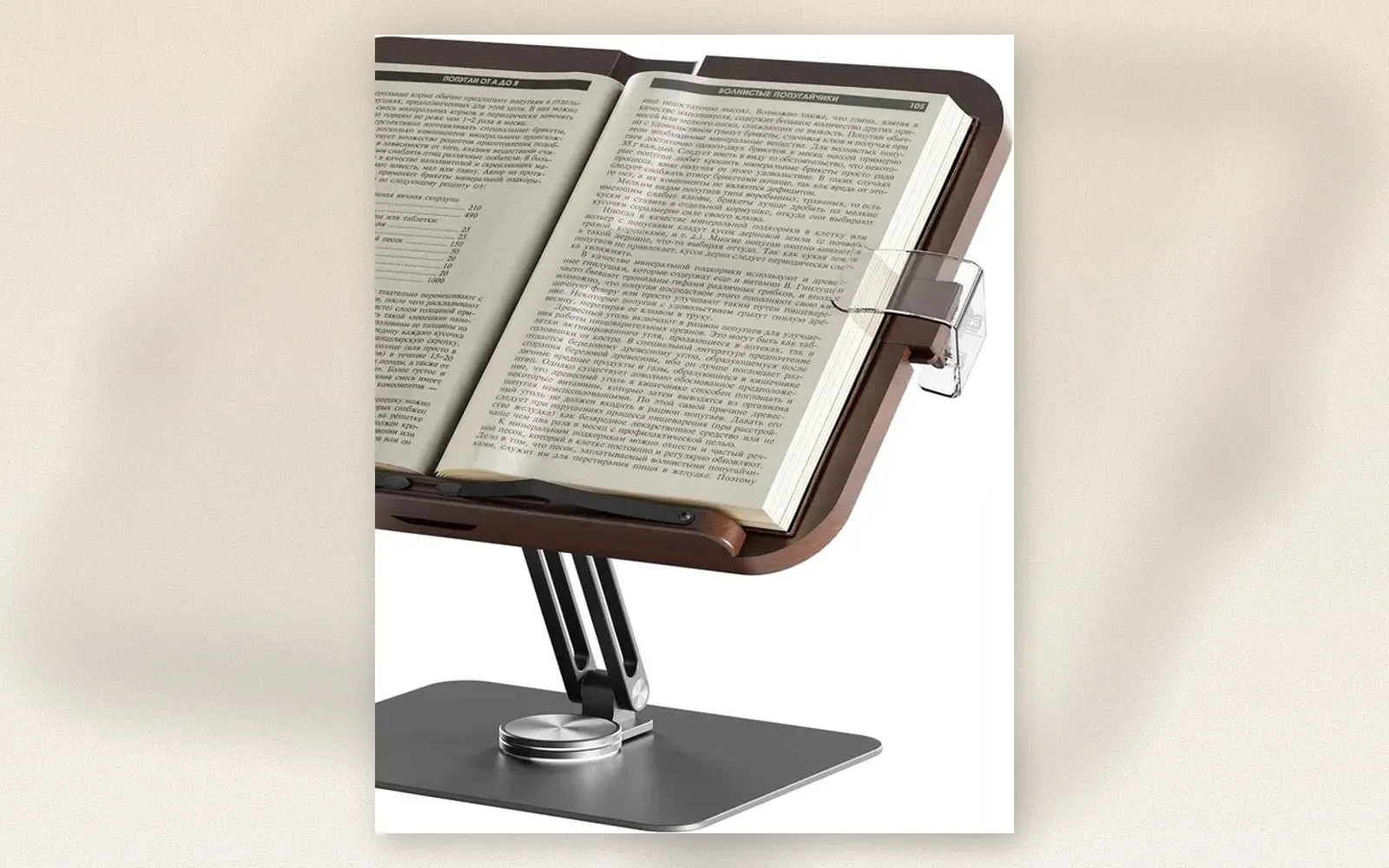
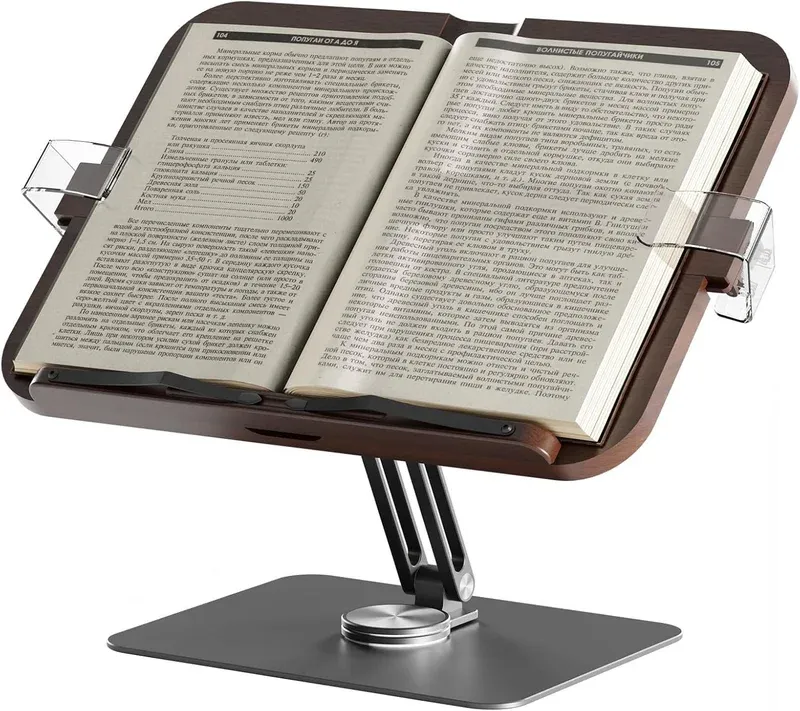
A 1,000-page cookbook does not stay open on its own. Neither does a textbook, a sheet of guitar tabs, or a tablet running a recipe video. The stand in the photo solves all four: a wooden tray with clear page clips, an adjustable aluminum arm, and a stable base, holding the book open at reading angle while both hands stay free to cook, type, or play.
🏷 Book stands Adjustable Book Stands → · Cookbook Holders →
The Anatomy: Tray, Arm, Clips
The tray is the part the book rests on: wide enough for A4 cookbooks, with a front lip that catches the spine. The clear plastic clips swing over the open pages and hold them flat against wind, page-turn memory, and thick spines that fight to close. The aluminum arm adjusts the tray’s angle and height, and the round base keeps the whole assembly stable when you lean on the book.
The clear clips are the detail that separates good stands from cheap ones: they hold the page without covering the text, and rounded edges do not crease paper.
The Neck Math: Why the Angle Matters
A flat book on a table bends the neck 45 degrees forward. Over a long recipe or study session, that is the posture equivalent of hanging a bowling ball on your neck, which is what the ergonomic research literally measures. A stand at 60 to 75 degrees cuts the flexion roughly in half.
For cooks, the stand also lifts the recipe above the flour zone and away from the splash radius. The aluminum arm wipes clean; the wooden tray wants a wipe-down after messy sessions.
What to Check Before Buying
Tray width: cookbooks and tablets need 30 cm or wider. Clip quality: clear plastic with rounded edges, not metal teeth. Arm stability: the stand in the photo uses a machined aluminum arm with a locking hinge, which holds angle under the weight of a thick book. Base size: a wide base plate matters more than weight, because the leverage of a heavy book on a tall arm tips narrow bases.
🏷 Cookbook stands Wooden Cookbook Stands →
Who needs one?
Cooks who follow recipes from physical books. The stand is the difference between reading the recipe and fighting the book mid-sauté.
Students and researchers who read textbooks at a desk for hours. The angle change alone reduces the end-of-day neck ache, and the clips hold pages during note-taking.
Musicians: sheet music on the same tray, angle adjusted for the instrument. And tablet users: the stand holds a recipe video or score app at the same reading angle.
Verdict
✅ Pros:
- Holds 1,000-page cookbooks open with clear page clips
- Adjustable angle cuts neck flexion roughly in half
- Aluminum arm and locking hinge hold angle under book weight
- Wide base stays stable when you lean on the book
- Works for books, tablets, sheet music, and recipe videos
- Clips hold pages without covering text
❌ Cons:
- Wooden tray needs wiping after kitchen sessions
- Tray width caps at A4; oversized art books overhang
- Clear clips can pop off thick spines on page turns
- Adjusting the arm takes two hands with a heavy book loaded
- Desk space: the base plus open book claims a workstation footprint
- Page-turn rhythm takes practice with clips engaged
🏷 Reading accessories Reading Lights →
🇩🇪 Dieser Artikel ist auch auf Englisch verfügbar:
Read in Deutsch →
FAQ
What is a book stand reading holder?
An angled stand that holds an open book, cookbook, or tablet at reading height: a base plate, an adjustable arm, a tilted tray with page clips, and a lip that keeps the book open. It frees both hands and raises the page to eye level.
Who needs a book stand?
Anyone who reads while their hands are busy: cooks following recipes, students working through textbooks, musicians with sheet music, and readers with neck pain who read long sessions at a table.
Do page clips damage books?
Quality clips are clear plastic with rounded edges and press on the page surface, not the spine. They hold pages flat without creasing. Avoid stands with metal clips that bite the paper.
Can a book stand hold a tablet?
Most can. The tray lip holds tablets up to 13 inches, and the page clips rest on the bezel. A stand that handles a 1,000-page cookbook handles any tablet with room to spare.
What angle should a reading stand be set to?
60 to 75 degrees for reading at a table, which matches the natural downward gaze angle and reduces neck flexion compared to a flat book. Flat reading bends the neck 45 degrees; a stand cuts that roughly in half.

Continue reading
Dark Home Office Setup: The Moody Workspace Done Right
Dark home office setup guide: live-edge wood desk on black drawer units, dual monitors, ergonomic mesh chair, studio speakers, and warm lighting against charcoal walls. How to build the moody setup without a cave.

Floral Print Saree in Beige and Black: Lightweight Daily Wear With Contrast Border
Floral print saree review: a beige chiffon saree with black-and-red contrast border, paired with a matching black blouse. Lightweight, easy to drape, and works for both casual and semi-formal occasions.
Wall-Mount Belt Hanger Organizer: 5-Slot Closet Upgrade That Actually Works
Wall-mount belt hanger organizer review: a compact grey bracket with 5 slots that mounts to any wall or closet door. Belts stay visible, accessible, and wrinkle-free.