Photographing Mount Fuji From the Lake: Best Spots, Timing, and Camera Settings
How to photograph Mount Fuji from the lakeshore: best locations around Lake Kawaguchi, optimal shooting times, camera settings for landscape shots, and how to frame the classic boats-and-Fuji composition.
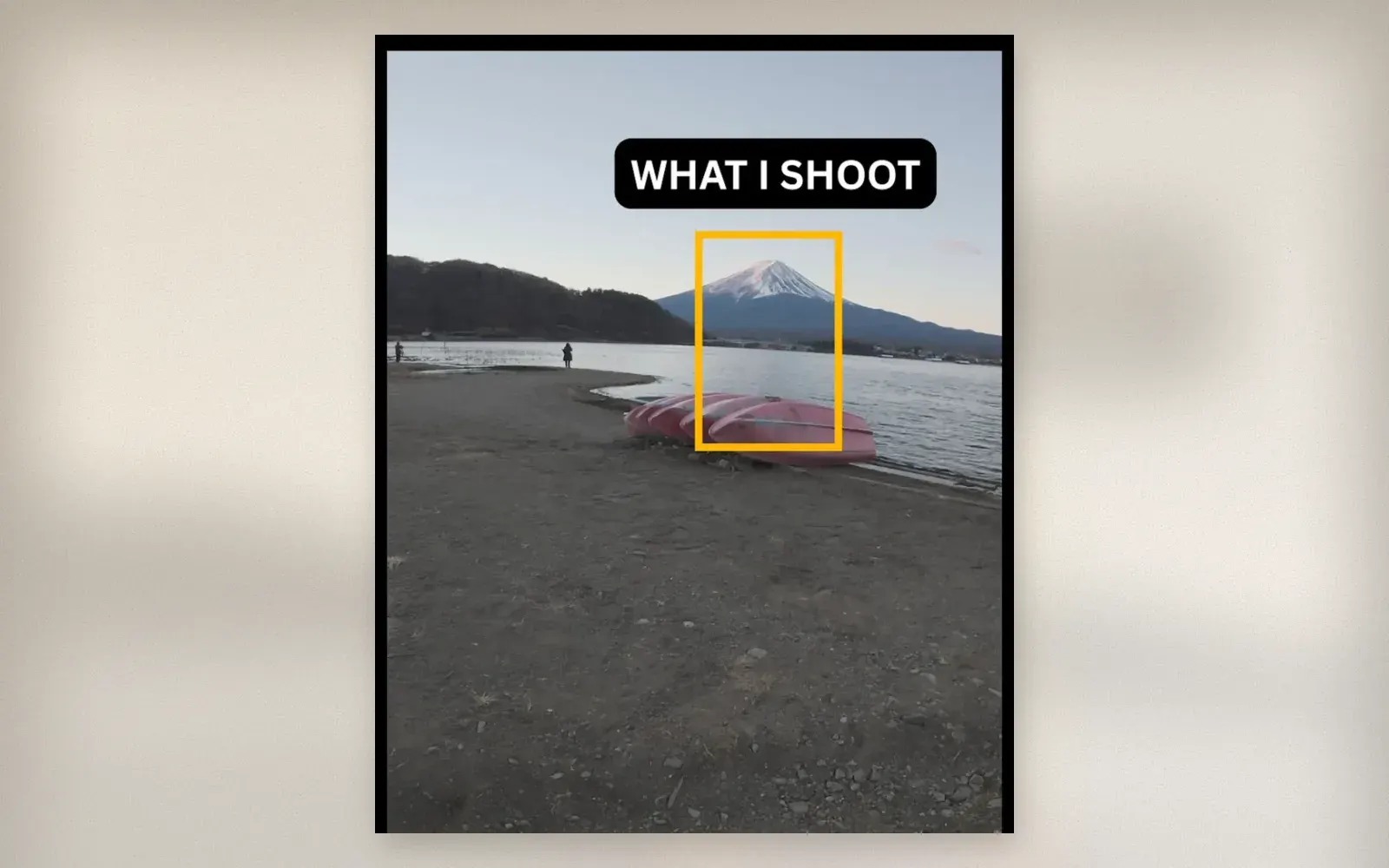
Mount Fuji is the most photographed mountain in Japan, and for good reason. The symmetrical cone, snow-capped in winter, reflected in still lake water — it is a composition that never gets old. But most tourist photos miss the framing that makes the shot work. The boats on the shore, the leading line of the beach, the timing of the light — these details separate a snapshot from a photograph worth printing.
🏷 Camera gear for shooting Mount Fuji Buy on Amazon → · Check on Etsy →
Where to shoot Mount Fuji from the lake
Lake Kawaguchi is the most accessible of the Fuji Five Lakes and the one that appears in most iconic photographs. The northern shore, near the Kawaguchiko Natural Living Center, gives you a direct view of Fuji across the water with minimal obstructions. The eastern shore, around Oishi Park, offers wildflower beds in spring and a pier that works as a foreground element.
Smaller lakes like Lake Shoji and Lake Motosu offer quieter spots with fewer tourists. Lake Shoji has the famous “floating island” composition — a small island in the middle ground with Fuji behind it. Lake Motosu is where the ¥1,000 bill photograph was taken, though the exact spot requires a short hike.
When to shoot
Winter (December through February) gives the clearest skies. The air is dry, haze is minimal, and the snow cap on Fuji is at its thickest. Early mornings before 7:00 AM offer the calmest water for reflections — wind typically picks up by mid-morning and ripples the surface.
Autumn (mid-October through November) adds red and gold foliage around the lakeshore, which gives the composition warm foreground colors. Cherry blossom season (late March through April) brings pink trees to the shoreline, but the weather is less predictable and clouds often obscure the summit.
Golden hour — the hour before sunset — casts warm light on Fuji’s western face. The mountain turns from white to pink to orange as the sun drops. This is when the most dramatic photographs happen, but you need to be in position early because the light changes fast.
Camera settings for Mount Fuji
The classic landscape settings work here: f/8 to f/11 for front-to-back sharpness, ISO 100 for clean images, and a tripod for anything under 1/60s. If you are shooting the reflection, a polarizing filter removes surface glare and deepens the blue in the water and sky.
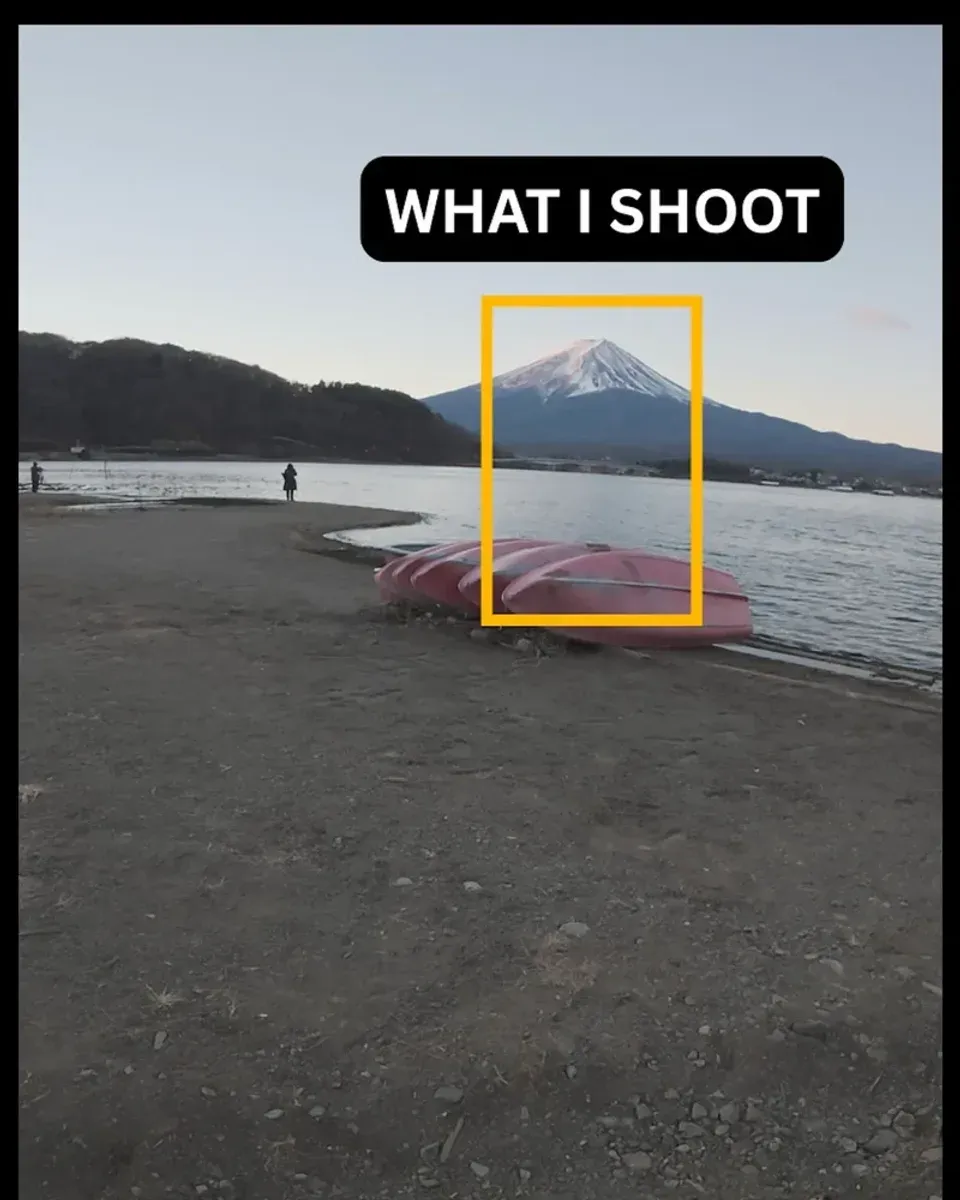
For the boats-and-Fuji composition, position yourself low on the shore so the boats fill the lower third and Fuji sits in the upper third. The leading line of the beach draws the eye from the foreground to the mountain. Shoot at f/8 to keep both the boats and the distant summit sharp.
If you are shooting handheld, bump ISO to 400 and use a wider aperture (f/4 to f/5.6) to keep the shutter speed above 1/125s. The tradeoff is slightly less depth of field, but you avoid camera shake blur.
The classic composition
The photograph that everyone wants — boats on the shore, calm water, Mount Fuji centered in the frame — requires three things: early morning timing, a low camera position, and patience. The boats are usually pulled up on the beach overnight and pushed into the water by 9:00 AM. Arrive at dawn, set up your tripod at water level, and wait for the light to hit the summit.
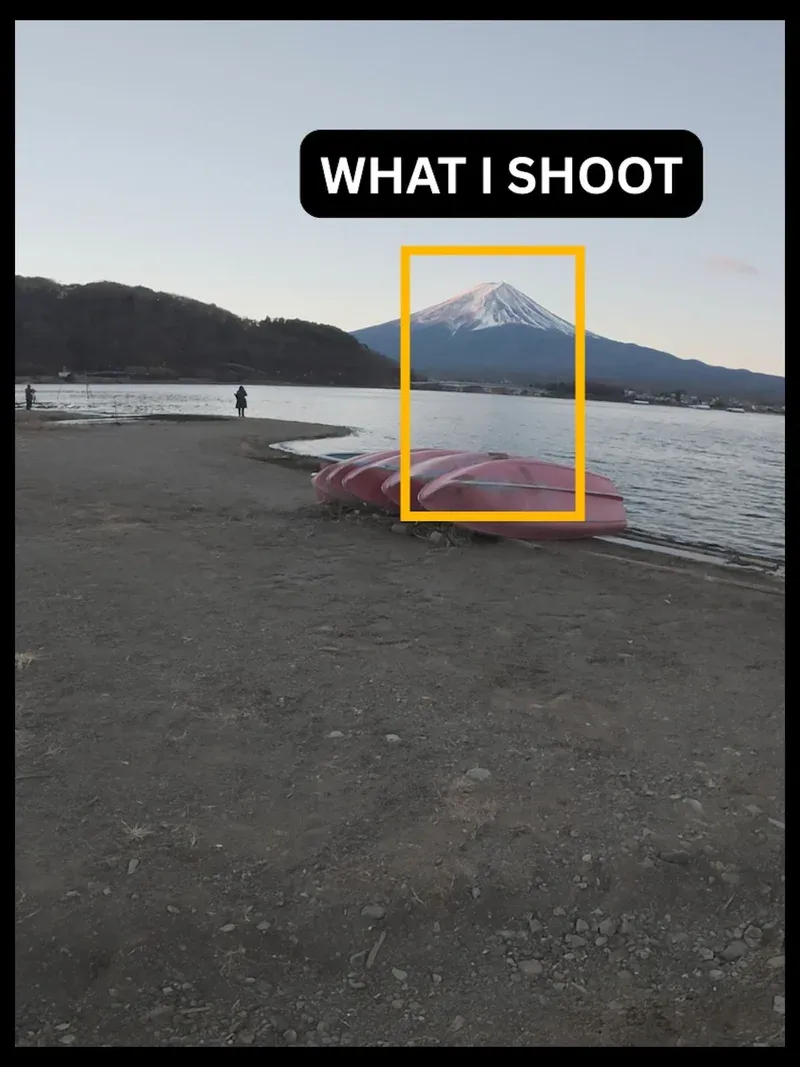
The yellow frame in the reference image highlights the key zone: Fuji’s peak sits in the upper center, the boats anchor the lower right, and the shoreline curves from left to center. This triangular composition — mountain, boats, shoreline — creates visual balance that keeps the eye moving through the frame.
Who should visit Lake Kawaguchi for photography?
Photographers who want the iconic Japan shot without a multi-day hiking expedition. The lakeshore is accessible by car or bus, flat enough for tripods, and offers multiple compositions within walking distance. For families and casual travelers, the Kawaguchiko area has rental bikes, boat tours, and cafes with Fuji views — you can photograph and relax in the same trip.
Solo photographers who want quiet should visit on weekday mornings in winter. The lakeshore is empty at dawn, and the clear winter air gives the sharpest images. Summer weekends are crowded and hazy — not ideal for serious photography.
Verdict
✅ Pros:
- Iconic composition with Mount Fuji reflected in calm lake water
- Multiple viewpoints within walking distance on the northern shore
- Winter mornings offer the clearest skies and sharpest images
- Accessible by public transport from Tokyo (2 hours)
- Year-round shooting with seasonal variations (snow, blossoms, autumn colors)
❌ Cons:
- Wind picks up by mid-morning, ruining reflections
- Summer haze and clouds obscure the summit frequently
- Tourist crowds on weekends and holidays
- Early morning timing required for best conditions
- Limited shelter from rain on the open lakeshore
🏷 Find photography gear for Mount Fuji Best prices on Amazon →
🇩🇪 This article is also available in Deutsch:
Read in Deutsch →
FAQ
Where is the best spot to photograph Mount Fuji from a lake?
Lake Kawaguchi (Kawaguchiko) offers the most accessible and iconic viewpoints. The northern shore near the Kawaguchiko Natural Living Center and the eastern shore near Oishi Park provide unobstructed views of Fuji reflected in the water.
What time of day is best for photographing Mount Fuji?
Early morning (5:30-7:00 AM) for calm water and soft light, or late afternoon (4:00-5:30 PM) for golden hour warmth. Winter months (December-February) offer the clearest skies with the least haze.
What camera settings work best for Mount Fuji landscape shots?
Use f/8 to f/11 for maximum sharpness across the frame, ISO 100 for clean images, and a shutter speed that balances exposure. A tripod is essential for early morning and sunset shots.
Can you see Mount Fuji reflected in the lake?
Yes, on calm mornings the reflection is clearly visible. Wind typically picks up after 9:00 AM, so arrive early. The reflection is strongest in autumn and winter when the air is dry.
How do you get to Lake Kawaguchi from Tokyo?
Take the JR Chuo Line from Shinjuku to Otsuki, then the Fujikyu Railway to Kawaguchiko Station. The trip takes about 2 hours. Buses run from the station to the lakeshore viewpoints.

Continue reading

Amazon Travel Must-Haves — 20 Products That Make Every Trip Easier
Amazon travel must-haves: 20 essential products from packing cubes to anti-theft backpacks, leak-proof bottles to electronics organizers. Everything you need for smoother travel.

Beach Tent Cabana — The Perfect Summer Setup for Sand, Sun, and Shade
Beach tent cabana review: a large open-front shelter with extended floor, sand stakes, and UPF 50+ protection. Turns any beach spot into a private lounge.

Bring This, Not That — The International Packing Checklist That Actually Works
Bring This Not That packing checklist: every category for international travel — documents, clothing, hygiene, technology, gear. What to pack and what to leave behind.