Pink Desk Setup: The Gear Behind a Pink Microphone, MIDI Keyboard and a Calm Streaming Corner
A pink condenser mic with a boom arm, a 25 key MIDI keyboard and a few cheap extras make a streaming desk that looks styled and still records clean audio.
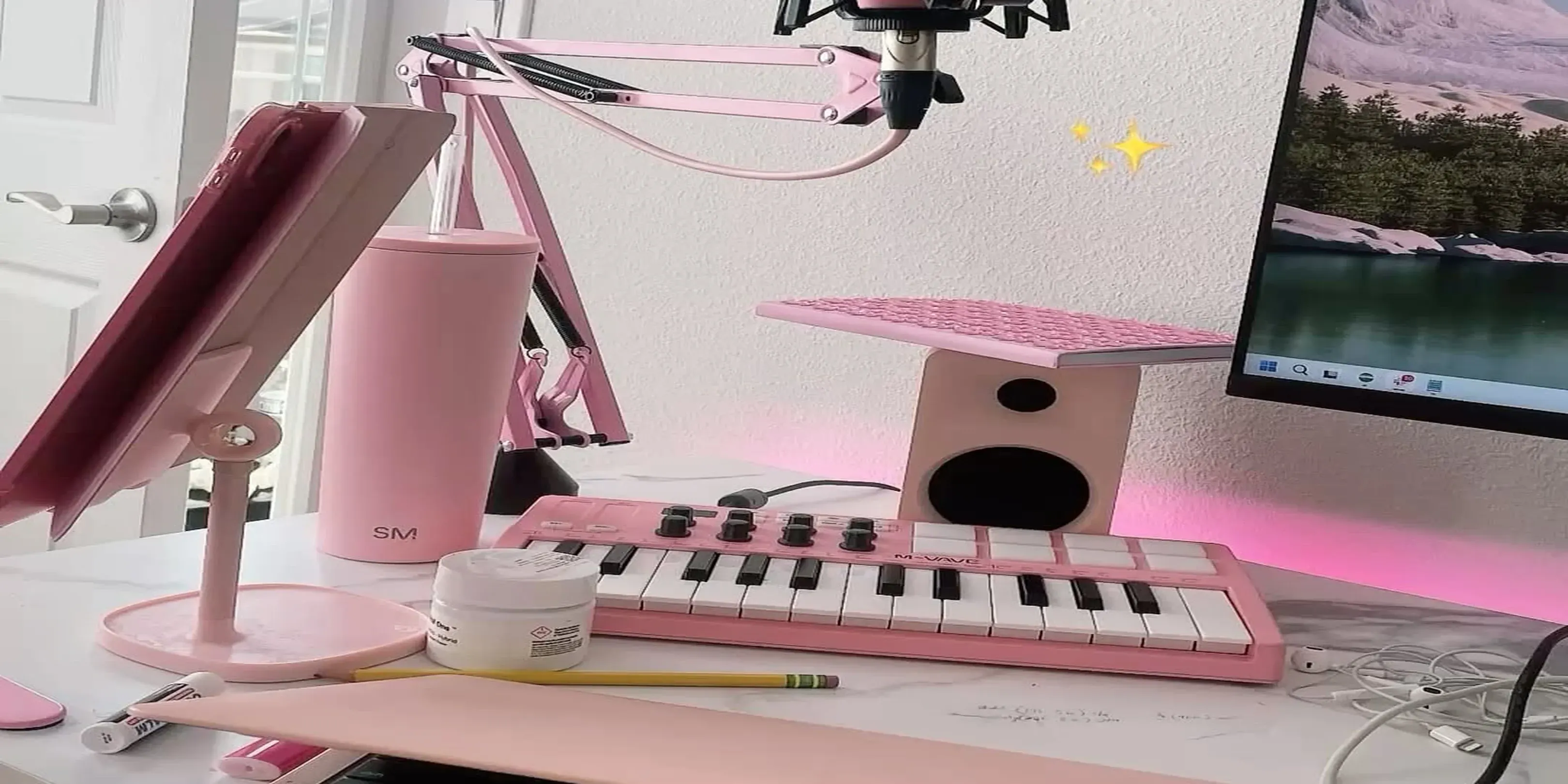
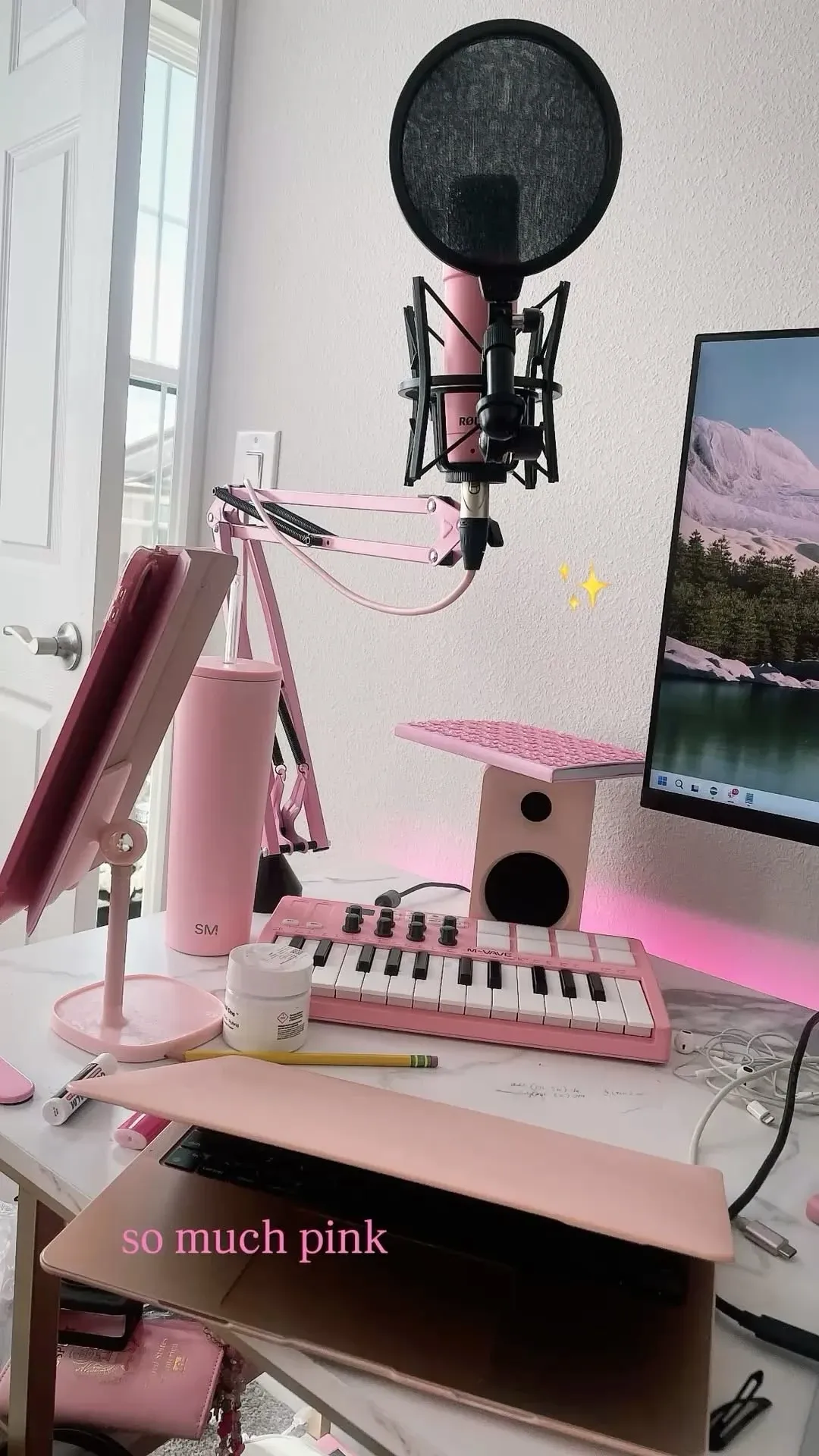
The desk in the photo does one thing well: it looks like a real studio corner and it works like one. A condenser microphone hangs in a black shock mount on a pink boom arm, a circular pop filter sits between the mic and the window, and a small pink MIDI keyboard waits below for beat sketches between recordings. Everything else serves the vibe: pink tumbler, pink speaker, and an LED strip throwing that soft rose glow across the wall.
What does a pink microphone actually change?
The paint changes nothing about the signal. What matters is the capsule size, the pickup pattern and how you position it. The mic in this style is a large diaphragm condenser with a cardioid pickup: it hears what is in front, and it softens what is behind. Speak from 15 to 25 centimeters away with the pop filter in between and the recording sounds like a podcast studio, even if the room is an ordinary bedroom.
FIFINE sells this exact class of mic in pink with both USB and XLR outputs (the Rose finish). USB works the day it arrives: plug it in, pick it as the input in OBS or your DAW, done. The XLR side matters later, when you want a real interface or a mixer in the chain. One purchase covers both stages, which is why this line keeps showing up in streaming-setup lists.
Why a boom arm and a shock mount are not optional extras
A desk mic on a small tripod picks up every bump: you type, the track rumbles. The boom arm in the photo clamps to the desk edge and holds the mic in the air, so keyboard noise falls away before it reaches the capsule. It also gets the mic off your screen: pull it close for a voice-over, swing it aside when you game.
The black shock mount is the second half. Elastic bands suspend the mic body, so knocks on the desk arrive at the capsule as a faint shiver instead of a thud. Together, the arm and mount are the difference between “recorded at a desk” and “recorded in a treated room”. A decent spring arm costs about as much as one delivery pizza, and it survives years.
Is the 25-key MIDI keyboard worth desk space?
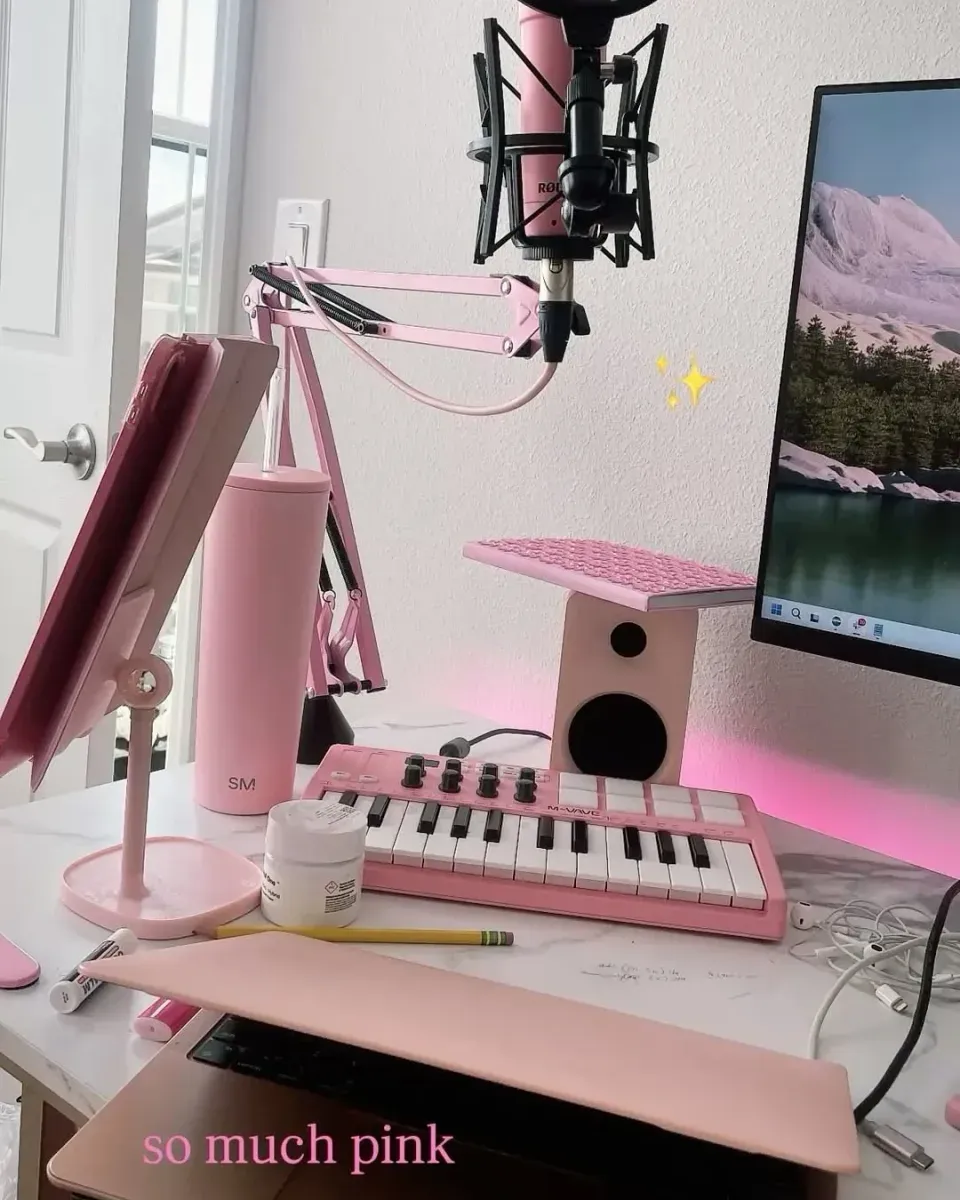
For the work most creators do at a desk, yes. A 25 key controller like the pink M-VAVE SMK-25 in the photo gives you two octaves, eight drum pads and a couple of knobs, and it runs over USB or Bluetooth with a built-in battery. Melodies, chords, and beat ideas happen in seconds, and when a heavier keyboard part shows up, DAW tools handle the rest.
Know the limit: 25 keys are for sketching, not for piano practice. If you play with both hands and read sheet music, a 49 or 61 key board is the honest buy. For producers who program drums and record vocal takes between beats, the small pink board earns its spot without apology.
How does the rest of the pink setup come together for little money?
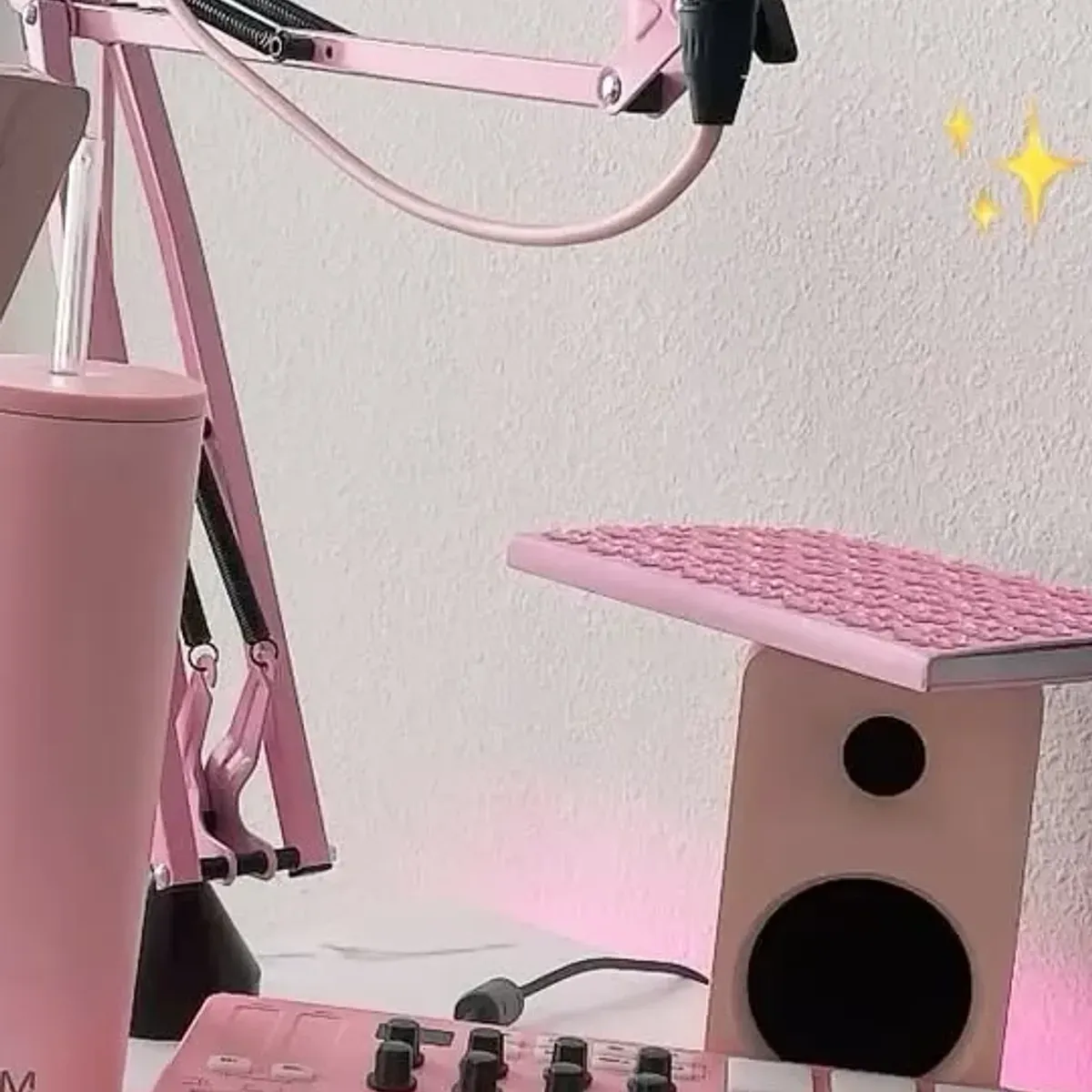
The glow under the desk is a single-color LED strip taped along the back edge. On camera it reads as expensive ambient lighting; in person it is a 15 euro strip with a USB plug. The pink tumbler, the small monitor speaker and the pink tablet stand on the left do no technical work, and that is the point: the desk stays calm, one color, nothing fighting for attention.
The order that keeps budgets sane: microphone and boom arm first, because they carry every video you publish. MIDI keyboard second, as soon as you start making any music bits. LED strip and decor last, on whatever is left. Most pink desks you see in setup tours follow that order, even when the final photo hides it.
One honest gap: an untracked room still sounds like an untracked room. The pop filter fixes plosives, the arm fixes desk noise, but echo from bare walls sits in every recording. A folded duvet behind the mic or a cheap panel kit beats any microphone upgrade at this stage.
Verdict
This setup proves a point: color does not fight function. A pink condenser mic on a proper arm records like any studio mic, a 25 key MIDI board fits between the keyboard and the coffee cup, and the LED strip buys the mood for the price of lunch. Build it in the order above and the desk looks styled in the first photo and sounds clean in every recording after.
✅ Pros
- Full studio chain for under 150 euros: mic, arm, pop filter, MIDI keyboard
- Pink gear is the same hardware as black versions, just in rose
- Boom arm with shock mount removes desk noise from recordings
- 25 key MIDI keyboard runs USB and Bluetooth with a built-in battery
- LED strip glow shows up on camera and costs under 15 euros
❌ Cons
- Condenser mics pick up room echo, bare walls still need something soft
- 25 keys are too few for two-handed piano work
- Pink finishes skip between brands and go out of stock faster than black
- Bluetooth on budget MIDI boards adds latency for live playing, USB is steadier
FAQ
What do you need for a pink desk setup that records audio?
Three parts: a condenser microphone with a shock mount and pop filter, an adjustable boom arm clamped to the desk, and a USB interface or a USB mic. A 25 key MIDI keyboard and an LED strip finish the look; neither affects sound quality.
Is a pink microphone worse than a black one?
No. Color is a shell choice on most models. FIFINE, TONOR and similar brands sell the same internals in rose or pink finishes, and reviews of the pink listings match the black ones.
Why does the mic need a shock mount and a pop filter?
The shock mount hangs the mic on elastic bands so desk knocks and keyboard clicks stay out of the track. The pop filter stops p and b sounds from hitting the capsule as blasts of air.
Is a 25 key MIDI keyboard enough for music production?
For beats, loops and one-handed chords, yes. 25 keys cover two octaves with an octave shift button. For two-handed piano practice you want at least 49 keys.
Where does the pink LED backlight come from?
A cheap USB LED strip taped to the back edge of the desk. Strips in single pink color cost under 15 euros and sit behind the monitor or speaker, so the glow reads on camera without lighting the desk.

Continue reading
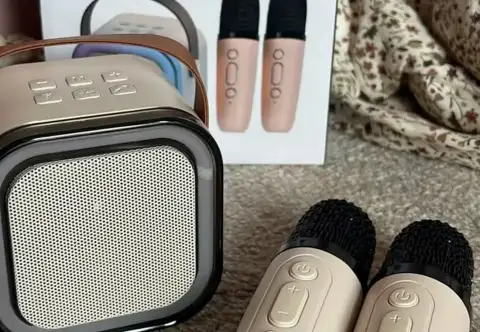
K12 Karaoke Machine Review 2026: 20W Bluetooth Party Box With 2 Wireless Mics
We tested the K12 karaoke sound system with two wireless microphones: sound, battery life, setup, and whether the 46 euro combo on Amazon.de is worth it.

iPod Classic in 2026: Honest Review of a Refurbished 160GB
iPod Classic 2026 review: refurbished 160GB from Etsy, clear case, kawaii stickers. What you get for $330 and whether it is worth it in the streaming era.

Apple AirPods Max Review: Worth the Premium in Starlight?
Apple AirPods Max review: USB-C, Spatial Audio, and Pro-level ANC in Starlight. We break down sound, comfort, battery, and whether the premium price pays off.