K12 Karaoke Machine Review 2026: 20W Bluetooth Party Box With 2 Wireless Mics
We tested the K12 karaoke sound system with two wireless microphones: sound, battery life, setup, and whether the 46 euro combo on Amazon.de is worth it.
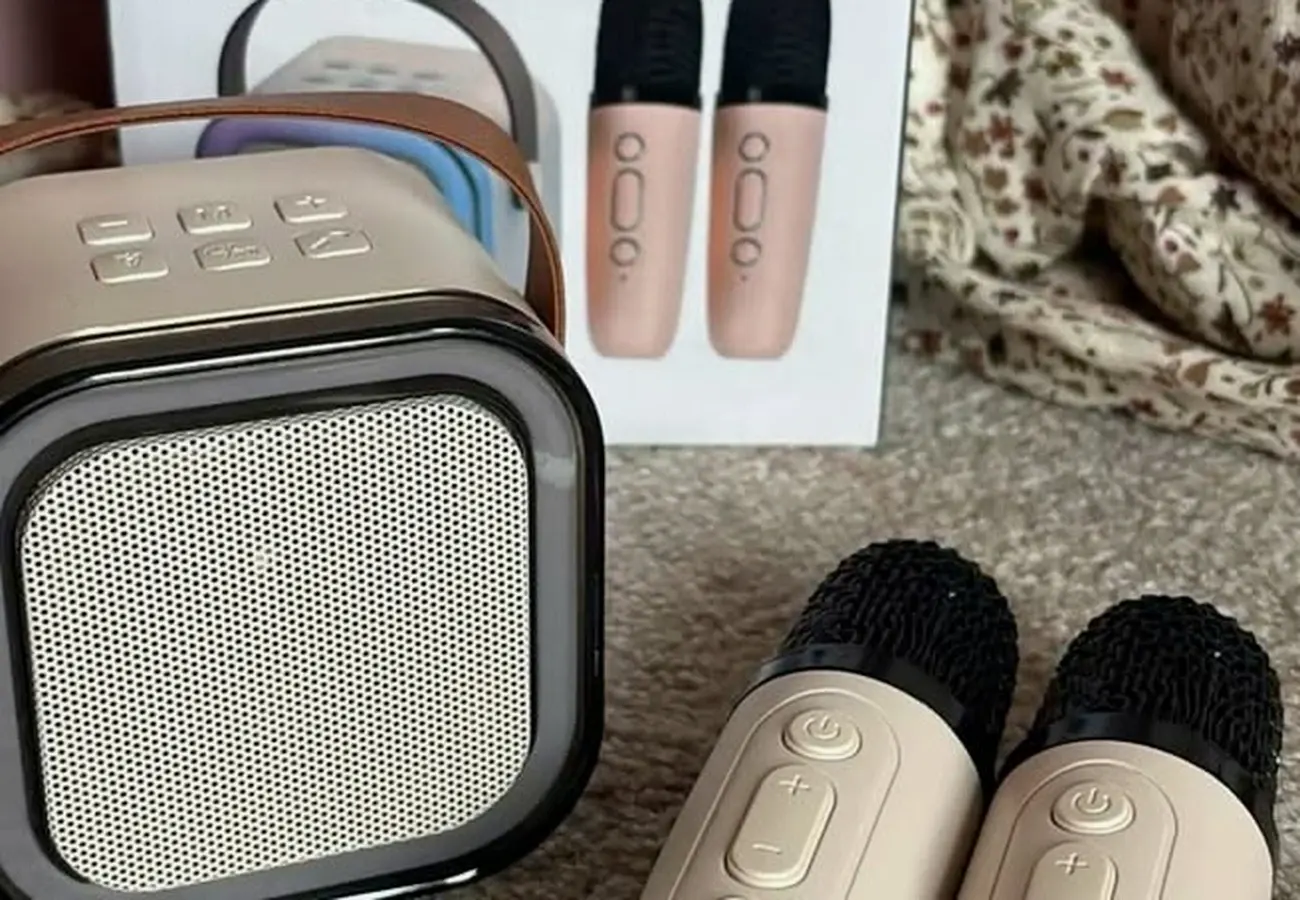
A beige cube with a leather carry handle, a black mesh front, and two fat beige microphones: the K12 “Colorful karaoke sound system” leans on looks before sound, and that is exactly why it sold so well. We tested the complete set over two weeks of living-room and garden use. Verdict up front: it is the rare 46 euro gadget that does what its box promises, as long as you treat it as a fun party box and not a PA system.
What is the K12 karaoke machine, exactly?
The K12 is a compact portable karaoke set: a roughly 15 centimeter cube speaker plus two handheld wireless microphones that each run on their own battery. Everything is Bluetooth. The speaker streams your music from a phone, the mics pair to the speaker automatically when you switch them on, and both microphones get their own volume knobs on the side.
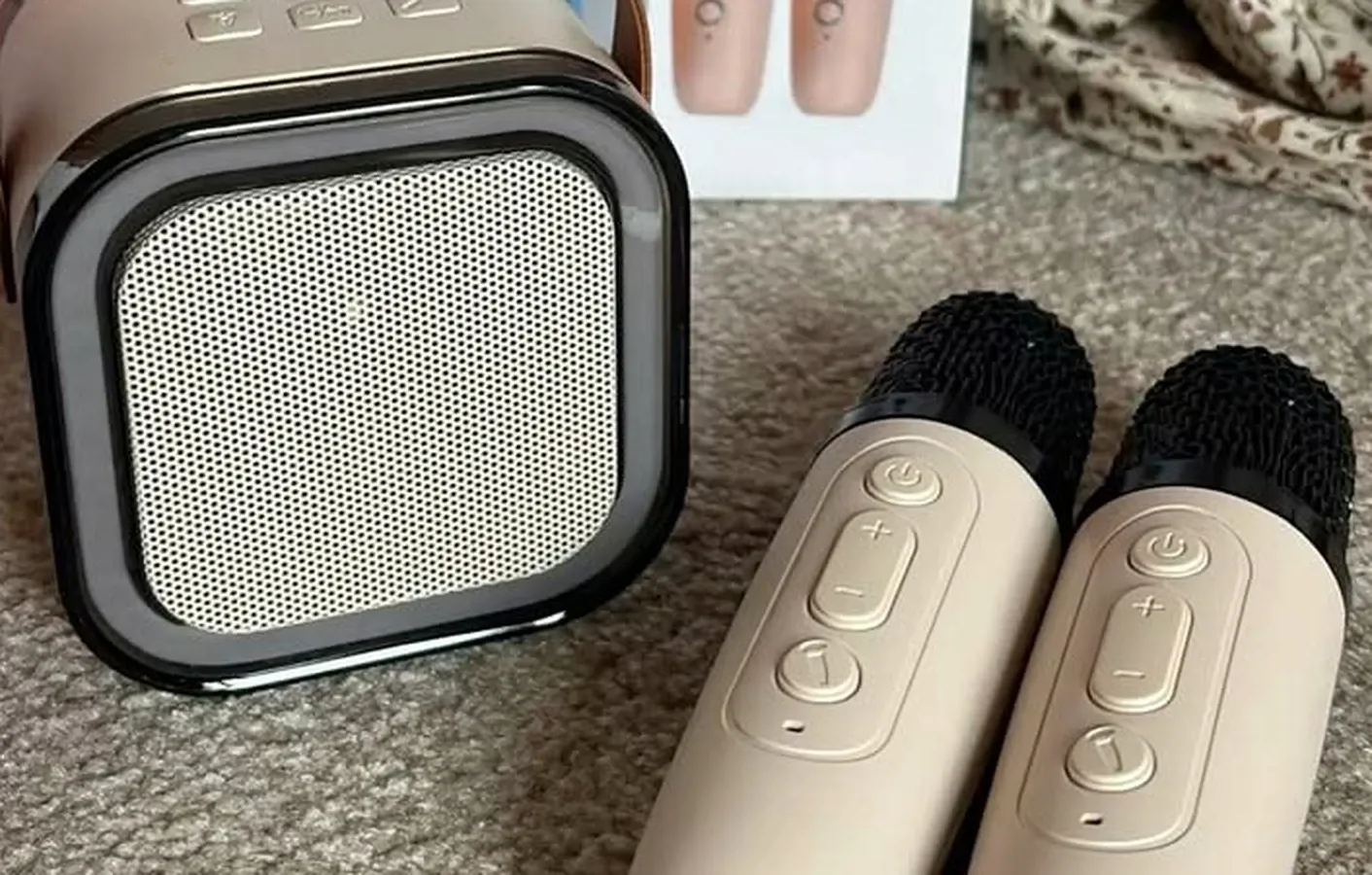
The design deserves the credit, though. Instead of gadget black, the unit we tested came in cream with a fake leather handle, and the control buttons sit on a fabric-textured top panel. It looks like a piece of designer decor, which is why these systems show up in so many living rooms.
How does the K12 sound with music and vocals?
Decent for its class, with two honest caveats.
For speech and kids’ singing, the 20W speaker is loud enough for a 30 square meter living room at moderate volume. The frequency response clearly favors midrange: voices come through present and intelligible, while bass is limited by physics. The cube is, after all, a cube small enough to hold in one hand.
Music playback without vocals sounds noticeably thinner than the design suggests. The 10 W nominal each of speaker output do not fill a garden, and at max volume the sound gets harsh. Keep it at about 70 percent and it stays pleasant.
Setup: how fast is it running?
About three minutes total.
- Charge the speaker and two mics fully first (USB Type-C on all three, cable included).
- Switch on the speaker; your phone finds it as a Bluetooth speaker.
- Slide the power button on each mic; they pair with the speaker within two seconds.
- Open any music app or YouTube, play a song, and turn up the mic knob.
A remote control is included for volume, echo, and track skipping, but the on-unit buttons work fine without it. No app is needed.
Battery life and portability
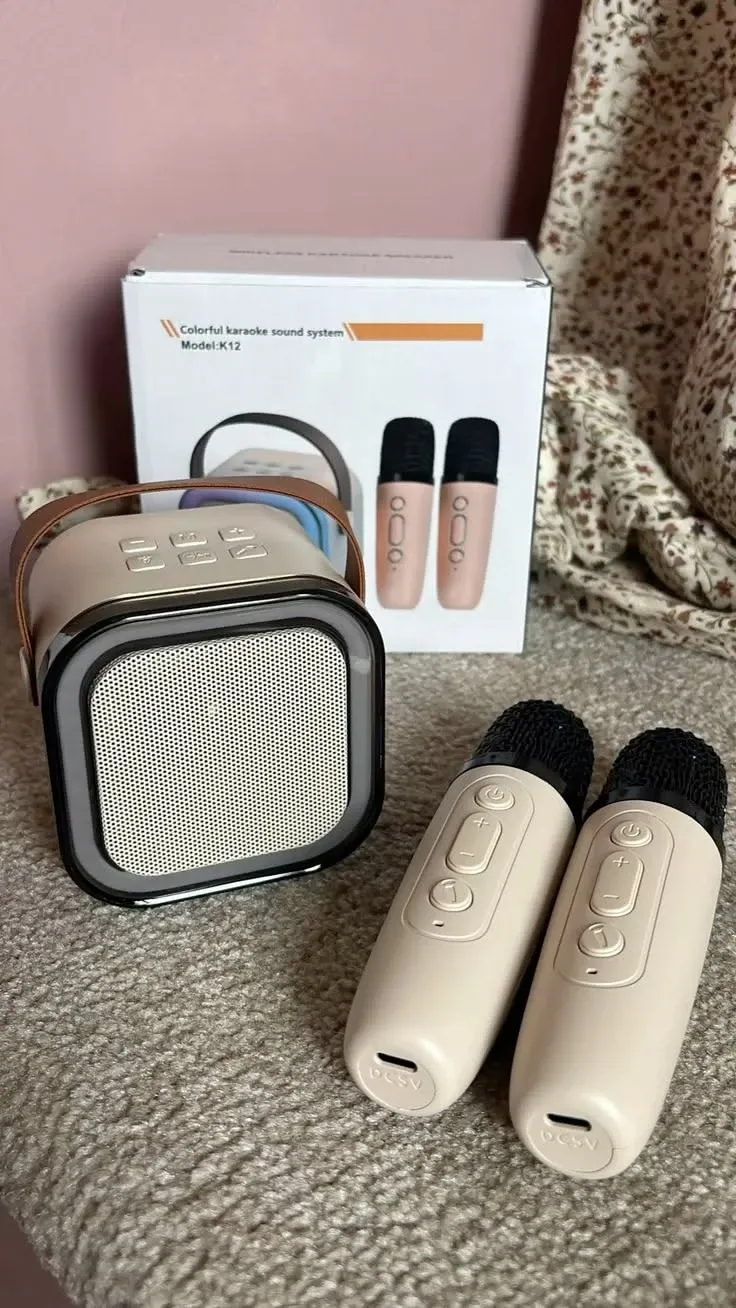
Each microphone has a 2200 mAh battery, the speaker an identical 2200 mAh. In practice that means roughly six hours of speaker playback and slightly less per microphone during active singing. For a kids’ birthday, a single afternoon in the garden, or spontaneous living-room karaoke, you rarely need the power cable.
The whole set fits in a small backpack: speaker, two mics, charging cable, remote, and a shoulder strap for the speaker. Total weight about 2 kilograms. That alone makes it worth packing for camping trips, visiting the grandparents, or family gatherings on the terrace.
What the K12 does well
The fun factor is the real argument. Kids grab the mics within minutes, start singing, and turn any evening into something with a memory attached. The echo effect helps timid singers, and the party ring of lights on the mesh front gets the room into karaoke mode even with the sound turned down low.
Ease of use is right up there, too. No pairing menus, no lags, no buttons you need a manual for. Switch on and sing.
Value for money is where the K12 beats most alternatives. A branded set from JBL or ION costs 150 to 300 euros. This set delivers about 70 percent of that joy for under a third of the price, provided you accept the compromises in sound and finish.
Where the K12 falls short
Durability is the biggest question mark. The plastic housing feels solid but light, the strap mounts are small, and everything about the set says “six weekends of fun” rather than “five years of service”. Case in point: the mic grilles are glued on, not screwed.
Sound at higher volumes is where physics wins. For a garden party where you need to project over 10 meters, you will want a proper PA system with 50W or more. The K12 is a living-room and picnic machine.
The Verdict
A rare find in the budget segment: the K12 karaoke machine does what its box promises, looks good while doing it, and costs under 50 euros.
✅ Pros
- Complete set: speaker + 2 wireless mics for around 46 euros
- Bluetooth 5.3, instant pairing with no app
- 6 hour battery life, USB Type-C, 2 kilograms total
- Looks great: cream cube, leather handle, low-bling LED ring
❌ Cons
- Sound limits its audience to small rooms and picnics
- Mockery of a bass function: there are highs and mids, no depth
- No TRS or AUX output for bigger setups
If you want a casual karaoke set for the living room, kids’ birthdays, or the picnic blanket, the K12 complete set is a very safe buy at this price. If you are planning “garden party for 40 people”, put your money toward a real PA box instead.
FAQ
How much does the K12 karaoke machine cost?
The comparable Dislocati complete set with a 20W speaker and two microphones sells for around 46 euros on Amazon.de, and generic K12 sets usually sit between 35 and 55 euros depending on the seller and bundle.
How long does the K12 karaoke machine battery last?
Expect about six to seven hours of playback at moderate volume from the 2200 mAh battery, enough for an afternoon kids party on one charge. Charging takes about three hours over USB Type-C.
Can you pair the K12 with a phone and sing at the same time?
Yes. The speaker streams music from your phone over Bluetooth 5.3 while the two microphones connect to the speaker, and vocals play back through the built-in speakers without extra apps.

Continue reading
Pink Desk Setup: The Gear Behind a Pink Microphone, MIDI Keyboard and a Calm Streaming Corner
A pink condenser mic with a boom arm, a 25 key MIDI keyboard and a few cheap extras make a streaming desk that looks styled and still records clean audio.
iPod Classic in 2026: Honest Review of a Refurbished 160GB
iPod Classic 2026 review: refurbished 160GB from Etsy, clear case, kawaii stickers. What you get for $330 and whether it is worth it in the streaming era.

Apple AirPods Max Review: Worth the Premium in Starlight?
Apple AirPods Max review: USB-C, Spatial Audio, and Pro-level ANC in Starlight. We break down sound, comfort, battery, and whether the premium price pays off.