Portable Smart TV on Wheels: The 32 Inch Rolling Touchscreen, Reviewed
An Android tablet that grew into a 32 inch TV on a rolling stand: battery power, touchscreen, Google apps and a pedestal base you steer with one hand. What the 750 to 1300 euro category really delivers.
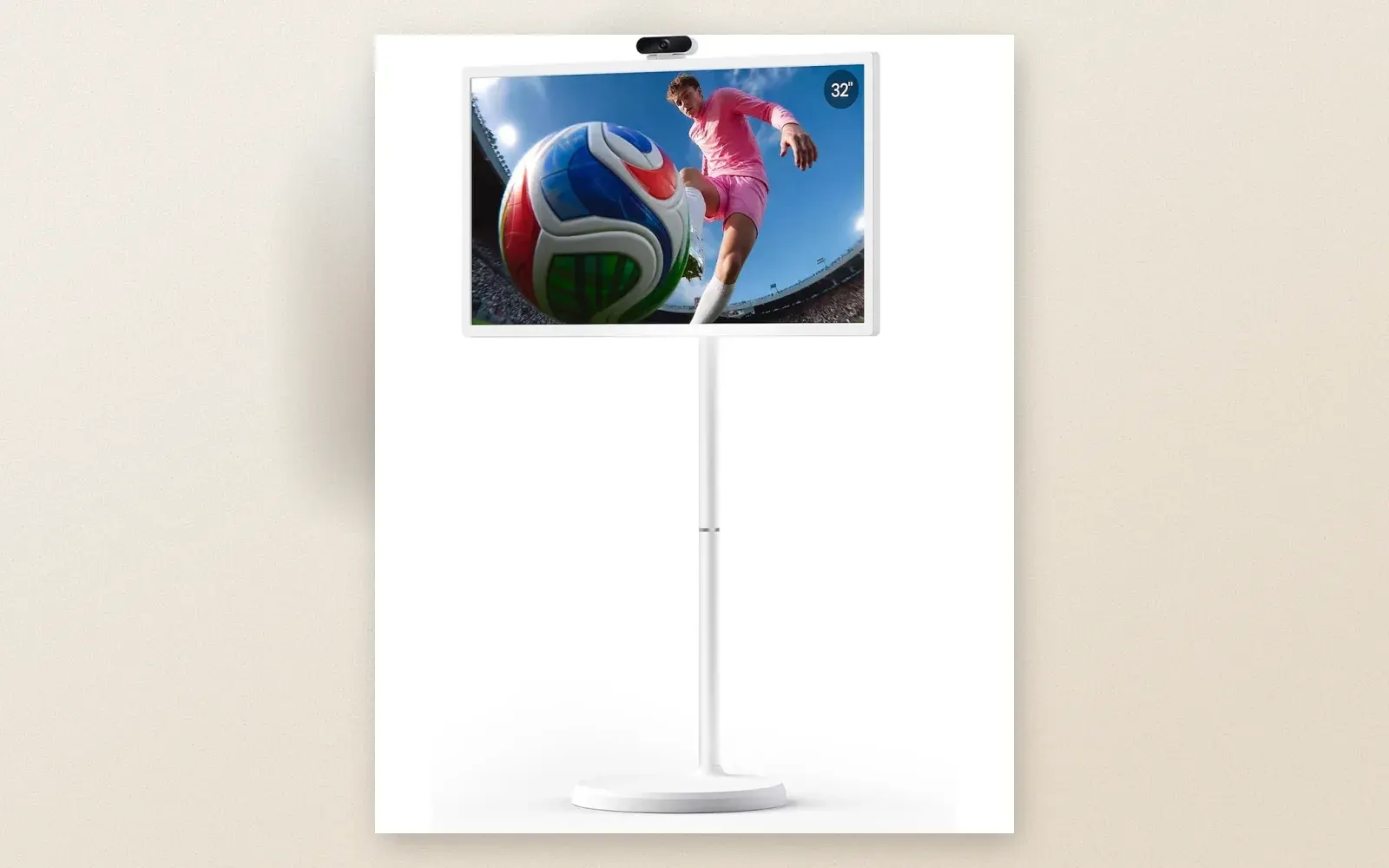
The screen in the photo is the reason this category exists: a complete 32 inch Android TV riding on a round pedestal base, wheeled from the bedroom to the kitchen and back again without a single cable. No wall mount, no console table, no fish-tailing power strip; the battery lives in the base and the whole unit steers with one hand. A version of this setup has been circulating on Pinterest with zero product links, which is usually the sign of a category that grew faster than the shops could index it. It has not: Amazon.de carries at least a dozen of them, and three of the finished ones are worth comparing.
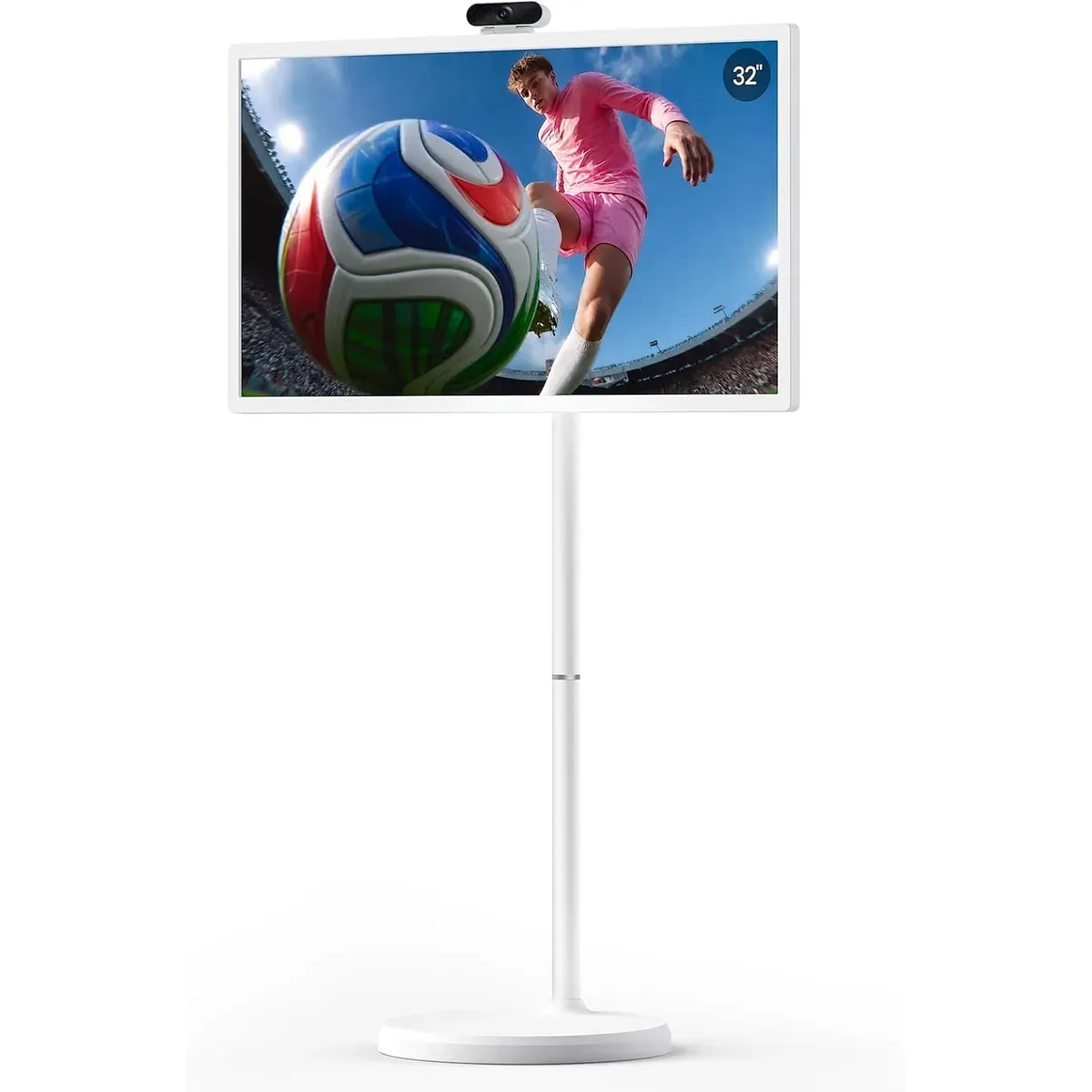
What you actually get in the 750 to 1300 euro class
The finished versions all share the same skeleton: a 32 inch IPS panel at 1080p, a Linux-free Android 15 build with Google Play, a camera on top for video calls, Wi-Fi and Bluetooth, and a stand that adjusts in height and rotates the screen 360 degrees on its column. The OFD build weighs 20.5 kg with the base, measures 42 by 73 cm footprint at 115 cm tall, and carries a 10 W stereo speaker pair. The battery is the honest differentiator: 5 hours of runtime per charge on the closer-to-750-euro builds, up to 8 hours claimed on the pricier 770-euro variant.
The Cozyla sits at the top of the range with an EDLA certification, which matters more than it sounds: EDLA is the Google license that guarantees Play Protect certification, so Netflix and banking apps install without the sideloading dance that kills uncertified Android boxes. It has 8 GB of RAM and 128 GB of storage against the 6 and 128 GB of the cheaper builds, and it is the only one of the three with a 41 cm base width, which is what makes it fit through a standard 70 cm doorframe without repositioning the screen.
Battery life is a floor, not a promise
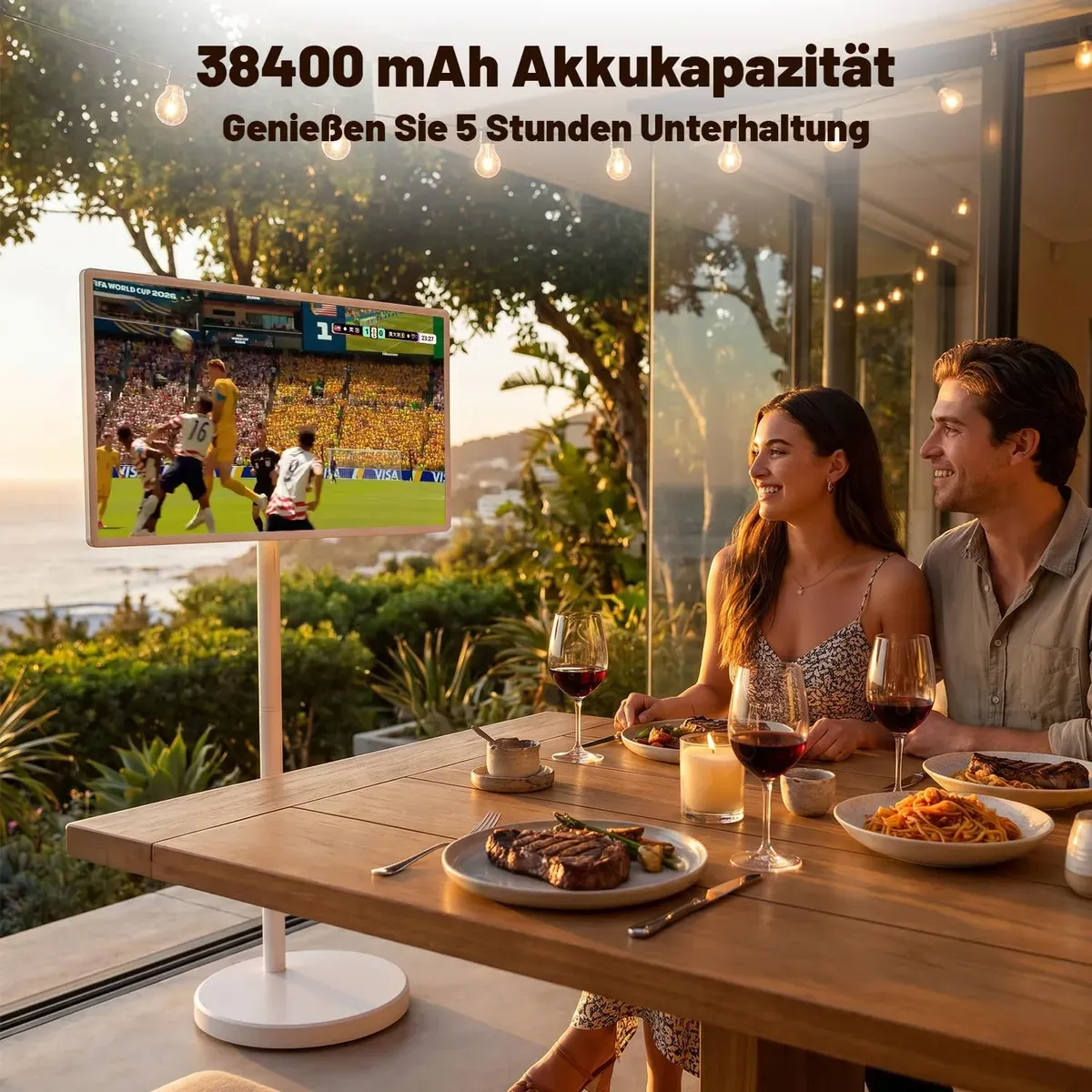
Every listing in this class quotes a battery figure with a range attached: 5 hours on the OFD, 6 to 8 claimed on its touchscreen headline. The HDMI input, the camera and the speaker brightness all pull from the same cells, so the honest expectation is a Saturday of intermittent use, not a week. What saves the category is the charging model: the base takes a standard EU-plug adapter, so a phone-style overnight charge and a rolling day is the rhythm that reviewers on the German listing report landing on.
The 32 inch panel itself draws 72 W at full tilt, which is why every build in this category ships a brick rather than a USB-C PD charger. Twelve volts at 11.1 V battery voltage, 6 or 8 GB of RAM, and a screen that never idles because the whole point of the product is ambient video. Treat the runtime figures the way you treat an electric bike range claim: accurate at the minimum, optimistic at the maximum.
Touchscreen and rotation earn the wheeled format
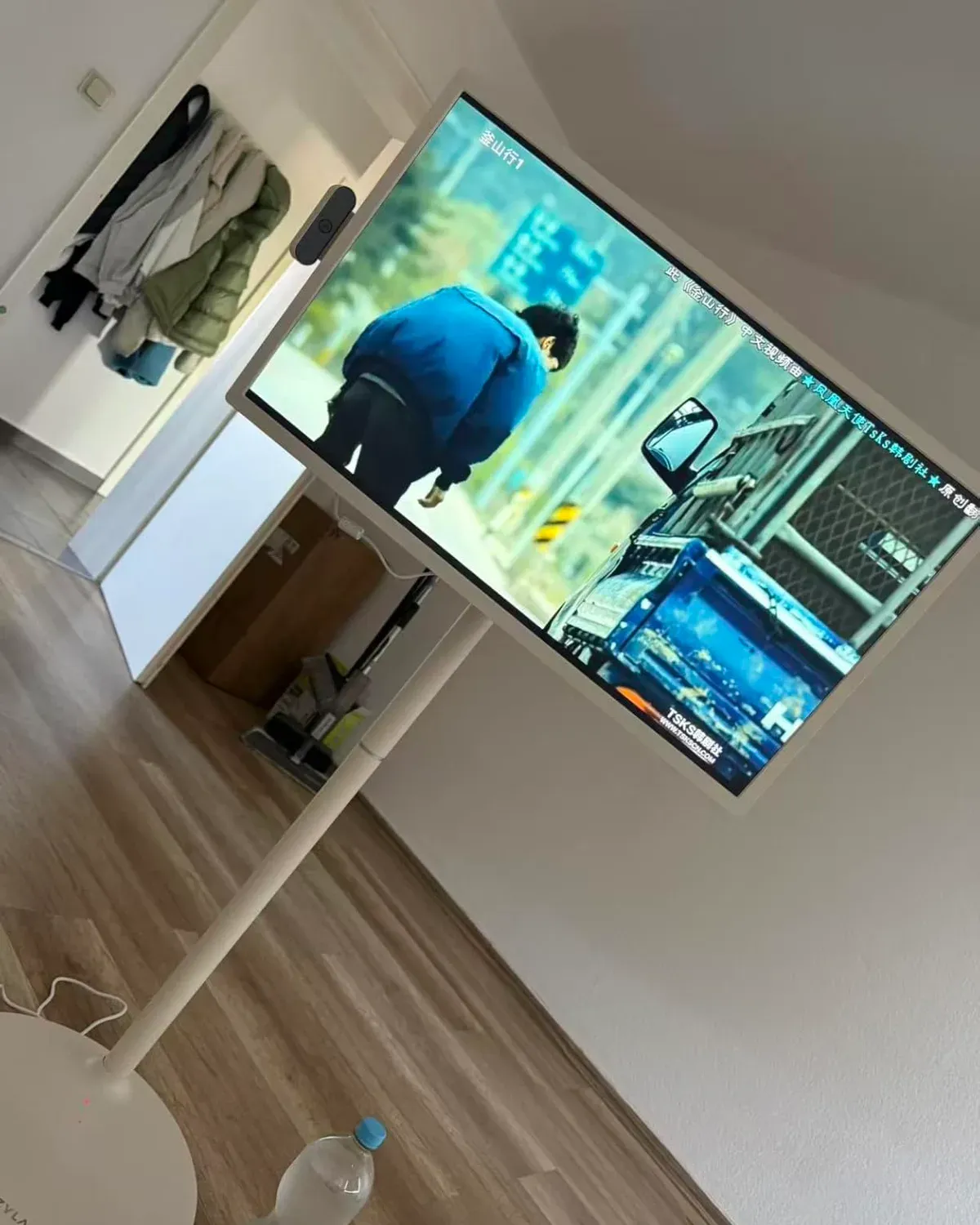
The part no fixed TV copies is the physical interface: you touch the screen where you would reach for a remote. In kitchen mode that means pausing a recipe video with a wet hand instead of hunting for the clicker; in workout mode it means leaning in and scrubbing a training clip without leaving the yoga mat because the screen rotated 360 degrees to face you. Both the OFD and the 770-euro variant rotate the panel on the column, and the base holds a 42 by 73 cm footprint that fits through a standard door without angling.
The weakness every buyer should know before purchase: 1080p resolution on a 32 inch panel at 2 meters looks softer than the 4K television it replaces. None of the three builds here ship a 4K panel; the camera captures 4K video, the panel plays 1080p. For a kitchen, a bedroom, a gym corner or a kid’s room that is a non-issue. For a living room where the TV currently does the heavy lifting in the evenings, it will feel like a downgrade, which is why the category works best as a second screen rather than a replacement.
Should you just buy a TV stand instead?
The boring alternative is a 33 euro rolling TV cart like the Perlegear under a regular television, and for a fixed living room it is the better call: any TV you already own sits on it, VESA 400x400 fits panels up to 65 inches, and there is no Android middleman between your streaming subscriptions and the screen.
What the cart cannot do is follow you out to the balcony, survive a power socket that lives on the wrong wall, or run a HIIT class without allocating a whole shelf to a streaming box. That is the actual product decision: 33 euros for a trolley under the TV you own, or 750 to 1300 euros for a self-contained screen that behaves like a 20 kg tablet.
Who should skip the rolling TV entirely
Skip it if your main screen time happens at a desk, because a monitor costs a quarter of the price and does not need a battery. Skip it if your household watches in one fixed spot every evening, because that is what a 440 euro 43 inch panel bolted to the existing console already solves. And skip it if you want HDR gaming on the weekends, because no build in this class carries more than a 60 hertz refresh rate or HDR processing at all.
Buy it if the screen genuinely has no home: physiotherapy routines that follow the patient from bed to armchair, a kitchen that pulls double duty as a video-calling booth for grandparents, or a rental where wall-mounting is forbidden and every piece of furniture has to move at the end of the lease. In exactly those situations, the 750 euro OFD build is the honest buy, the Cozyla is the one to grab if video calls carry family weight, and the 770-euro EDLA variant is the safe middle for everyone else.
Verdict
A portable smart TV on wheels is not competing with your living room television, it is competing with the argument about where the television should go. Battery, touchscreen, rotation and Google Play make it a screen without a fixed address, and the 750 to 1300 euro price buys the format rather than the picture quality.
The category verdict: the OFD build at 750 euros is the value pick for anyone whose use case is videos and calls on the move, the EDLA-certified 770-euro variant adds certified Play Store behavior for the same silhouette, and the Cozyla at 1300 euros is the premium pick with double the RAM and the strongest camera. Everyone with a fixed living room should spend 33 euros on a rolling cart instead and never look back.
Pros:
- Whole-room mobility with no wall mount and no power socket planning
- Certified Google Play builds install streaming and video-calling apps natively
- Touchscreen and 360 degree rotation beat a remote in kitchen and workout scenarios
- Round pedestal base steers with one hand and fits through normal doorways
Cons:
- 1080p panel at 32 inches looks soft next to a modern 4K television
- Real battery use lands at the low end of the 5 to 8 hour claims
- 20.5 kg with base: not a carry-out-to-the-garden weight class
- Premium price buys format, not picture quality
🇩🇪 Dieser Artikel ist auch auf Deutsch verfügbar:
Auf Deutsch lesen →
FAQ
What is a portable smart TV on wheels?
It is a complete Android smart display, usually 32 inches, mounted on a low pedestal base with casters. The screen carries its own battery, speaker, camera and Wi-Fi, so it moves between rooms like a luggage cart: no wall mount, no cables, no second media console.
How long does the battery actually last?
Current 32 inch models claim 5 to 8 hours per charge, and independent buyer reports land in the lower half of that range with brightness above half. The screen consumes most of it, so a movie night plus a morning of background YouTube is a realistic single-charge day.
Can you install normal Android apps on it?
Yes, the certified models run Google Play, so YouTube, Netflix, Prime Video, Spotify and video-calling apps install the same way they do on a tablet. The touchscreen works from the panel itself, and a voice remote ships in the box for couch distance.
Is the picture quality good enough for movies?
The 32 inch class runs 1080p FHD, not 4K, at a 60 hertz refresh rate. On a panel this size that is fine for series, YouTube and kitchen cooking videos at two to three meters. Home cinema fans hooked on HDR will notice the difference and should skip the category.

Continue reading
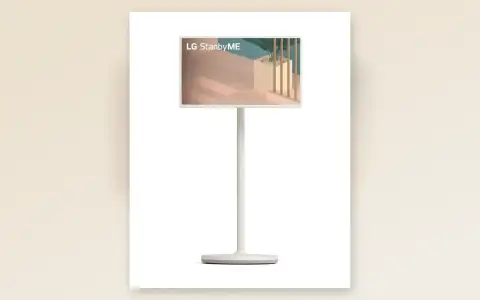
LG StanbyME Review: The 27 Inch Touchscreen TV on a Battery Pole That Rolls Into Your Bedroom
The LG StanbyME 27ART10 from the pastel bedroom photo: a 27 inch touchscreen that runs webOS from a built-in battery on a rolling pole. What 999 euros buys, what the wheel-less base does better than the renders claim, and the 895 euro StanbyME 2 alternative.
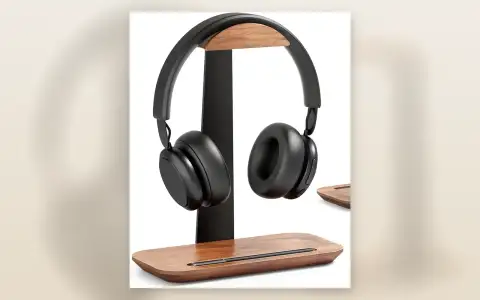
The Cactus Headphone Stand: A Desk Organizer That Hugs Your Headphones
A 3D printed cactus holds over-ear headphones on one branch, a smartwatch on the other, and drops your AirPods into a catch-all tray below. Here is what the viral pin actually shows and three real stands that solve the same problem.
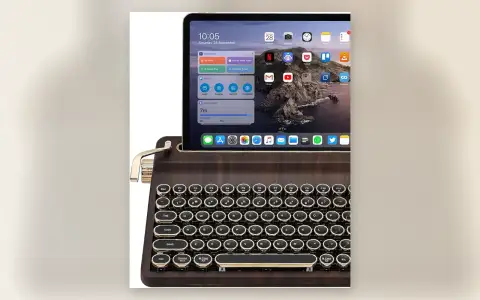
YUNZII QL75: A Typewriter Keyboard With a Tablet Slot
The YUNZII QL75 turns your tablet into a typewriter: walnut body, round typewriter keys, hot-swap switches, a slot that holds an iPad or e-reader upright, and real mechanical feel under every keypress.