Recessed Floor Outlet: Brass Power Socket That Disappears Into Your Floor
Recessed floor outlet review: a brass flip-lid power socket installed flush with hardwood floors. Clean power access without visible cables or extension cords.

Extension cords across a living room floor are a tripping hazard and an eyesore. Running cables along baseboards works until you need power in the middle of the room: a floor lamp, a coffee table charger, or a desk lamp with no nearby wall outlet. The Recessed Floor Outlet solves this by installing a brass power socket directly into the floor, flush with the surface, hidden under a flip lid that opens when you need power and closes when you don’t.
🏷 Where to buy a Recessed Floor Outlet Buy on Amazon →
How does a recessed floor outlet work?
The outlet is a circular brass housing: roughly 10 cm diameter: that sits in a hole cut into the floor. The housing contains a standard power socket (Type F for Europe, Type A/B for US) protected by a waterproof gasket and a hinged brass lid. When closed, the lid sits flush with the floor surface, creating a smooth, walkable surface. When open, the lid flips up to reveal the socket inside.

The installation requires cutting a hole in the floor: typically 10–12 cm diameter: and connecting the outlet to the electrical wiring underneath. For hardwood floors, the hole cuts cleanly with a hole saw. For tile, a diamond-tipped bit is needed. The outlet connects to standard 20A household wiring, so a licensed electrician should handle the connection.
The brass finish ages naturally, developing a patina that blends with hardwood floors over time. The flip lid includes a rubber gasket that seals against water splashes: essential for kitchens and dining areas where spills are common.
Is a recessed floor outlet practical?
The primary benefit is cable elimination. Instead of running an extension cord from a wall outlet to the middle of the room, you have a permanent power source exactly where you need it. Floor lamps, coffee table chargers, desk setups, and entertainment systems all benefit from a mid-room power point.
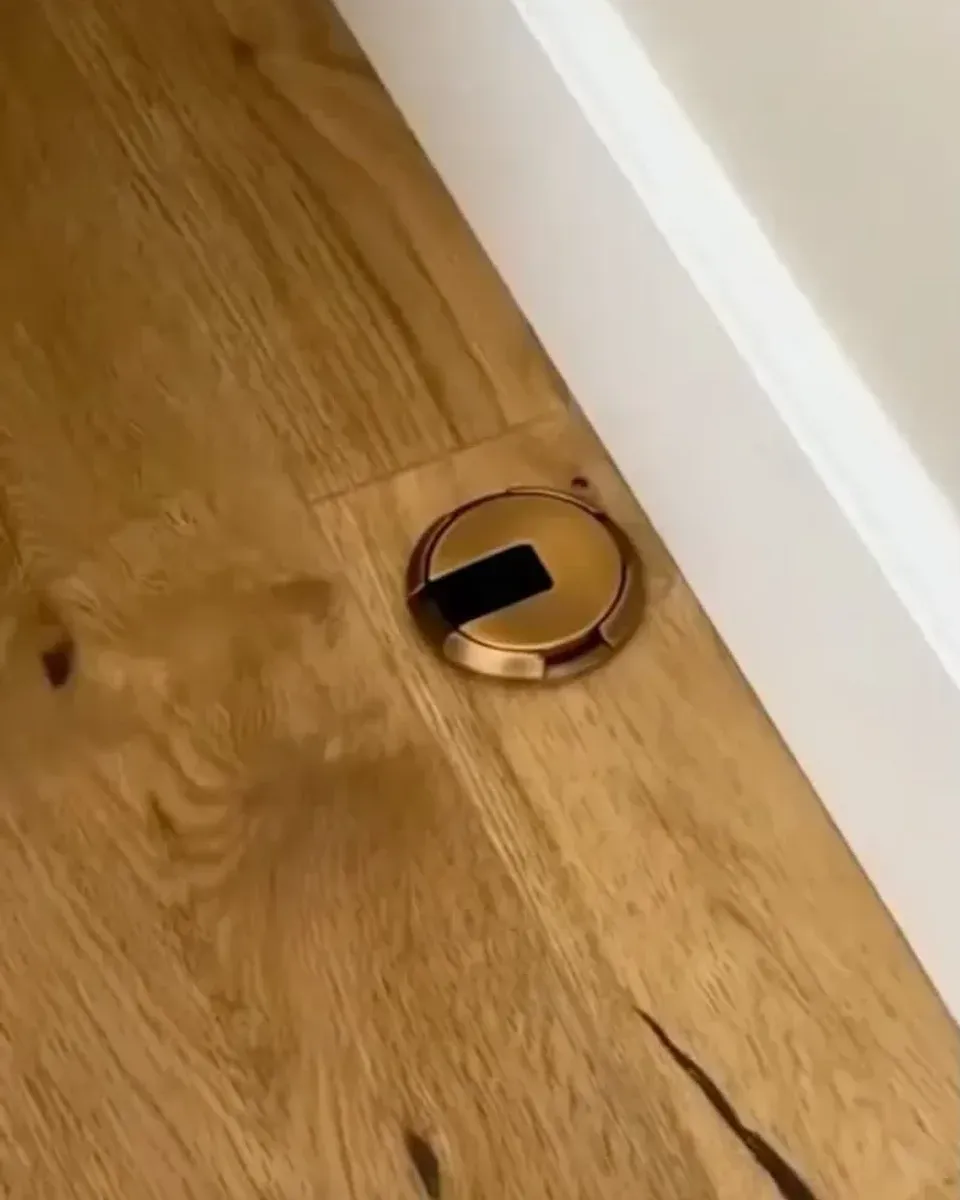
The flush design means no trip hazard. When the lid is closed, the outlet is essentially invisible: a brass circle in the floor that most people mistake for a decorative element. When open, the socket sits deep enough inside the housing that plugs don’t protrude above the floor level, so you can walk over a plugged-in cord without catching your foot.
The waterproof gasket matters more than you’d expect. In a kitchen, a spilled drink near the outlet won’t cause a short circuit: the gasket seals the electrical components from moisture. The brass housing also resists corrosion, so the outlet maintains its appearance in humid environments.
Who should buy a recessed floor outlet?
Anyone with a living room, office, or dining area where power is needed away from walls. If your current setup involves extension cords, power strips on the floor, or furniture pushed against walls to reach outlets, a recessed floor outlet eliminates the compromise. The room layout becomes about function and aesthetics, not about where the nearest wall socket is.
For new construction or major renovations, the outlet installs during the flooring phase: no retrofitting required. For existing floors, the installation is more involved but still manageable in an afternoon. The key is access to the wiring underneath: for homes with crawl spaces or raised floors, the connection is straightforward. For concrete slabs, running new wiring requires more planning.
For home offices where desks sit in the middle of a room, the floor outlet provides power without cables running across walkways. For dining rooms with pendant lights that need a floor-level power source, the outlet keeps the table area clean and uncluttered.
Verdict
✅ Pros:
- Eliminates extension cords and visible cables
- Flush design: no trip hazard when lid is closed
- Waterproof gasket protects against spills and moisture
- Brass finish develops attractive patina over time
- Standard 20A socket: handles most household devices
❌ Cons:
- Requires cutting into floor: professional installation recommended
- Not suitable for concrete slab floors without retrofitting
- Brass shows scratches more than matte finishes
- Limited to one or two sockets per outlet: no USB charging in basic models
- Waterproof gasket requires periodic replacement
🏷 Where to buy a Recessed Floor Outlet Buy on Amazon →
🇩🇪 This article is also available in Deutsch:
Read in Deutsch →
FAQ
Can I install a recessed floor outlet myself?
Cutting the hole in the floor is straightforward with a hole saw, but connecting to electrical wiring should be done by a licensed electrician. The installation is manageable in an afternoon with professional help.
Will a recessed floor outlet work on concrete slab floors?
Concrete slabs require more planning to run new wiring underneath. Homes with crawl spaces or raised floors make the connection much easier and more cost-effective.
Is a recessed floor outlet safe around water?
Yes, quality recessed outlets include a waterproof gasket that seals the electrical components from moisture. This makes them suitable for kitchens and dining areas where spills are common.
How much weight can a recessed floor outlet lid handle?
The brass lid sits flush with the floor and is designed to be walkable. It's rated for foot traffic, though it's not intended for heavy furniture placed directly on top.

Continue reading

Moon Body Pillow Review: The Big Spoon Pillow for Side Sleepers
The viral moon body pillow from TikTok promises a full-body hug. Here is what it actually does for side sleepers, and which Amazon version is worth the money.
Bedside Charging Niche: The Built-In Wall Outlet Setup That Hides Every Cable
The bedside charging niche puts outlets, USB-C and USB-A ports inside a recessed panel in your headboard. No desk clutter, no cables on the floor.

Book Stand Reading Holder: Save Your Neck While You Read Cookbooks and Textbooks
Book stand reading holder guide: adjustable aluminum-and-wood stands with page clips that hold cookbooks, textbooks, and tablets at reading angle. Which features matter and who needs one.