Suitcase Packing Technique — The 6-Step Method That Fits Everything
Suitcase packing technique: a 6-step illustrated method — roll clothes, drape pants, layer outerwear, wrap and tuck. Fits more in less space with zero wrinkles.
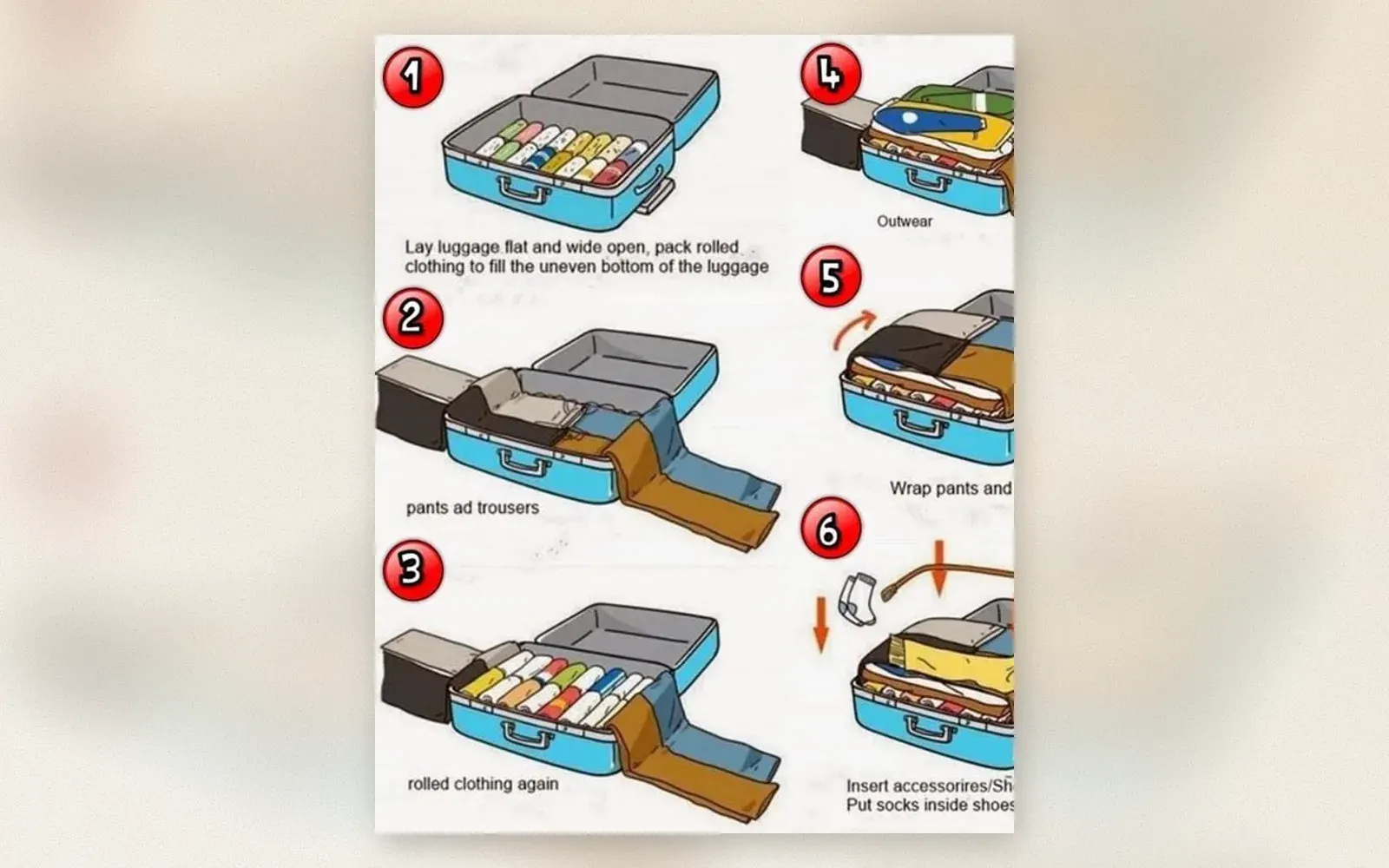
Folding clothes into a suitcase is how wrinkles happen. Rolling is better, but most people roll everything and jam it in without a system. The 6-Step Suitcase Packing Technique solves this with a specific layering order: roll, drape, roll again, layer outerwear, wrap, and tuck. Each step has a purpose, and together they create a suitcase that holds more clothes in less space — with zero wrinkles at arrival.
🏷 Where to buy Packing Essentials Available on Amazon.de — search for packing cubes, shoe bags, and travel organizers to enhance this packing technique
Step 1 — Lay Luggage Flat and Pack Rolled Clothing
Open the suitcase flat on the floor or bed. Start with the bottom half — the side without the lid. Pack rolled clothing to fill the uneven bottom of the luggage. The rolls create a flat, even surface that subsequent layers can rest on without shifting.
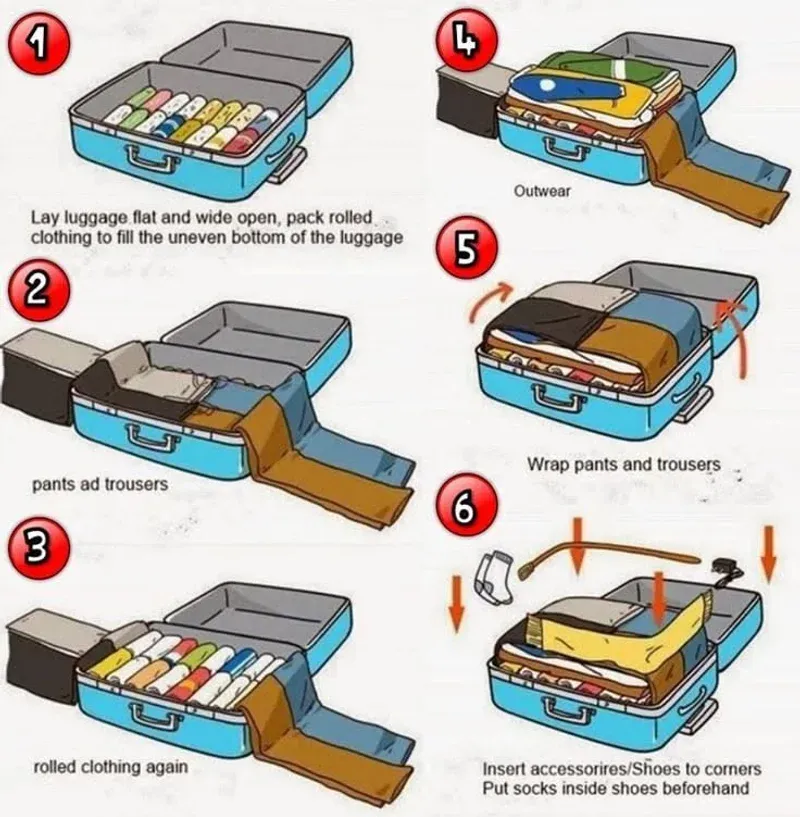
The rolling technique matters here. Each item rolls into a tight cylinder — not a loose bundle. Tight rolls compress air out and create uniform cylinders that nest together without gaps. T-shirts, tops, and casual items roll best. Place them side by side, filling the width of the suitcase.
Step 2 — Drape Pants and Trousers Over the Sides
Take your pants and trousers and drape them across the suitcase with the waistband on one side and the legs hanging over the opposite edge. The pants should extend beyond the suitcase walls — you’ll fold them back in Step 5.
This technique prevents the hard crease that folded pants develop. By draping them over the edge, the fold line falls on the soft edge of the suitcase rather than on a hard crease point. When you wrap them back in Step 5, they lay flat without a visible fold mark.
Step 3 — Pack Rolled Clothing Again
Add another layer of rolled clothing on top of the draped pants. This second layer fills the middle section of the suitcase and creates a cushion for the outerwear that comes next.
The two layers of rolled clothing — bottom and middle — create the bulk of your packed items. Each layer should be tight and even, with no gaps between rolls. The tighter the packing, the less shifting during transit.
Step 4 — Layer Outerwear on Top
Place your jackets, sweaters, and outerwear on top of the second clothing layer. These bulkier items go last because they’re the most wrinkle-prone — they need the most space and the least compression.
Fold jackets once lengthwise and lay them flat. Don’t stuff them into gaps — they need room to breathe. The outerwear layer should fill the remaining depth of the suitcase without being compressed by the lid.
Step 5 — Wrap Pants and Trousers Back Over
Now fold the hanging pant legs back over the top of everything. The pants wrap around the outerwear and clothing layers, creating a smooth outer shell that holds everything in place.
This is the key step that separates this technique from basic rolling. The wrapped pants act as a compression layer — they hold the outerwear down and prevent items from shifting when you close the lid. The fold line falls on the soft edge of the suitcase, not on a hard crease point.
Step 6 — Insert Accessories and Shoes in Corners
The final step fills the gaps. Place shoes in the corners — stuff socks and small items inside the shoes to use every centimeter. Accessories like belts, ties, and scarves tuck into any remaining spaces.
The shoe placement is strategic. Corners are the hardest spaces to fill with clothing — shoes fit naturally and create a solid frame that prevents the rest of the contents from shifting. The socks inside shoes serve double duty: they protect the shoes and fill dead space.
Why This Technique Works
The layering order is the secret. Rolled clothing at the bottom creates a flat base. Draped pants prevent crease lines. A second clothing layer adds volume. Outerwear goes on top where it has room. Wrapped pants compress everything. Shoes fill the corners.
The result is a suitcase where every item has a designated position, nothing shifts during transit, and wrinkles are minimized because items aren’t compressed against hard surfaces. It’s the difference between arriving with a suitcase full of ironing and arriving with clothes ready to wear.
Who Should Use This Packing Technique?
Anyone who packs a checked suitcase. The technique works best with hard-shell spinners that have a single deep compartment. For soft-sided bags, the draped pants technique still works but the corner shoe placement may need adjustment.
For business travelers who need wrinkle-free suits and dress shirts, this technique is essential. The draped pants and flat-folded jackets prevent the creases that make you look like you slept in your clothes.
For families sharing a suitcase, the two clothing layers accommodate different people’s items — one person’s rolls on the bottom, another’s on top — without mixing categories.
Verdict
✅ Pros of the 6-Step Technique:
- Prevents wrinkles through strategic layering and draped pants
- Fits more clothes than basic folding or random rolling
- Each step has a clear purpose — no wasted motion
- Works with any suitcase size or type
- Shoes and accessories fill dead space that goes unused in other methods
❌ Adjustments for Different Situations:
- Soft-sided bags: draped pants still work but corner placement is less precise
- Carry-on only: reduce rolled layers to one, skip outerwear layer
- Cold destinations: outerwear goes in a separate bag or worn on the plane
- Business trips: fold suits once lengthwise before draping
🏷 Where to buy Packing Essentials Search for packing cubes, shoe bags, and travel organizers on Amazon.de to complement this packing technique
FAQ
Does this packing technique work for carry-on luggage?
Yes, but you need to adapt. Reduce to one layer of rolled clothing, skip the outerwear layer, and use smaller shoes. The draping and tucking steps still apply.
Why drape pants over the suitcase edges instead of folding them?
Draping prevents hard crease lines. The fold falls on the soft edge of the suitcase rather than on a flat surface. When you wrap the legs back in Step 5, they lay smooth without visible fold marks.
How do I pack business suits using this technique?
Fold each suit jacket once lengthwise, then lay it flat in Step 4. Drape trousers over the edges in Step 2 as usual. The layered approach keeps suits wrinkle-free during transit.
Can I use this technique with soft-sided bags?
Yes, though the draped pants and corner shoe placement are less precise. The rolling and layering steps work on any bag type. Focus on tight rolls to minimize shifting.
Where should heavy items like jeans go in this method?
Pack jeans and other heavy items in Step 1 as part of the bottom rolled layer. Heavy items at the bottom near the wheels keep the suitcase stable when rolling.

Continue reading
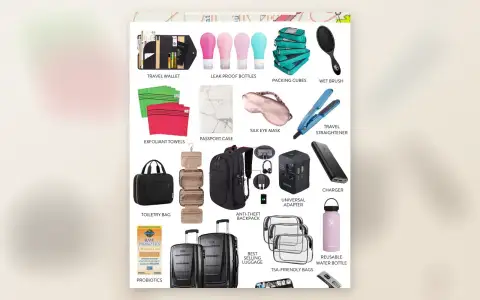
Amazon Travel Must-Haves — 20 Products That Make Every Trip Easier
Amazon travel must-haves: 20 essential products from packing cubes to anti-theft backpacks, leak-proof bottles to electronics organizers. Everything you need for smoother travel.
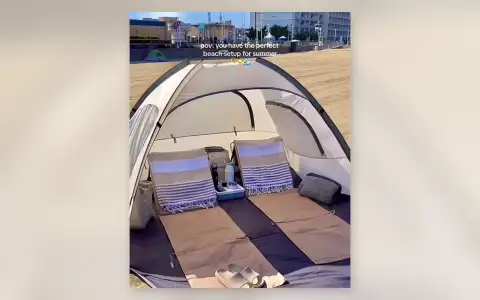
Beach Tent Cabana — The Perfect Summer Setup for Sand, Sun, and Shade
Beach tent cabana review: a large open-front shelter with extended floor, sand stakes, and UPF 50+ protection. Turns any beach spot into a private lounge.
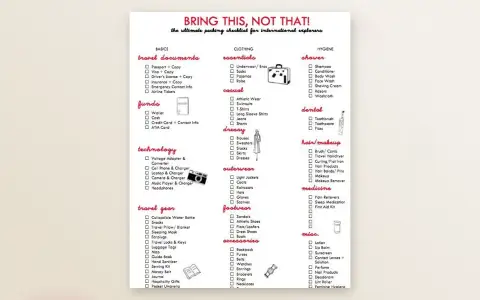
Bring This, Not That — The International Packing Checklist That Actually Works
Bring This Not That packing checklist: every category for international travel — documents, clothing, hygiene, technology, gear. What to pack and what to leave behind.