USB-C DAC Dongles and IEMs: The Pocket Hi-Fi Chain Explained
USB-C DAC dongle and IEM guide: how the phone-to-dongle-to-IEM chain works, what 4.4mm balanced adds, which specs matter at 50 dollars, and how to build the pocket hi-fi setup in the photo.
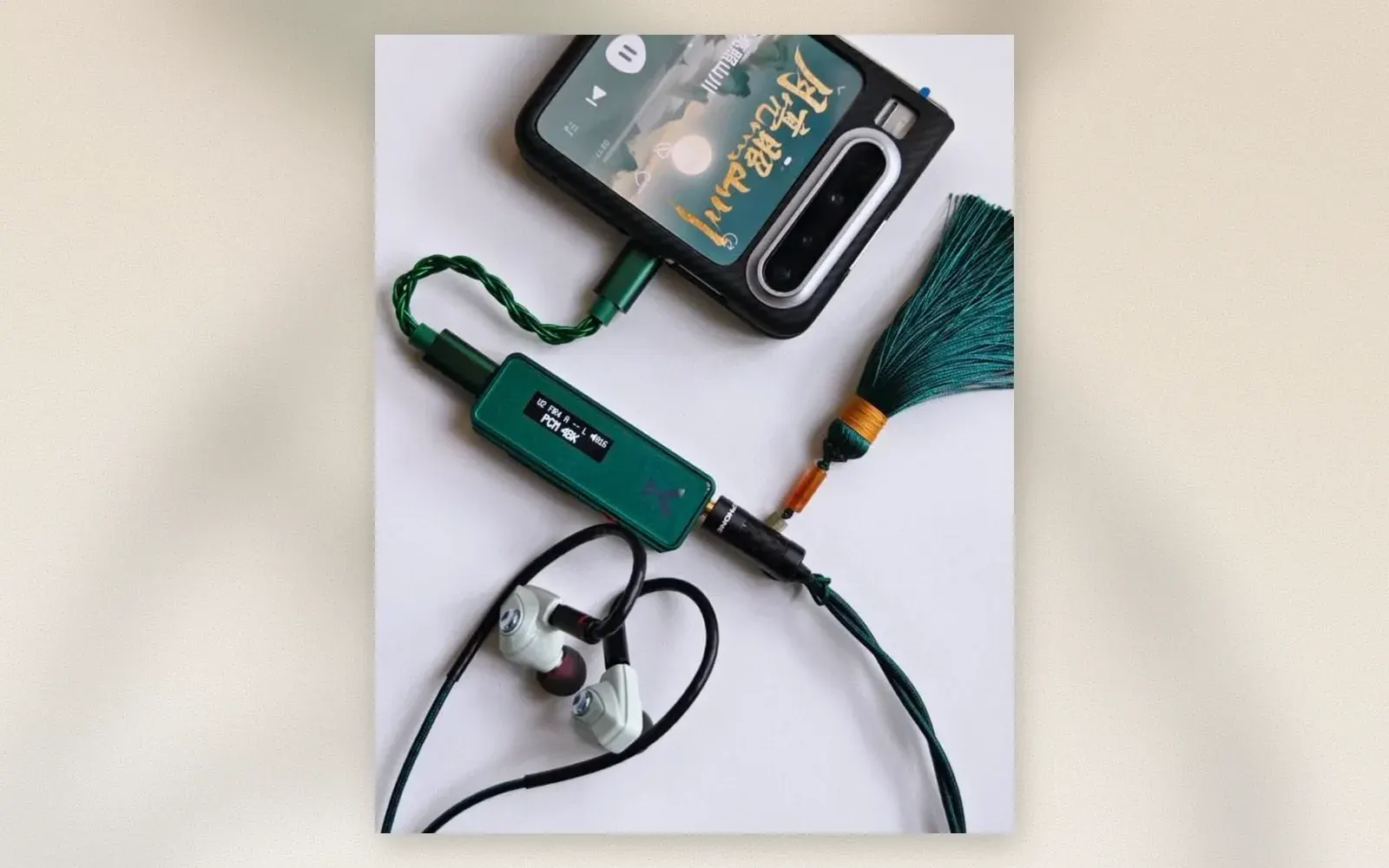
The chain in the photo is the entire pocket hi-fi hobby: phone, braided green USB-C cable, a dongle DAC with its own display, a 4.4mm balanced plug, and white IEMs with a bead charm on the cable. Everything in the chain costs less than a wireless earbuds flagship, and it sounds better: a dedicated DAC chip converts the stream, a balanced output drives the IEMs, and the dongle’s display confirms the phone is sending the native sample rate instead of resampling it.
🏷 Build the chain DAC Dongles → · IEMs →
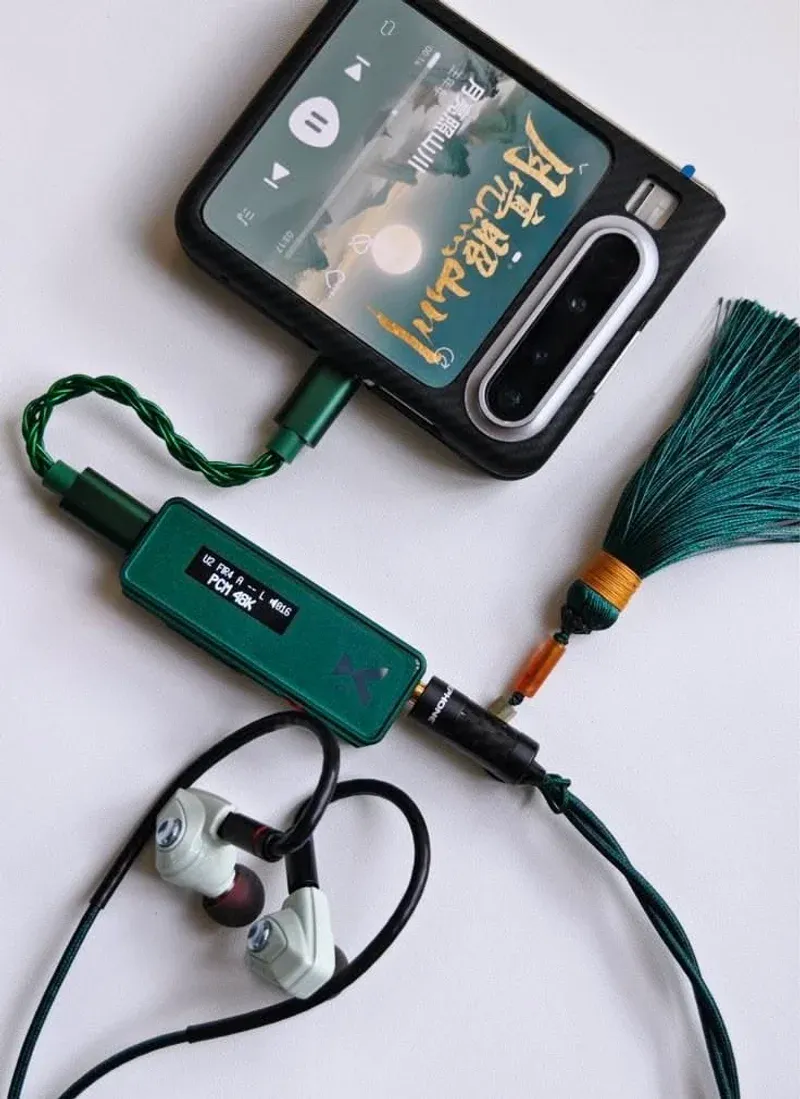
The Dongle: Your Phone’s Second Audio Department
Every phone contains a DAC, and every phone’s DAC compromises: shared power rails, minimal amplification, and a 3.5mm jack on the models that still have one. A USB-C dongle takes the digital stream over USB and handles conversion with a dedicated chip, then amplifies through its own clean power section.
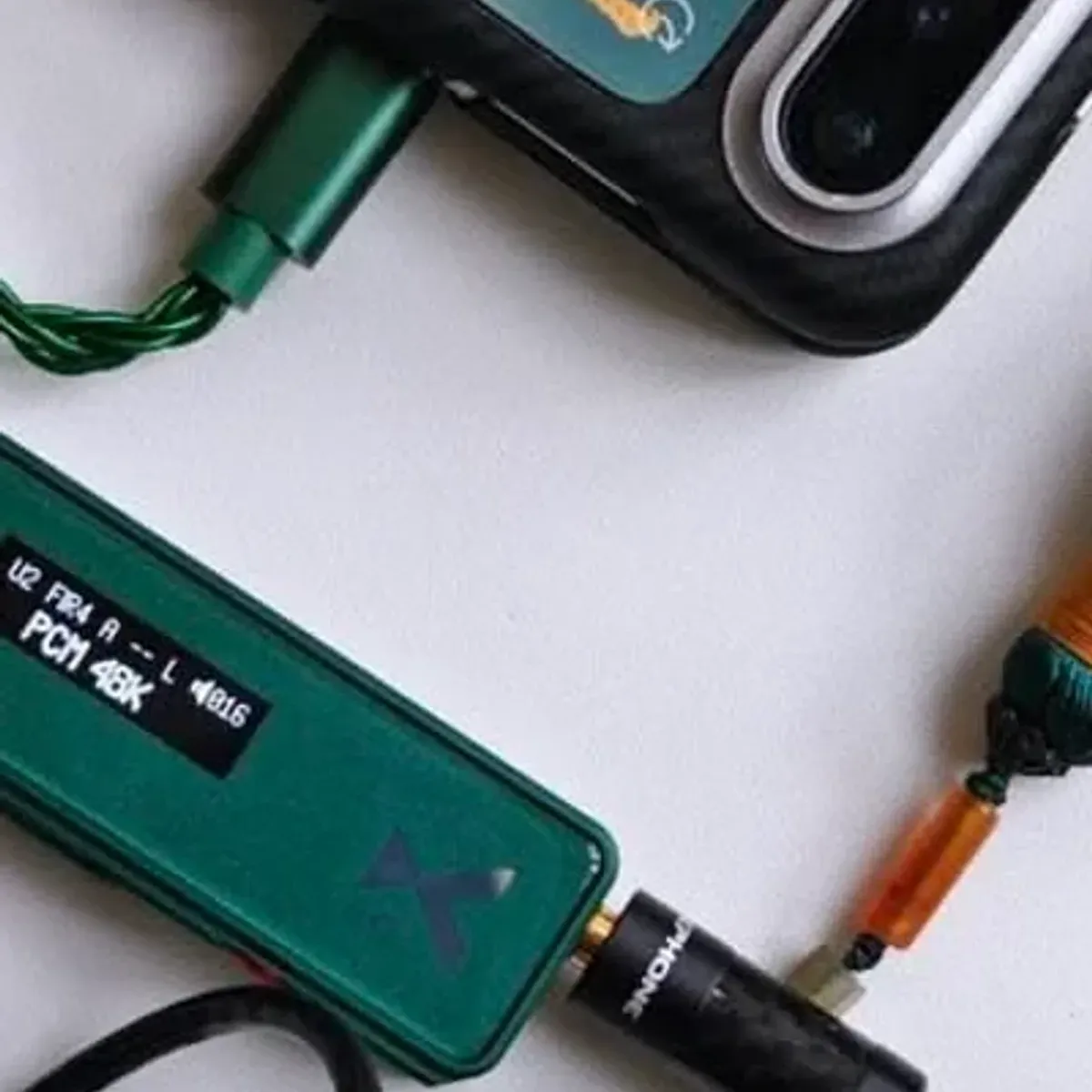
The display on the green dongle in the photo is the trust feature: it shows 44.1k or 48k sample rate, PCM or DSD format, and volume mode. Watching the numbers change between streaming sources confirms the chain receives what the app sends.
Popular dongles run 20 to 80 dollars: the Fiio KA11, Moondrop Dawn Pro, and Kiwi Ears Allegro class. All drive IEMs to deafening levels and most full-size headphones comfortably.
The 4.4mm Plug: Balanced, Not Snake Oil
The five-pole 4.4mm plug on the photo’s dongle carries each channel on its own circuit, which doubles channel separation and typically doubles output power over 3.5mm single-ended. For sensitive IEMs the audible difference is subtle; for power-hungry models it is the difference between enough volume and headroom.
🏷 Balanced cables 4.4mm Cables →
The side effect is the ecosystem: 4.4mm cables now ship with most IEMs, swappable two-pin connectors let you re-cable without soldering, and the bead charms in the photo thread onto the cable as the personalization layer the hobby wears proudly.
The IEMs: White Shells, Serious Engineering
The white in-ear monitors in the photo are the category’s daily drivers: dynamic driver IEMs in resin or metal shells, tuned close to the Harman target, with detachable two-pin cables. At 20 to 50 dollars, modern budget IEMs outperform the 300-dollar earphones of a decade ago, and the tuning race among Chinese brands keeps raising the floor.
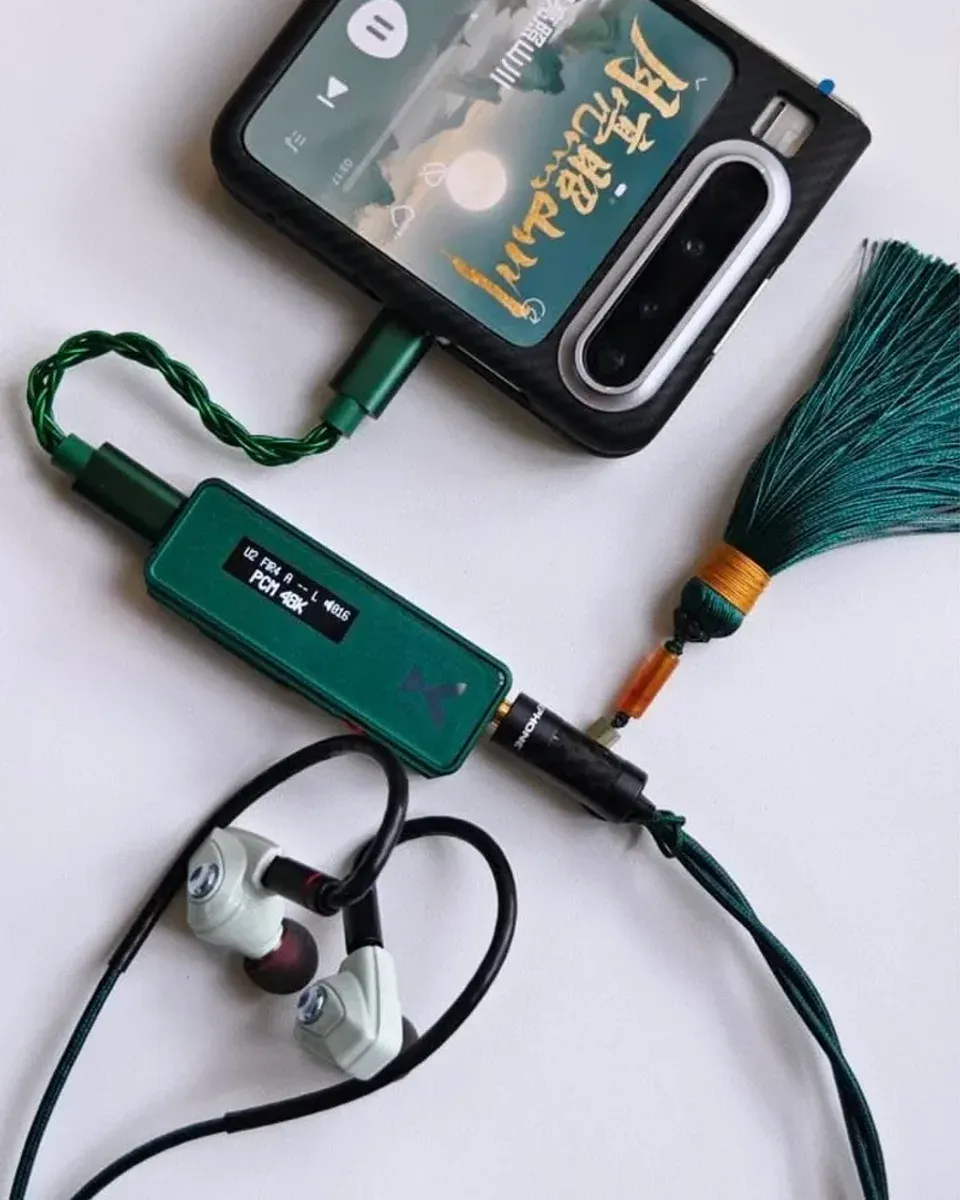
Pairing matters less than the internet suggests: a neutral dongle plus a neutral IEM is the safe start, and ear tips change the sound more than most DAC chips.
Tip rolling, trying the silicone sizes in the box, is the free upgrade.
The Charm: Why the Style Layer Exists
The braided cable, the color-matched green hardware, the bead charm: none of it changes the frequency response, and all of it is the hobby. Pocket hi-fi chains are carried, seen, and photographed, and the style layer is why people carry them instead of wireless earbuds. The wireless future is convenient; the wired chain is intentional.
Who should build this chain?
Commuters who listen two hours a day and want the upgrade wireless earbuds cannot give: better tuning, replaceable cables, and no charging case to lose.
Anyone whose phone lost its headphone jack and resents the adapter. The dongle is the honest version of that adapter, with a chip that outperforms the one Samsung removed.
Audiophile-curious listeners who want to test the hobby under 100 dollars before touching desktop gear. The chain in the photo is the entry ticket, and every component graduates to bigger setups.
Verdict
✅ Pros:
- Dedicated DAC chip bypasses the phone’s compromised audio
- 4.4mm balanced output doubles power and separation
- Dongle display confirms native sample rate pass-through
- Budget IEMs at 20 to 50 dollars outperform decade-old flagships
- Detachable cables and tip rolling customize sound for free
- Whole chain costs less than wireless flagships
❌ Cons:
- Wired means untangling and no water resistance rating
- Dongle occupies the phone’s only USB-C port
- Spec sheets oversell: PCM 384k changes nothing audible
- Balanced output on sensitive IEMs hisses at low volume
- Charm and colorway culture adds spending beyond sound
- Two devices to carry instead of one pair of buds
🏷 More pocket hi-fi Dongle DACs →
🇩🇪 This article is also available in Deutsch:
Read in Deutsch →
FAQ
What does a USB-C DAC dongle do?
It bypasses the phone's internal audio hardware: the dongle converts the digital stream with its own DAC chip and amplifies it for headphones. The result is cleaner output, more power, and features like balanced 4.4mm output that phones abandoned.
What is 4.4mm balanced output?
A five-pole connection that carries left and right channels on separate circuits, doubling separation and often doubling power over the standard 3.5mm jack. Most dongles and IEM cables now ship 4.4mm as the premium termination.
What do the numbers on the dongle screen mean?
The display shows the incoming sample rate and format: 44.1k or 48k is the sample rate in kHz, PCM is the format, and letters like A-L indicate volume sync mode. If the numbers change between songs, the dongle is receiving the native stream.
Do IEMs need an amplifier?
Most dynamic-driver IEMs run fine straight from a dongle. Planar IEMs and low-sensitivity multi-driver models benefit from the dongle's higher output, which is the main upgrade path from a phone jack.
How much does the pocket hi-fi chain cost?
A working chain costs 50 to 120 dollars: a 20 to 60 dollar dongle DAC, 20 to 50 dollar IEMs, and the cable that comes with them. The setup in the photo, with color-matched cable and charm, adds style spending on top.

Continue reading

Angel Devil AirPods Clips — The Good and Evil on Your Earbuds
Angel devil AirPods clips review: tiny silicone figurines that attach to AirPods cable — angel on right, devil on left. Cute, functional cable management.

ATHAND Cat Earbud Holder: Cute Desk Figurine That Holds Your AirPods
ATHAND Cat Earbud Holder review: a white resin cat figurine that doubles as an AirPods stand and pen holder. Cute, functional, and surprisingly useful.

AirPods Pro 3: headphones with personal spatial audio
AirPods Pro 3 review: improved ANC, adaptive audio, pulse monitoring, and Apple Vision Pro compatibility.