Canon 5D Mark III Video Rig: Every Piece in This Flat Lay Explained
A working Canon 5D Mark III video rig in one flat lay: Rode shotgun mic, battery grip, telephoto glass, speedlite, and the small parts that keep a shoot alive.
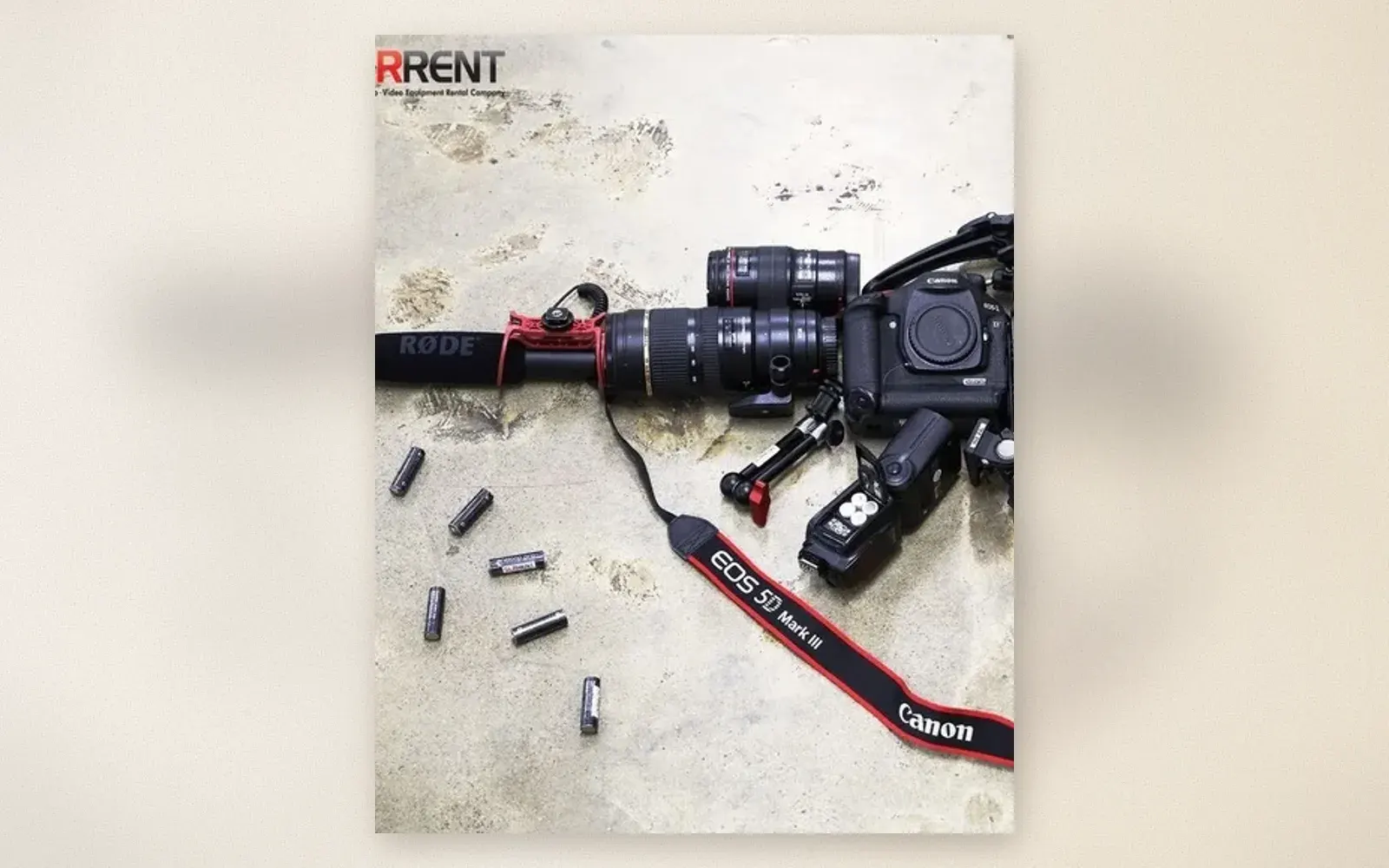
A Canon 5D Mark III video rig like this one tells you more about real production work than any spec sheet, because every object on the concrete floor exists to solve a problem the owner has already run into. There is the body with its battery grip, a Rode shotgun mic in a red shock mount, two telephoto zooms, a speedlite loaded with four AA cells, a radio trigger, a small ballhead arm, and a loose scatter of batteries that any working shooter will recognize. Here is what each piece does, and whether this 2012 setup still makes sense to shoot with today.
What sits on a working 5D Mark III video rig?
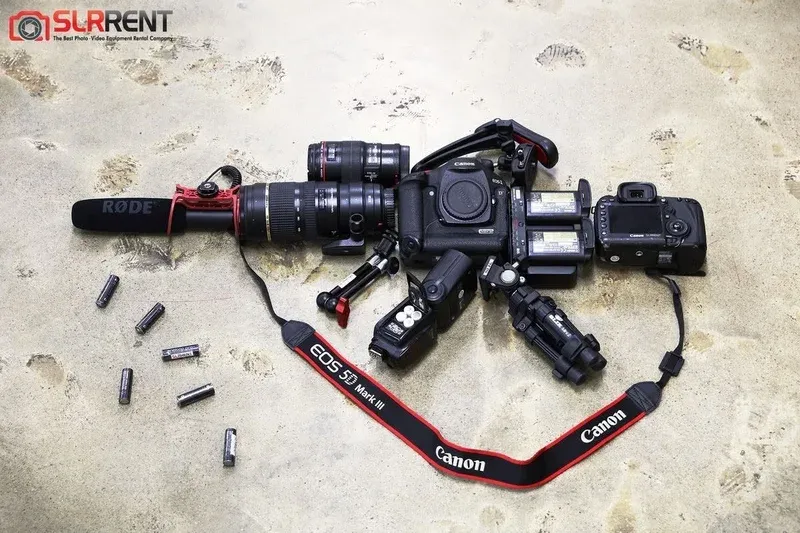
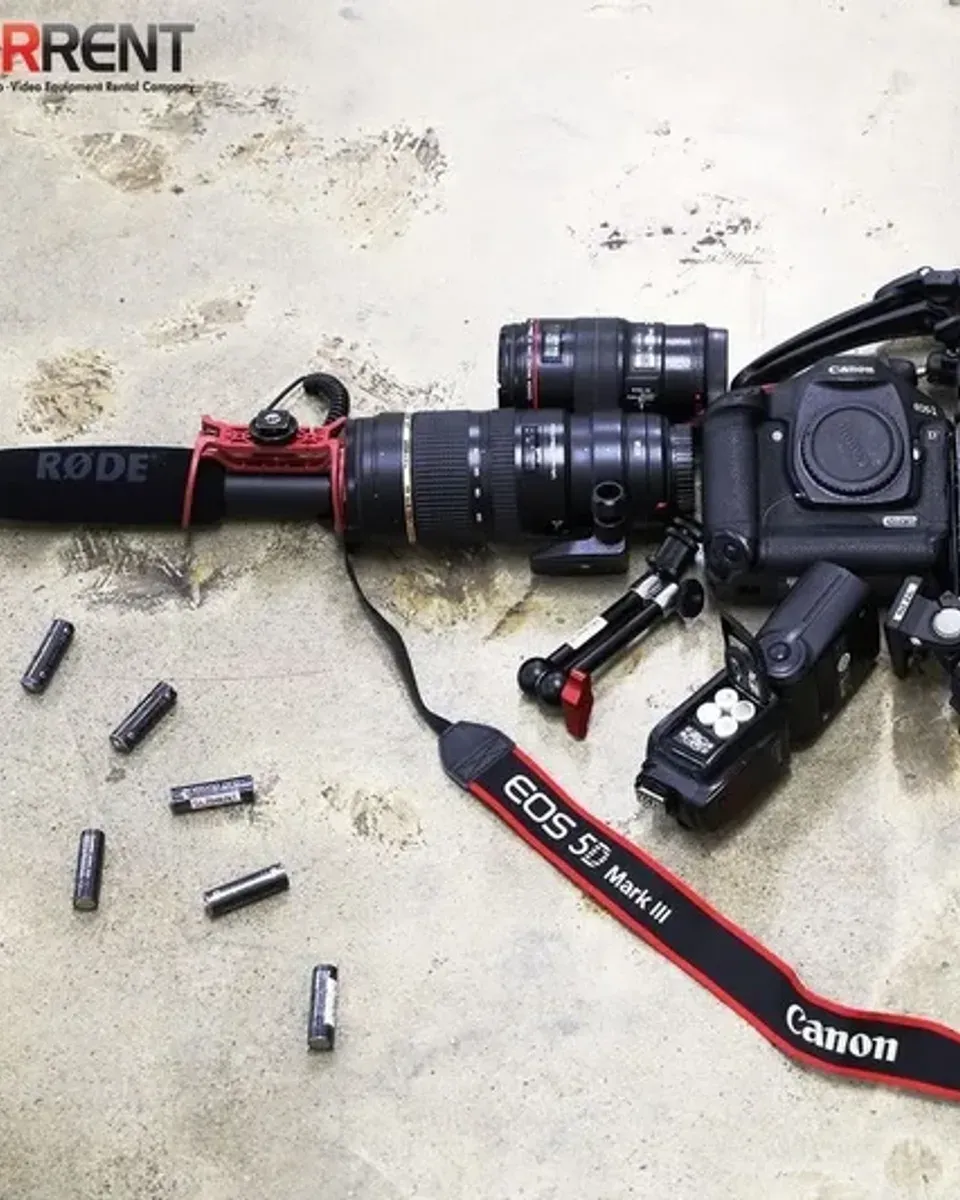
The camera is the EOS 5D Mark III with an EOS 5D Mark III strap, fitted with a battery grip that gives the body the taller profile you can see in the frame. Next to it sit two zooms: a Tamron 70-200 mm f/2.8 with its gold ring, and a Canon L telephoto with the red ring. The Rode shotgun microphone rides on a red suspension mount, positioned to plug straight into the camera’s mic input. On the right side, a hot shoe speedlite sits with its battery door open showing four AA cells, beside a small radio trigger that fires it remotely.
The rest of the flat lay is consumables. Loose AA batteries wait for the flash and the trigger, and the small arm with the red knob is a ballhead that mounts the camera or an accessory to a stand. Nothing here is decorative. Rental houses pack exactly this combination for corporate and event shoots, which is where this photo comes from.
Is the 5D Mark III still usable for video in 2026?
Yes, as long as 1080p is enough for the job. The body records Full HD from a 22.3 megapixel full frame sensor, and its color and rolling shutter behavior are well understood after more than a decade of use. It has both a CF and an SD card slot, a 3.5 mm mic input, and a headphone jack for monitoring, which was a genuine step up when it launched in 2012 at a list price around 3,000 euros.
The honest limitation is resolution. There is no 4K mode, and modern clients often expect it. Many videographers answered that gap with the Magic Lantern community firmware, which unlocked raw video recording and extra audio tools on this body. If your work lives on YouTube at 1080p, interviews, or web spots, the camera remains a cheap way into full frame glass.
How does the rig handle audio and power?
Audio travels its own path. The Rode microphone has a suspension mount that isolates it from handling noise, runs on its own rechargeable battery, and hands a clean signal to the camera’s mic input while the operator monitors through the headphone jack.
Power is split across the bag. The battery grip takes two LP-E6 packs at once, which doubles runtime and makes vertical shooting comfortable. The speedlite and the radio trigger run on AAs, which is why loose cells litter the floor in the photo. Carry twice as many as you think you need.
What does a kit like this cost second-hand?
Far less than it once did. Bodies circulate on the used market for a fraction of their launch price, and the accessories are equally cheap used because so many were sold. The Rode microphone above shows used pricing from around 183 euros on Amazon.de, and Tamron’s 70-200 mm f/2.8 has sold in large numbers since 2010, which keeps used prices friendly.
Set a budget by role rather than by list price. A used body with fresh shutter ratings, one grip, and the mic covers most interview work. Add the speedlite and trigger only if you shoot stills and video in the same day, which is exactly the mix this rental kit was assembled for.
Verdict
This Canon 5D Mark III video rig is a textbook example of a complete 1080p production kit: the gripped body for all-day power, a self-powered Rode shotgun mic for clean sound, telephoto glass for reach, and a flash setup that switches the same bag into stills mode. Buy it used, budget for batteries, and it still earns its space.
✅ Pros
- Complete audio, power, and lighting coverage in one bag
- Battery grip doubles runtime and improves handling
- Full frame sensor with a huge used lens ecosystem
- Headphone jack and mic input for proper sound monitoring
❌ Cons
- No 4K recording, which rules out some client work
- Three battery types to carry and charge
- 2012-era body weight, well over a kilogram before glass
FAQ
Is the Canon 5D Mark III still good for video?
For many jobs, yes. The body records 1080p video from its 22.3 megapixel full frame sensor, which still looks respectable for interviews, short documentaries, and b-roll. There is no 4K mode, so anything that must be delivered in 4K needs a different camera or an upsample.
What batteries does this rig need on a shoot day?
Three kinds. The camera runs on LP-E6 packs and the battery grip holds two of them at once, the Rode microphone carries its own rechargeable cell, and the speedlite and radio trigger burn AA batteries. A packed kit bag carries spares of all three.
Which microphone is mounted on this camera?
A Rode shotgun microphone sitting in a red shock mount on the hot shoe. It draws power from its own battery instead of the camera, and the 5D Mark III headphone jack lets you monitor what it actually records.

Continue reading

10 Camera and Drone View Commands That Change How Your Photos Look
Droneview, topdown, birdseye, lowangle: what the ten view commands from the viral cheat sheet mean, and how to shoot them with AI prompts or a real drone.
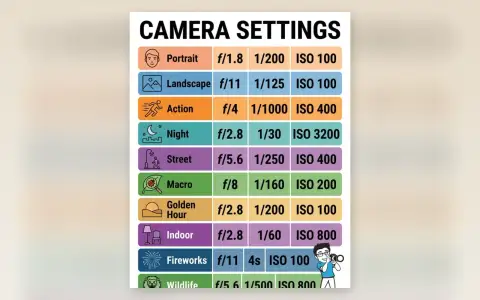
Camera Settings Cheat Sheet: 10 Scenes With Aperture, Shutter Speed, and ISO
Portrait, landscape, action, night: the ten setting combos from the widely shared camera cheat sheet, why each one works, and the camera to practice them on.
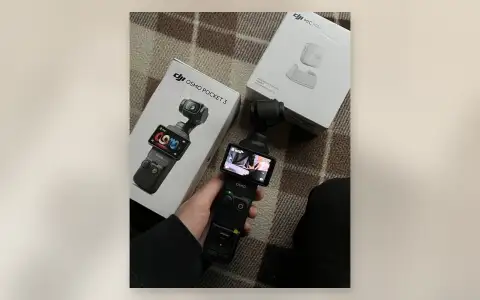
DJI Osmo Pocket 3 Mic Mini Bundle: The Lightest Full Vlogging Kit You Can Carry
The Osmo Pocket 3 with the DJI Mic Mini transmitter: a 10 gram mic with 11.5 hours of battery, 4K/120fps gimbal footage, and every accessory in one box.