Canon PowerShot G7 X Mark III Review: The Compact Everyone Keeps Buying
Canon G7 X Mark III review: 20.1MP 1-inch sensor, 24-100mm f/1.8 lens, flip-up screen, 4K video. Why this 2019 compact still sells out in 2026, and who should skip it.

The Canon PowerShot G7 X Mark III came out in 2019, costs around 629 euros on Amazon.de today, and still regularly runs out of stock. That is strange for a camera with no interchangeable lenses and no firmware updates in years, and it is worth understanding before you buy one. This review covers what the camera actually delivers in daily use, where it beats a phone, and who should save the money.
🏷 Canon PowerShot G7 X Mark III Buy on Amazon →
Is the Canon G7 X Mark III worth it in 2026?
Yes, if you take photos indoors, at dusk, at shows, or of people and want them to look better than your phone manages without filters. The camera packs a 1-inch 20.1MP stacked CMOS sensor into a body that fits a jacket pocket, and the fixed lens opens to f/1.8 at the wide end. Phones simulate blur with software and clean up noise with computation; the G7 X gathers real light and needs less repair afterward.
The honest counterweight: in bright daylight the difference from a recent phone is small. If your roll is coffee shops, daylight walks, and the occasional sunset, the camera buys you optical zoom and ergonomics, not a visual revolution.

What the f/1.8 lens and 1-inch sensor give you
The lens is an 8.8-36.8mm f/1.8-2.8, which works out to 24-100mm in full-frame terms, a 4.2x zoom. Wide open at the wide end it lets in roughly four times the light of a typical phone lens. That shows up exactly where you would expect: indoor dinners, hotel rooms, evening streets, and concert venues where flash is banned and phones start painting over detail.
Zoom range matters too. At the telephoto end the camera frames faces and pets from across a room without moving, and the background separates from the subject in a way phone portrait modes approximate. A built-in three-stop ND filter keeps video usable in hard midday sun, which phones handle only with exposure compromises.
The shooting speed is another practical difference. The G7 X locks focus and fires with a shutter that feels instant, so it catches a dog mid-shake or a friend mid-laugh. Phone cameras open in a second or two, and the moment is usually gone.

🏷 Compare compact cameras G7 X vs Sony ZV-1 → · Sony RX100 VII →
Canon G7 X Mark III vs iPhone: where each wins
In daylight, a recent iPhone and the G7 X produce images that survive side-by-side comparison on a phone screen. Computational photography has closed that gap, and social platforms compress both files anyway.
The Canon wins in three situations. Indoors and at night, the larger sensor keeps skin tones natural where phones smooth faces and smear shadows. With optical zoom, distant subjects hold detail that phone digital zoom turns into watercolor. And with motion, whether a child, a pet, or a performer, the mechanical shutter and fast readout avoid the rolling distortion phones show on moving subjects.
The phone wins on everything else: always in your pocket, instant sharing, night mode held steady, and video stabilization good enough for one-handed walking clips. Most owners keep both and reach for the camera when the light drops.

Vlogging, flip screen, and 4K video
The 3-inch LCD flips up a full 180 degrees, so self-framing needs no app and no guesswork. That single feature is why the camera dominates travel vlogging kits: handheld clips look composed, and the lens stabilizer smooths walking footage well enough to skip a gimbal for casual work.
Video records 4K internally, with a microphone input and USB-C for power and live streaming straight to YouTube. Colors lean warm and pleasant straight out of camera, so most clips need no grading before posting. The main video limitation is the same as the photo one: no viewfinder and a screen that washes out in direct sun.
Who should skip the G7 X Mark III
Photographers who want to grow into different lenses should buy an APS-C mirrorless instead; the fixed lens is the ceiling here. Video-first buyers comparing against the Sony ZV-1 will find the ZV-1 cheaper at times and better articulated for side-flip monitoring. And if your photos live entirely on your phone and look fine to you, 629 euros buys a better pair of walking shoes.
Verdict
✅ Pros:
- 1-inch sensor and f/1.8 lens beat phones in low light for real
- 24-100mm equivalent zoom with useful background separation
- Flip-up 180-degree screen, instant shutter, pocketable body
- 4K video with mic input and USB-C streaming
- Built-in ND filter for bright-day video
❌ Cons:
- No viewfinder, screen washes out in direct sunlight
- Fixed lens: no way to expand the system
- Released in 2019 with no firmware updates since
- Still priced near 629 euros, rarely discounted
- Battery lasts about 235 shots per charge
🏷 Get the best price on the G7 X Mark III Buy on Amazon →
🇩🇪 Dieser Artikel ist auch auf Deutsch verfügbar:
Auf Deutsch lesen →
FAQ
Is the Canon G7 X Mark III worth it in 2026?
Yes, for anyone who wants noticeably better low-light photos and real optical zoom without carrying an interchangeable-lens camera. The 1-inch sensor and f/1.8 lens still beat phones in dusk shots, indoor scenes, and background blur. Buyers who mostly post phone-quality snapshots do not need it.
Canon G7 X Mark III vs iPhone: which takes better photos?
In daylight, the gap is small and often invisible on social media. The Canon pulls ahead indoors, at night, and at concerts, where the larger sensor and fast lens gather more light. Optical 4.2x zoom also keeps detail that phone digital zoom smears.
Is the G7 X Mark III good for vlogging?
Yes. The 3-inch screen flips up 180 degrees for self-framing, the lens stabilizes handheld walking shots, and 4K video records internally. The microphone input and USB-C live streaming to YouTube cover more serious setups.
What lens does the G7 X Mark III have?
A fixed 8.8-36.8mm f/1.8-2.8 zoom, equal to 24-100mm in full-frame terms. That is a 4.2x range from wide everyday scenes to tight portraits, with a built-in ND filter for bright-day video.
Does the G7 X Mark III have a viewfinder?
No. Framing happens on the flip-up touchscreen only. In direct sunlight the screen dims and loses visibility, which is the most common complaint from owners.

Continue reading

Mini Camera Walkie-Talkies: The Bestie Talkies Trend, Explained
Mini camera walkie-talkie guide: the pastel bestie talkies taking over TikTok, how the camera-screen pairing works, real range expectations, and what to check before buying a pair.
Mini EDC Cameras: Why Tiny Cameras on Carabiners Came Back
Mini EDC camera guide: pocket cameras small enough for a keychain, what the dual-lens Twin-style designs offer, which specs matter at this size, and the real mini cameras worth buying on Amazon.
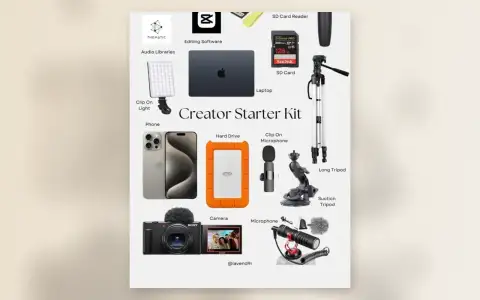
Creator Starter Kit: 14 Pieces That Take You From Phone to Published
Creator starter kit guide: phone or compact camera, laptop, tripods, mics, lights, storage, and the software stack. The complete gear list for starting a content channel without overspending.