Beginner Photographer Gear: 9 Essential Items to Start Your Photography Journey
Beginner photographer gear guide: Canon EOS 2000D DSLR, 18-55mm kit lens, tripod, SanDisk 64GB memory card, camera bag, UV filter, cleaning kit, camera strap, and LED light. Everything you need to start shooting: nothing you don't.
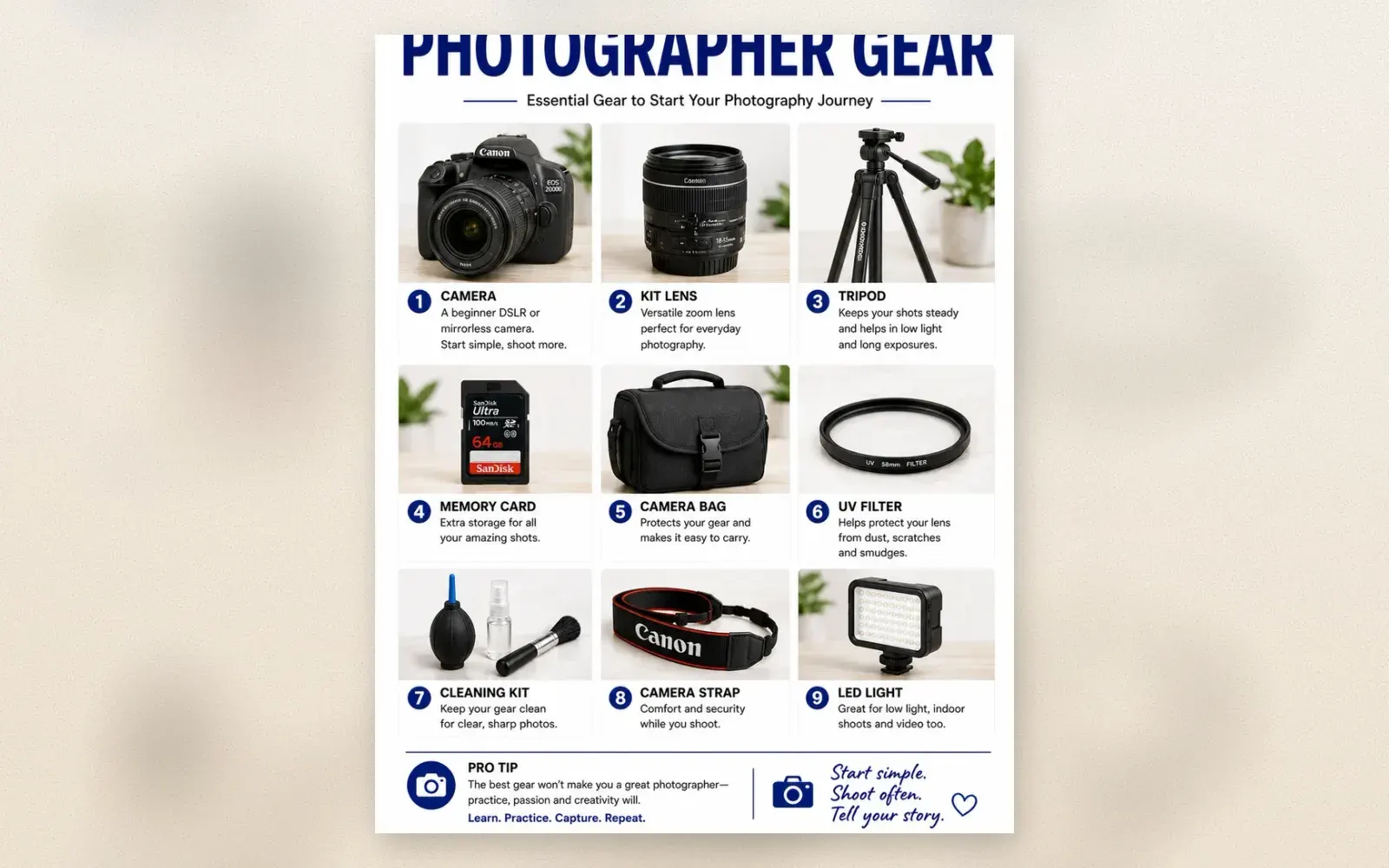
Every photographer starts somewhere, and that somewhere does not require a $3,000 camera body or a bag full of prime lenses. The 9 items below cover everything a beginner needs to start shooting: and nothing they don’t. The Canon EOS 2000D with an 18-55mm kit lens handles the actual photography. The tripod, memory card, bag, filter, cleaning kit, strap, and LED light handle everything else. Total investment: roughly $400-$600.
🏷 Beginner photography gear on Amazon Canon EOS 2000D Kit → · SanDisk Ultra 64GB → · Tripods →
1. Camera: Canon EOS 2000D
The Canon EOS 2000D (also known as the Rebel T7) is a 24.1MP APS-C DSLR with built-in Wi-Fi and Canon’s DIGIC 4+ processor. It shoots RAW and JPEG, records 1080p video at 30fps, and has a 9-point autofocus system. For a beginner, this is the right camera: it teaches you manual controls without overwhelming you with features you will not use for months.
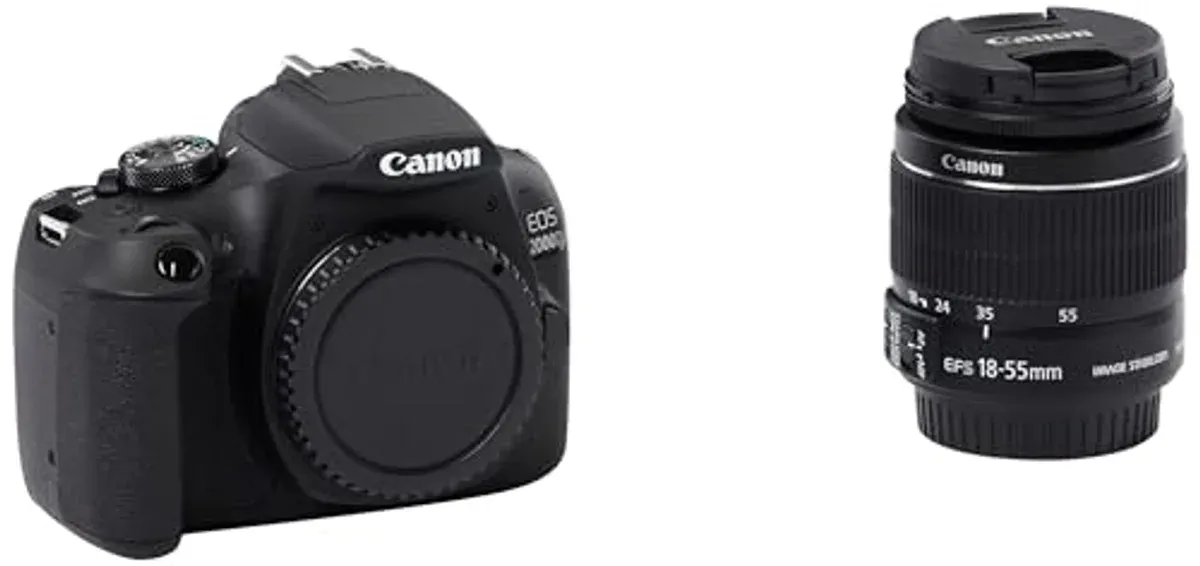
🏷 Canon EOS 2000D Kit: Buy on Amazon →
The 24.1MP sensor delivers enough resolution for large prints and social media crops. The APS-C format produces images with more depth of field than full-frame, which is forgiving for beginners still learning focus. The body weighs 475g: light enough for all-day shooting without arm fatigue.
2. Kit Lens: Canon EF-S 18-55mm f/3.5-5.6
The 18-55mm kit lens covers wide-angle to short telephoto: landscapes at 18mm, portraits at 55mm, and everything in between. The f/3.5-5.6 maximum aperture is not fast, but it is adequate for daylight shooting and learning exposure. The IS (Image Stabilization) variant reduces camera shake by up to 4 stops.
This lens is not a forever lens. You will outgrow it within 6-12 months as you discover what focal lengths you shoot most. But it teaches you to zoom with your feet instead of the ring, which builds better composition habits than starting with a fast prime.
3. Tripod: Steady and Affordable
A tripod keeps your shots steady in low light, enables long exposures, and forces you to slow down and compose carefully. The Andoer tripod in the image is a budget option that handles light mirrorless and entry-level DSLR bodies. For heavier setups, invest in a sturdier tripod later.
🏷 Tripod: Buy on Amazon →
The cheapest way to improve image quality immediately is a tripod. Handheld shots at 1/30s blur from camera shake. Tripod shots at 1/30s are tack sharp. The difference is dramatic, and the investment is minimal.
4. Memory Card: SanDisk Ultra 64GB
A 64GB SanDisk Ultra writes at 100MB/s and holds approximately 1,800 RAW files or 2,000+ JPEGs from the Canon 2000D. For a beginner shooting casually, 64GB lasts a full day of shooting without running out of space.
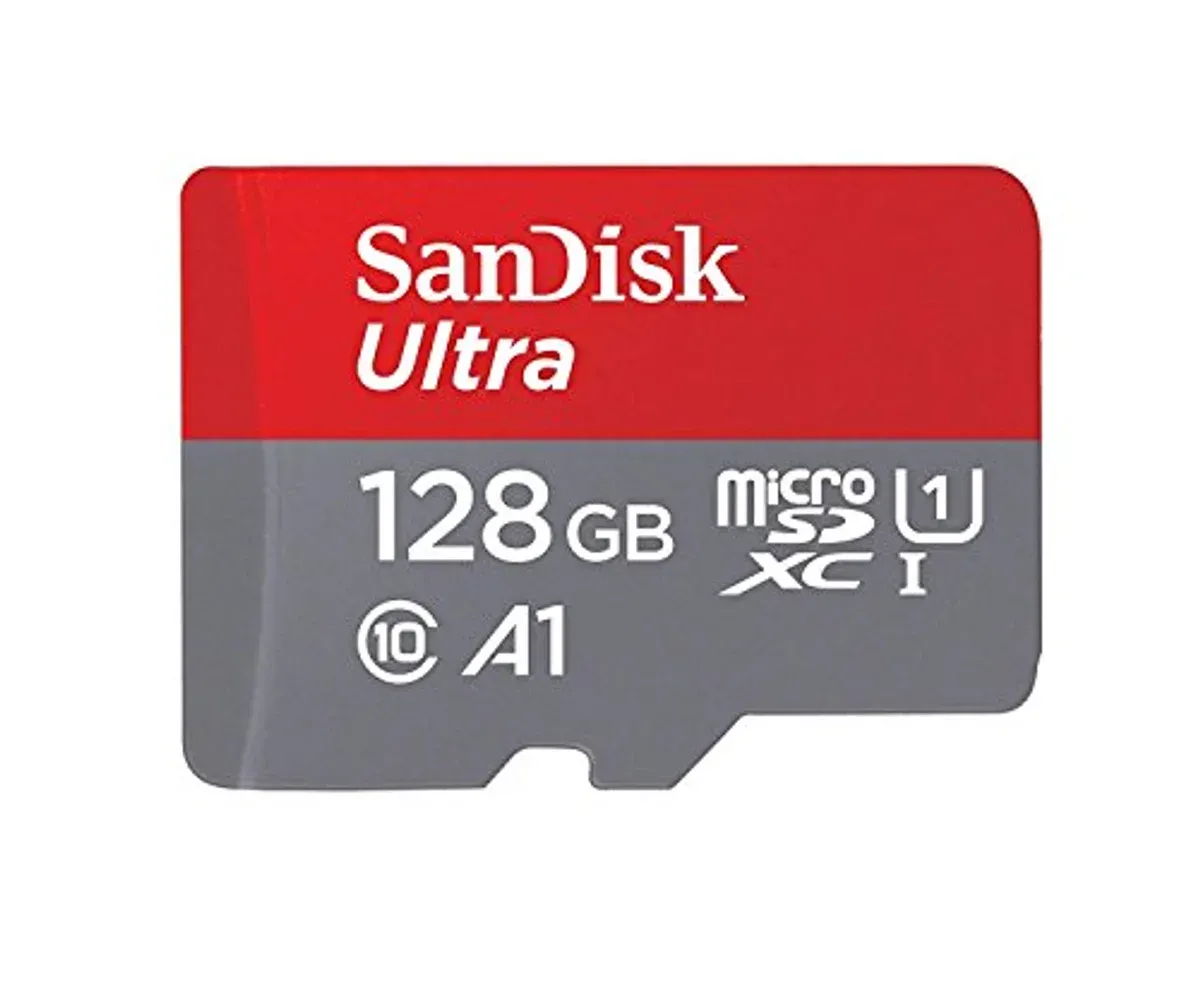
🏷 SanDisk Ultra 64GB: Buy on Amazon →
Buy a second card as backup. Memory cards fail: not often, but when they do, you lose everything on them. Two 64GB cards cost less than one lost shoot.
5. Camera Bag: Protection and Organization
A padded camera bag protects your gear during transport and keeps everything organized. The bag in the image is a compact shoulder bag that fits the Canon 2000D with kit lens, plus space for a spare battery, memory cards, and the cleaning kit.
🏷 Camera bag: Buy on Amazon →
The bag does not need to be expensive. It needs to be padded, have dividers, and fit your current kit. When you add lenses, upgrade the bag: not before.
6. UV Filter: Cheap Insurance
A 58mm UV filter screws onto the front of the 18-55mm kit lens and protects the glass from dust, scratches, and smudges. It does not improve image quality on modern digital cameras: the UV blocking is handled by the sensor: but it is the cheapest insurance for an expensive lens.
🏷 58mm UV filter: Buy on Amazon →
If you drop the camera and the filter cracks, you replace a $10 filter instead of a $200 lens. Keep one on permanently.
7. Cleaning Kit: Protect Your Investment
The cleaning kit contains a blower (removes dust from the sensor and lens), a microfiber cloth (wipes smudges), and lens cleaning spray (dissolves fingerprints). Dust on the sensor creates dark spots in every photo. Smudges on the lens reduce sharpness and contrast.
🏷 Cleaning kit: Buy on Amazon →
A cleaning kit costs under $15 and keeps your gear in condition for years. Clean your lens before every shoot and your sensor every few months. It takes 30 seconds and prevents hours of post-processing cleanup.
8. Camera Strap: Comfort and Security
The Canon-branded strap that comes with the 2000D is adequate: it distributes the camera’s weight across your neck and shoulder and has a non-slip backing. For longer shoots, consider a cross-body strap that distributes weight more evenly.
🏷 Camera strap: Buy on Amazon →
The strap is not glamorous, but it prevents drops. A camera hanging from your neck survives a stumble. A camera sitting on a table does not.
9. LED Light: Expand Your Shooting Range
A small on-camera LED light provides fill light for indoor portraits, close-ups, and video. It mounts on the camera’s hot shoe and runs on AA batteries or a rechargeable pack. The light is not powerful enough for full studio work, but it extends your shooting range into dim restaurants, evening events, and indoor spaces.
🏷 LED light: Buy on Amazon →
For beginners, the LED light solves the most common problem: not enough light. Instead of raising ISO to 3200 and getting noisy images, add a little light and keep ISO at 400.
Verdict
✅ Pros:
- 9 items cover every beginner need without excess
- Canon 2000D teaches manual controls at an affordable price
- 18-55mm kit lens covers wide to telephoto for everyday shooting
- Tripod immediately improves image quality in low light
- 64GB memory card holds a full day of shooting
- UV filter protects the lens for $10
- Cleaning kit prevents dust spots and smudges
- LED light extends shooting range into low light
❌ Cons:
- Kit lens (18-55mm f/3.5-5.6) is slow: limited low-light performance
- Budget tripod may not support heavier lens upgrades
- 64GB may not be enough for video-heavy shooting
- UV filter can cause slight flare in backlit situations
- LED light is too weak for professional studio work
- Camera strap is basic: upgrade for comfort on long shoots
🏷 Find beginner photography gear Canon EOS 2000D Kit →
🇩🇪 This article is also available in Deutsch:
Read in Deutsch →
FAQ
What camera should a beginner photographer buy?
A Canon EOS 2000D or similar entry-level DSLR is ideal. It offers manual controls, interchangeable lenses, and a price point that does not break the budget. Start simple, learn the settings, and upgrade the body later when your skills demand it.
Do I need a tripod as a beginner?
Yes. A tripod keeps your shots steady in low light, enables long exposures, and forces you to slow down and compose carefully. It is the cheapest way to improve image quality immediately.
What size memory card should I get?
A 64GB SanDisk Ultra holds approximately 1,800 RAW files or 2,000+ JPEGs. For a beginner shooting casually, 64GB lasts a full day of shooting without running out of space. Buy a second card as backup.
Is a UV filter necessary?
A UV filter protects your lens from dust, scratches, and smudges. It does not improve image quality on modern digital cameras, but it is cheap insurance for an expensive lens. Keep one on permanently.
What is the most overlooked beginner accessory?
The cleaning kit. Dust on the sensor or smudges on the lens ruin more photos than poor composition. A blower, microfiber cloth, and lens cleaning spray cost under $15 and keep your gear in condition for years.

Continue reading

Studio Lighting Modifiers Comparison: Strip, Softbox, Reflector, China Ball, and Octabox
Studio lighting modifiers compared: strip light with grid, softbox with and without grid, reflector dish, China ball lantern, and octabox with grid. How each modifier changes light quality, spread, and mood — with the same model and the same light source.
Camera Shot Types Explained: 12 Frames Every Photographer and Videographer Should Know
Camera shot types guide: Close Up, Extreme Close Up, POV, Medium Shot, Low Angle, Over the Shoulder, High Angle, Tracking, Reveal, Wide Shot, Dutch Angle, and Bird's Eye View. When to use each and why it matters.
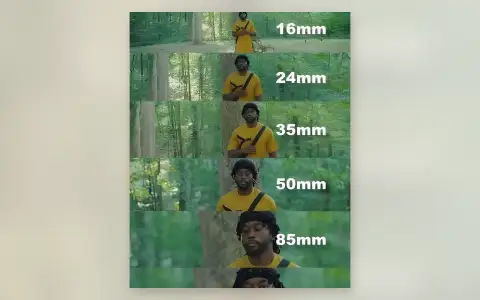
Focal Length Comparison: How 16mm to 135mm Changes Your Portrait
Focal length comparison guide: how 16mm, 24mm, 35mm, 50mm, 85mm, 105mm, and 135mm lenses affect portrait perspective, background compression, and facial distortion. Visual examples from wide to telephoto.