Camera Shot Types Explained: 12 Frames Every Photographer and Videographer Should Know
Camera shot types guide: Close Up, Extreme Close Up, POV, Medium Shot, Low Angle, Over the Shoulder, High Angle, Tracking, Reveal, Wide Shot, Dutch Angle, and Bird's Eye View. When to use each and why it matters.
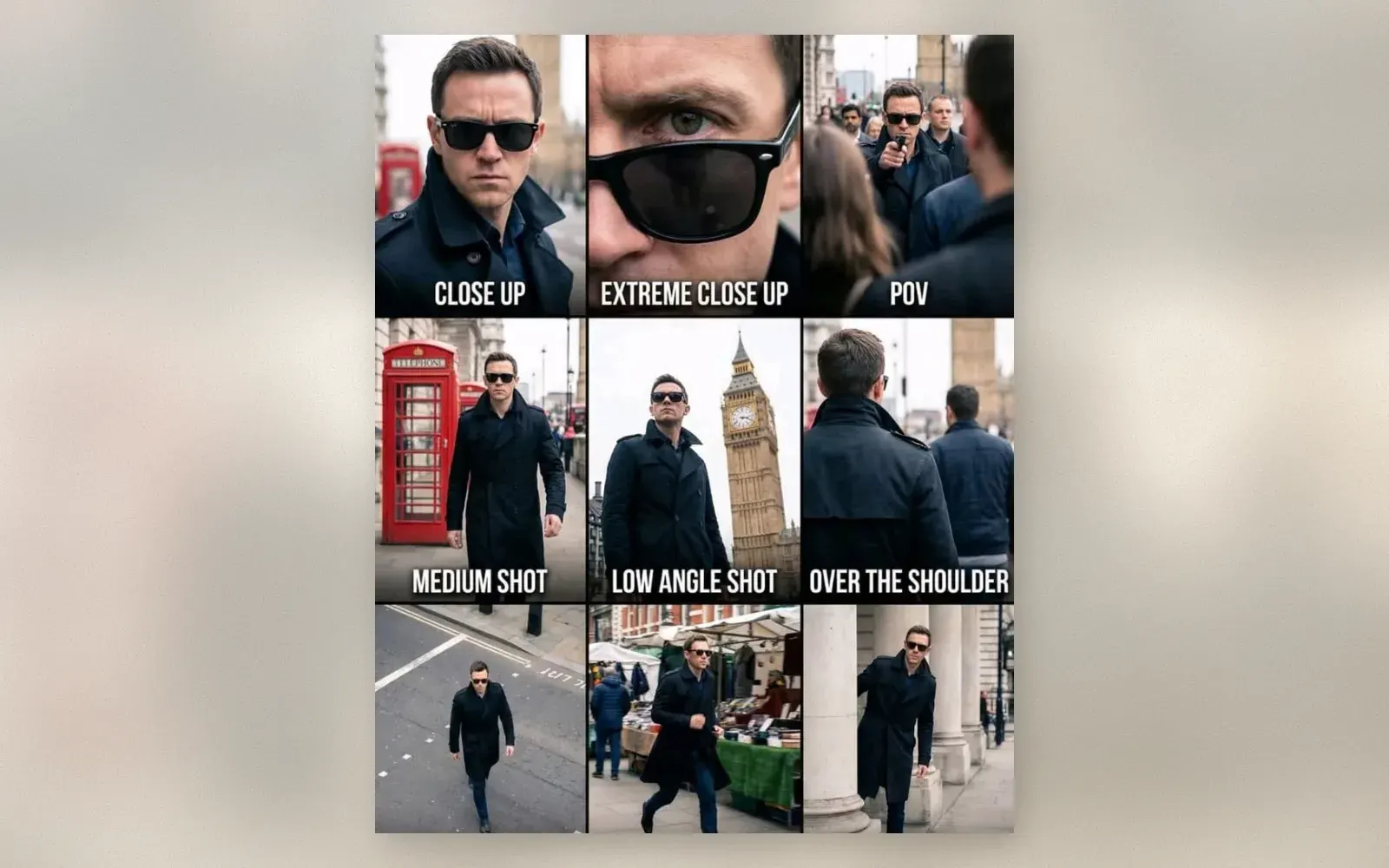
Every photograph and every video frame is a deliberate choice of where to put the camera. The 12 shot types below — Close Up, Extreme Close Up, POV, Medium Shot, Low Angle, Over the Shoulder, High Angle, Tracking, Reveal, Wide Shot, Dutch Angle, and Bird’s Eye View — are the vocabulary of visual storytelling. Master these and you can communicate any emotion, tell any story, and direct the viewer’s eye exactly where you want it.
📷 Camera gear for creative shooting Buy on Amazon → · Check on Etsy →
Close Up and Extreme Close Up
The close up frames the subject’s face and shoulders, filling the frame with their expression. It is the most intimate shot type — the viewer sees every detail of the face, every micro-expression. Close ups connect the audience to the subject’s emotions. Use them for dialogue scenes, emotional moments, and character introductions.
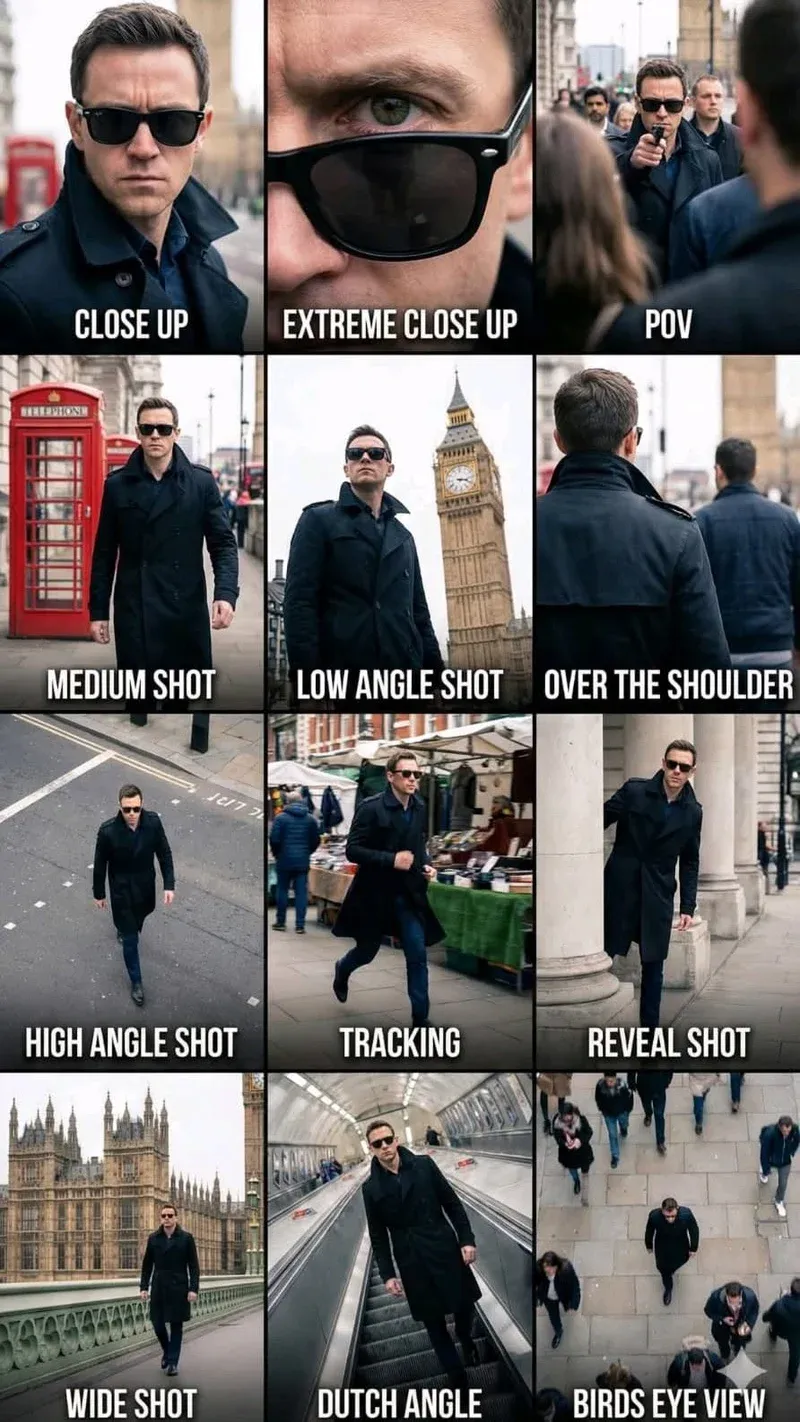
The extreme close up goes further — focusing on a single feature. Eyes, mouth, hands, a detail on clothing. It creates intensity and forces the viewer to look at something specific. An extreme close up of eyes during a lie, of hands during a tense moment, of a detail that reveals the story. It is powerful but easy to overuse.
POV and Over the Shoulder
POV (Point of View) shows what the subject sees, not the subject itself. The camera becomes the subject’s eyes. POV creates immersion — the viewer steps inside the character and experiences the scene from their perspective. Use it for moments when the audience needs to see what the character sees.
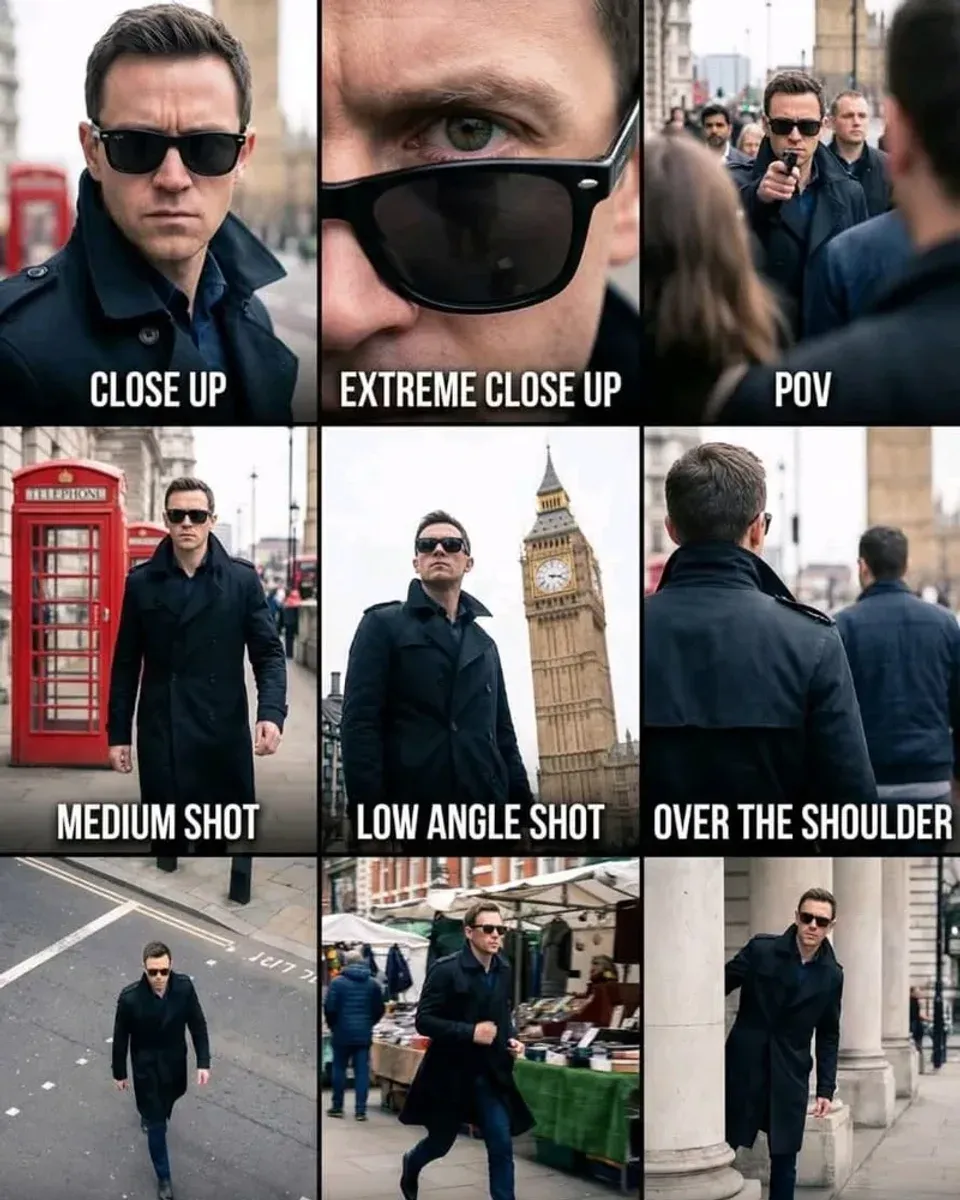
Over the Shoulder frames the subject from behind another person’s shoulder. The shoulder in the foreground creates depth and context — we see the subject and we see who they are talking to. This is the standard dialogue shot. It establishes relationships and spatial orientation between characters.
Medium Shot and Wide Shot
The Medium Shot frames the subject from the waist up. It shows enough body language to communicate posture and gesture while keeping the face prominent. Medium shots are the workhorse of interview filming, vlogging, and casual photography. They feel natural — like standing at a conversational distance.
The Wide Shot shows the subject’s full body within their environment. The setting becomes a character — the location tells part of the story. Wide shots establish where the scene takes place and how the subject relates to their surroundings. Use them at the beginning of sequences to orient the viewer.
Low Angle and High Angle
The Low Angle shoots upward from below the subject. It makes the subject appear powerful, dominant, or heroic. The subject towers over the viewer, filling the frame with authority. Low angles work for authority figures, action heroes, and moments of triumph. The more extreme the angle, the more powerful the subject appears.
The High Angle shoots downward from above. It makes the subject appear small, vulnerable, or overwhelmed. The subject is diminished by the space around them. High angles work for moments of defeat, isolation, or when the environment dwarfs the person. The contrast between low and high angle tells a power story without words.
Tracking and Reveal
The Tracking Shot follows the subject as they move through space. The camera moves with them — walking, running, riding alongside. Tracking creates momentum and energy. It pulls the viewer into the movement and makes them feel like they are part of the journey. Use it for action sequences, walk-and-talk scenes, and moments of pursuit.
The Reveal Shot starts on something else — a wall, a door, an empty space — and then moves to show the subject or a new element. The reveal creates surprise and shifts the viewer’s understanding. What seemed like one thing becomes another. Use it for dramatic entrances, plot twists, and moments that change the story.
Dutch Angle and Bird’s Eye View
The Dutch Angle tilts the camera so the horizon is not level. The tilted frame creates unease, disorientation, or visual tension. It signals that something is wrong, unstable, or chaotic. Dutch angles work in psychological thrillers, horror scenes, and moments of madness. Use sparingly — too many tilted shots make the footage feel amateur rather than artistic.
The Bird’s Eye View shoots straight down from directly above. It removes the subject from their context and shows the geometry of the scene — patterns, shapes, relationships between objects. Bird’s eye views work for establishing shots, abstract compositions, and moments that need a God’s-eye perspective. The subject becomes a element in a larger pattern.
Who should use these shot types?
Filmmakers and videographers who want to tell visual stories with intention. Each shot type communicates a specific emotion and relationship between the subject and the viewer. Mixing shot types creates rhythm and keeps the audience engaged.
Photographers who want to move beyond snapshots. Understanding shot types gives you a framework for making deliberate compositional choices instead of randomly pointing the camera. A close up says something different than a wide shot — knowing which to use is the difference between a photo and a story.
Content creators who shoot video for YouTube, TikTok, or social media. The same 12 shot types that work in Hollywood work in a living room. A tracking shot walking through a market, a reveal of a finished meal, a close up of a reaction — these techniques make amateur content feel professional.
Verdict
✅ Pros:
- 12 shot types cover the complete visual storytelling vocabulary
- Each type explained with when and why to use it
- Covers intimate (close up) to abstract (bird’s eye) perspectives
- Practical for photography, videography, and content creation
- Works in any setting — studio, street, travel, events
- Visual examples demonstrate each shot type clearly
❌ Cons:
- Does not cover camera movement within shot types (dolly, crane, gimbal)
- Some shot types require specific equipment (tracking needs gimbal or dolly)
- Dutch angle and extreme close up are easy to overuse
- Does not discuss editing rhythm between shot types
- Bird’s eye view requires elevated position or drone
- Mixing shot types requires practice to avoid visual confusion
📷 Find creative camera gear Best prices on Amazon →
🇩🇪 This article is also available in Deutsch:
Read in Deutsch →
FAQ
What is the difference between a close up and an extreme close up?
A close up frames the subject's face and shoulders, filling the frame with their expression. An extreme close up focuses on a single feature — eyes, mouth, or hands — creating intimacy or tension. Close ups connect; extreme close ups intensify.
What is a POV shot in photography?
POV (Point of View) shows what the subject sees, not the subject itself. The camera becomes the subject's eyes, looking at another person, an object, or the environment. POV creates immersion — the viewer experiences the scene from inside the story.
When should I use a low angle shot?
Low angle shots make the subject appear powerful, dominant, or heroic. The camera looks up at the subject, who towers over the viewer. Use it for authority figures, action heroes, or when you want the subject to feel larger than life.
What is a Dutch angle shot?
A Dutch angle tilts the camera so the horizon is not level. It creates unease, disorientation, or visual tension. Use it for psychological thrillers, horror scenes, or moments of chaos. Overuse makes the footage feel amateur.
What is the difference between a tracking shot and a reveal shot?
A tracking shot follows the subject as they move through space — the camera moves with them. A reveal shot starts on something else and then moves to show the subject or a new element. Tracking creates momentum; reveal creates surprise.

Continue reading
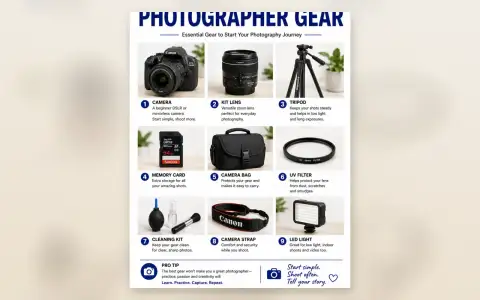
Beginner Photographer Gear: 9 Essential Items to Start Your Photography Journey
Beginner photographer gear guide: Canon EOS 2000D DSLR, 18-55mm kit lens, tripod, SanDisk 64GB memory card, camera bag, UV filter, cleaning kit, camera strap, and LED light. Everything you need to start shooting: nothing you don't.
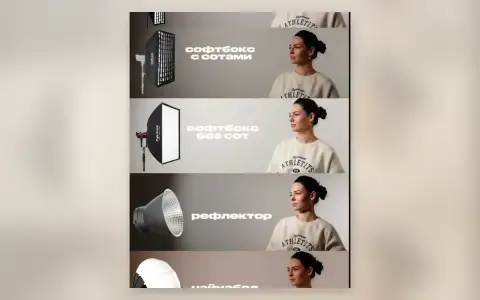
Studio Lighting Modifiers Comparison: Strip, Softbox, Reflector, China Ball, and Octabox
Studio lighting modifiers compared: strip light with grid, softbox with and without grid, reflector dish, China ball lantern, and octabox with grid. How each modifier changes light quality, spread, and mood — with the same model and the same light source.
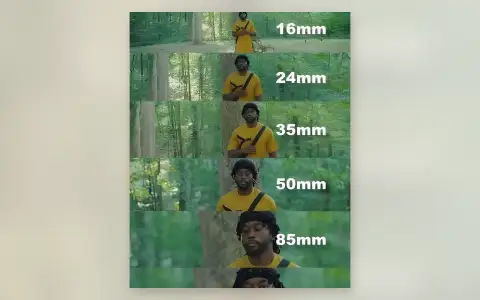
Focal Length Comparison: How 16mm to 135mm Changes Your Portrait
Focal length comparison guide: how 16mm, 24mm, 35mm, 50mm, 85mm, 105mm, and 135mm lenses affect portrait perspective, background compression, and facial distortion. Visual examples from wide to telephoto.