Studio Lighting Modifiers Comparison: Strip, Softbox, Reflector, China Ball, and Octabox
Studio lighting modifiers compared: strip light with grid, softbox with and without grid, reflector dish, China ball lantern, and octabox with grid. How each modifier changes light quality, spread, and mood — with the same model and the same light source.
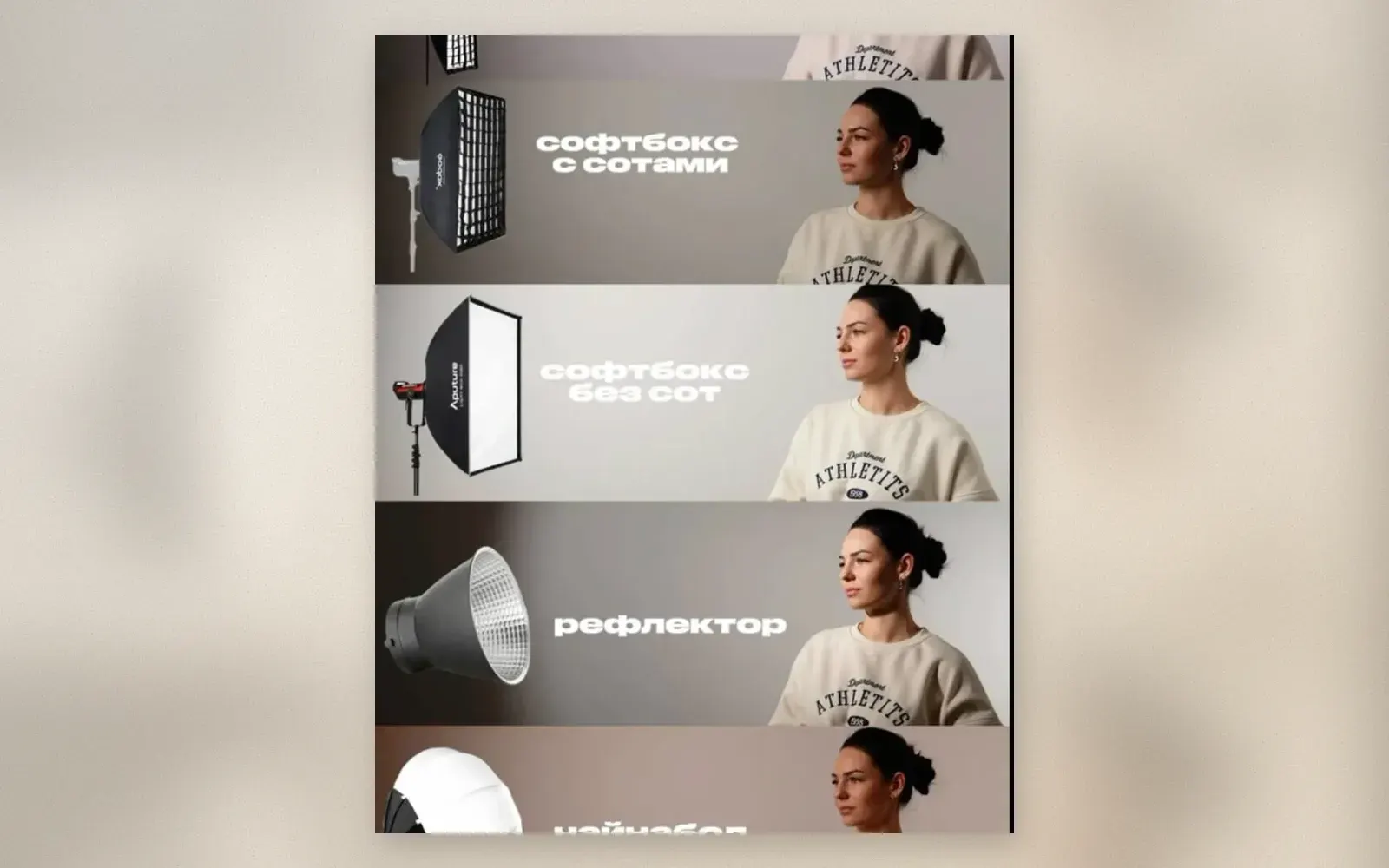
The same light source, the same model, the same distance — but six different modifiers produce six different looks. A strip light with grid creates dramatic rim lighting. A softbox without grid produces even, flattering illumination. A China ball fills the room with ambient softness. The modifier you choose determines the mood, the shadow quality, and the story the portrait tells.
🏷 Studio lighting gear on Amazon Buy on Amazon → · Check on Etsy →
Strip Light with Grid (Стрип с сотами)
The strip light with grid produces a narrow, controlled band of light. The grid restricts the beam angle, preventing light from spilling onto the background or other parts of the subject. The result is dramatic rim lighting — a bright edge along the subject’s hair, shoulder, or jawline, with the rest of the face in shadow.
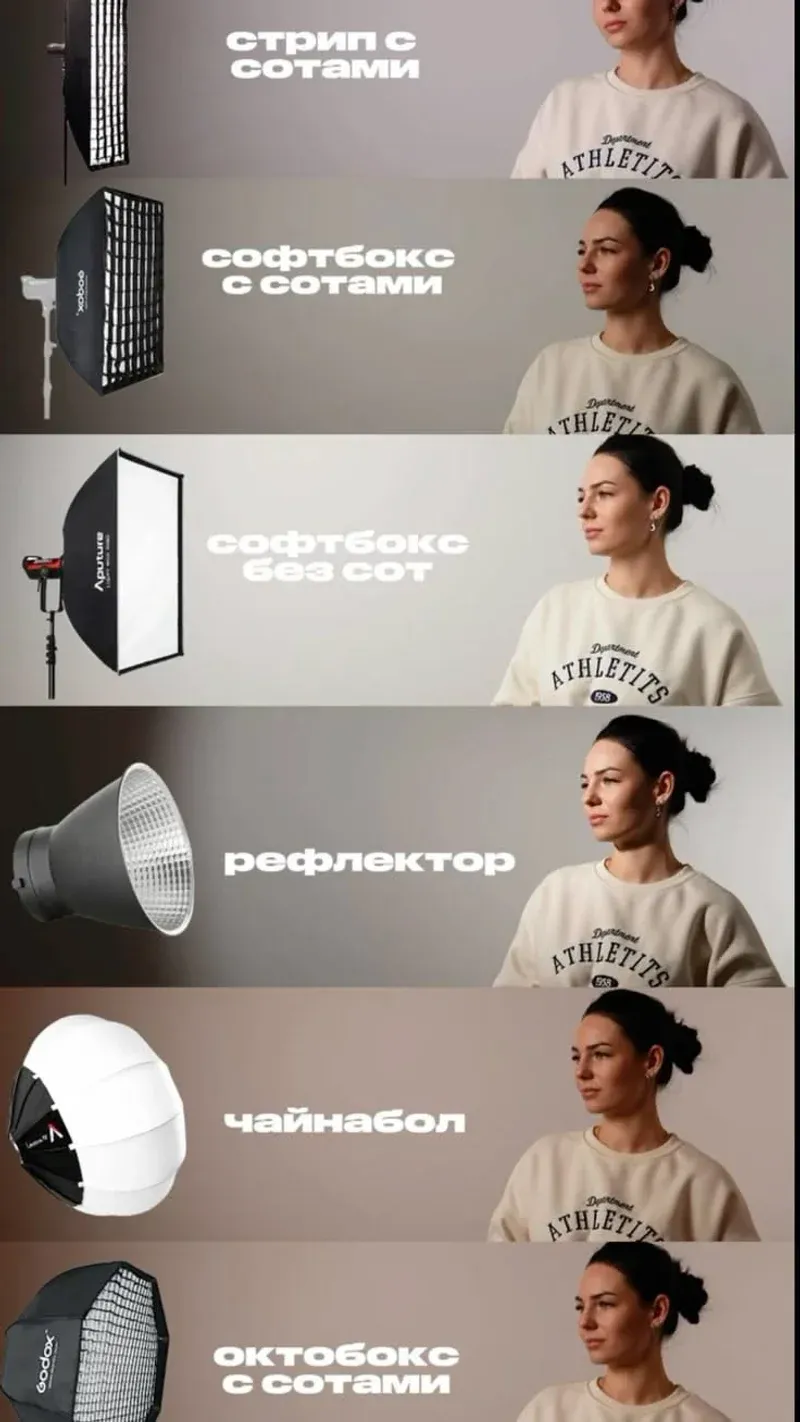
Strip lights with grids are essential for separating the subject from the background. Without rim lighting, the subject blends into the backdrop. With it, the subject pops forward with dimension and depth. Use it as a second or third light in a multi-light setup — never as the main light, unless you want a silhouette.
Softbox with Grid (Софтбокс с сотами)
A softbox with grid produces soft, directional light with controlled spread. The grid narrows the beam, creating more contrast between the lit side and the shadow side of the face. Shadows are softer than a reflector dish but harder than a softbox without grid.
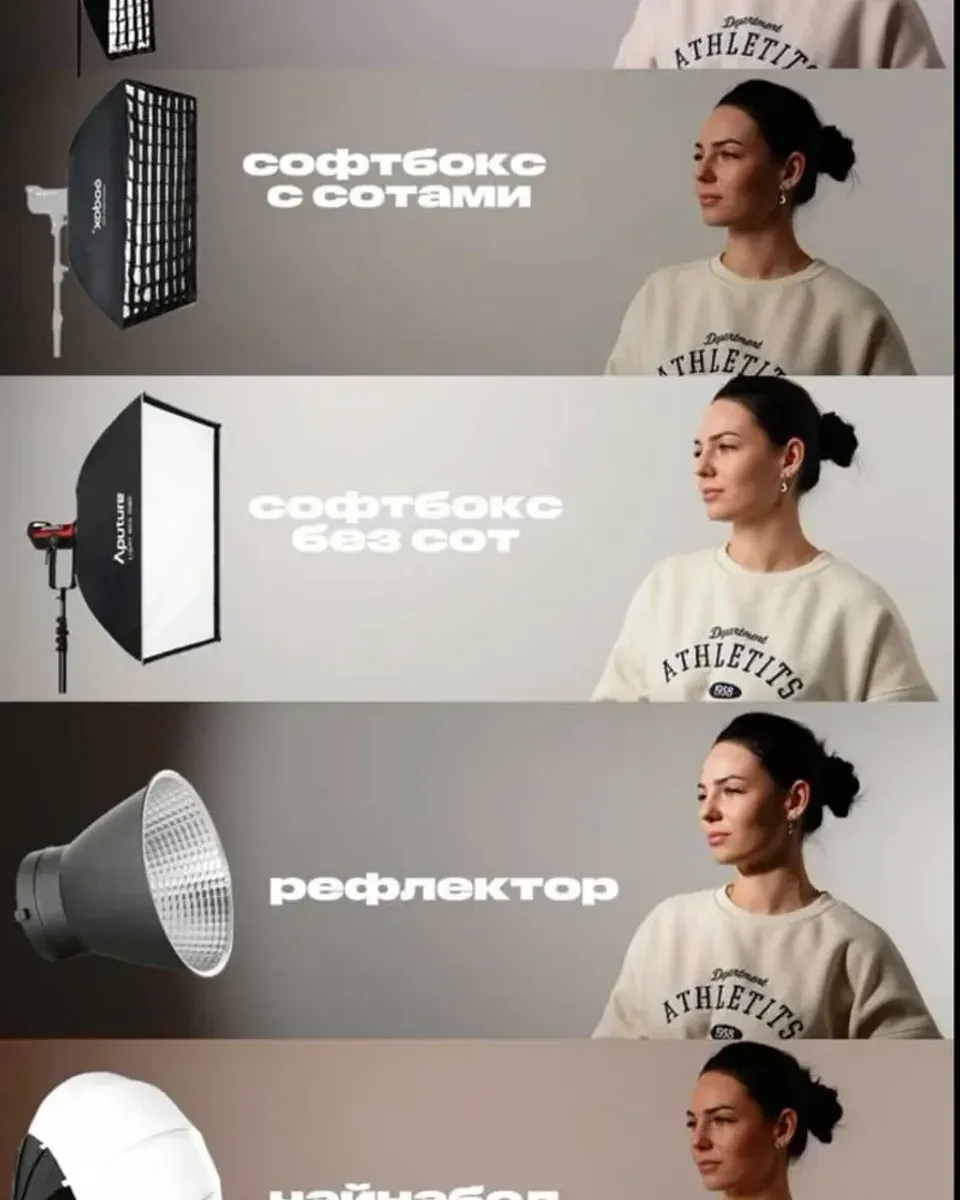
This is the workhorse modifier for portrait photography. The grid gives you control over where the light falls, which is critical when you want to light the face without lighting the background. The soft quality flatters skin, while the grid adds enough contrast to define facial features.
Softbox without Grid (Софтбокс без сот)
A softbox without grid produces the widest, most even soft light. The light spreads in all directions from the softbox surface, filling the scene with gentle illumination. Shadows are minimal and the transition from light to shadow is gradual and smooth.
This is the safest modifier for beginners. It is hard to get bad results with a large softbox — the light is forgiving, the shadows are soft, and the subject looks good from almost any angle. The downside is less control — the light spills everywhere, which can wash out backgrounds and reduce contrast.
Reflector Dish (Рефлектор)
The reflector dish (standard reflector) produces hard, directional light with defined shadows. There is no diffusion — the light bounces off the metal surface and hits the subject directly. The result is high contrast, sharp shadow edges, and visible texture in skin and clothing.
Reflector dishes are used for dramatic lighting, product photography, and situations where you want to emphasize texture and shape. The hard light creates strong shadows under the nose, chin, and cheekbones, which can be flattering for angular faces but harsh for round ones.
China Ball (Чайнабол)
The China ball (paper lantern) produces soft, omnidirectional light that fills a room evenly. Unlike a softbox, which directs light toward the subject, the China ball radiates light in all directions — ceiling, walls, floor. The result is a natural, ambient look with minimal shadows and a warm, inviting mood.
China balls are popular for interview lighting, lifestyle photography, and scenes that need soft, wraparound illumination. The light quality is similar to window light on an overcast day — even, flattering, and natural. The downside is less control — you cannot focus the light or prevent it from hitting the background.
Octabox with Grid (Октобокс с сотами)
The octabox with grid produces soft, directional light with a round catchlight in the eyes. The octagonal shape creates a more natural-looking catchlight than a square softbox — it mimics the round shape of the sun or a natural light source. The grid narrows the beam for controlled, contrasty portraits.
The octabox is the most popular portrait lighting modifier. The large surface area creates smooth, flattering light that wraps around the face. The round catchlight in the eyes looks natural and alive. The grid adds control, preventing light from spilling onto the background.
Who should use which modifier?
Beginners: start with a large softbox without grid. It is the most forgiving modifier and produces good results in almost any situation. Learn lighting with a softbox, then add grids and specialized modifiers as your skills develop.
Portrait photographers: the octabox with grid is your primary modifier. It produces the most flattering light for faces and the most natural catchlights. Add a strip light with grid for rim lighting and a reflector for fill.
Interview and video shooters: the China ball produces the most natural-looking ambient light. It fills the room evenly without hotspots or harsh shadows, which is ideal for talking-head content.
Product photographers: the reflector dish and softbox with grid cover most product photography needs. The reflector creates dramatic shadows that define shape, while the softbox provides even illumination for flat-lay and catalog work.
Verdict
✅ Pros:
- 6 modifiers compared with the same model and light source
- Each modifier explained with when and why to use it
- Covers hard light (reflector) to soft light (softbox) to ambient (China ball)
- Grid vs no-grid comparison shows the control difference
- Practical recommendations for beginners, portrait, interview, and product work
- Works with any studio flash or continuous light system
❌ Cons:
- Does not cover beauty dishes, parabolic reflectors, or barn doors
- Light quality depends on modifier size, not just type
- Grids reduce light output — may require higher flash power
- China ball is fragile and not portable for location work
- Octabox with grid requires more space than smaller modifiers
- Does not discuss color temperature differences between modifier brands
🏷 Find studio lighting modifiers Best deals on Amazon →
🇩🇪 This article is also available in Deutsch:
Read in Deutsch →
FAQ
What is the difference between a softbox with and without a grid?
A grid on a softbox restricts the light spread, creating a more focused beam with harder shadows and more contrast. Without a grid, the softbox produces a wider, more even light with softer shadows. Grids give you control; grids without give you coverage.
What is a strip softbox used for?
A strip softbox produces a narrow, vertical band of light. It is used for rim lighting, hair lighting, and accentuating the edge of a subject. The grid on a strip light further narrows the beam, preventing spill onto the background.
What is a China ball in studio lighting?
A China ball (paper lantern) produces soft, omnidirectional light that fills a room evenly. It creates a natural, ambient look with minimal shadows. It is popular for interview lighting, lifestyle photography, and scenes that need soft, wraparound illumination.
What is an octabox and when should I use it?
An octabox is an octagonal softbox that produces soft, even light with a round catchlight in the eyes. It is the most popular portrait lighting modifier — the round catchlight looks natural, and the large surface area creates smooth, flattering light for faces.
What is a reflector dish in studio lighting?
A reflector dish (standard reflector) produces hard, directional light with defined shadows. It is used for dramatic lighting, product photography, and situations where you need contrast and texture. The light is not diffused, so it creates sharp shadow edges.

Continue reading
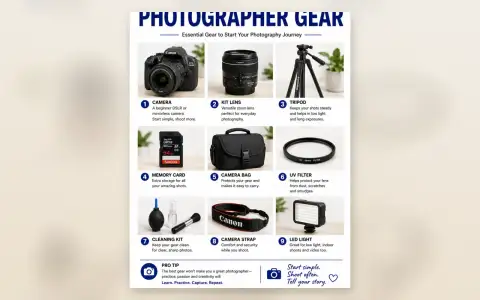
Beginner Photographer Gear: 9 Essential Items to Start Your Photography Journey
Beginner photographer gear guide: Canon EOS 2000D DSLR, 18-55mm kit lens, tripod, SanDisk 64GB memory card, camera bag, UV filter, cleaning kit, camera strap, and LED light. Everything you need to start shooting: nothing you don't.
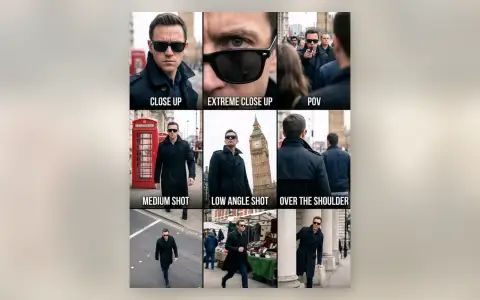
Camera Shot Types Explained: 12 Frames Every Photographer and Videographer Should Know
Camera shot types guide: Close Up, Extreme Close Up, POV, Medium Shot, Low Angle, Over the Shoulder, High Angle, Tracking, Reveal, Wide Shot, Dutch Angle, and Bird's Eye View. When to use each and why it matters.
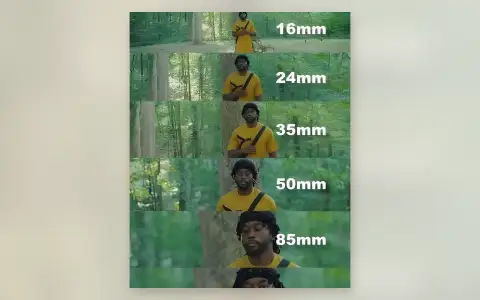
Focal Length Comparison: How 16mm to 135mm Changes Your Portrait
Focal length comparison guide: how 16mm, 24mm, 35mm, 50mm, 85mm, 105mm, and 135mm lenses affect portrait perspective, background compression, and facial distortion. Visual examples from wide to telephoto.