HiMirror Slide Review: The Smart Beauty Mirror That Grades Your Skin
A vanity mirror with a sliding tablet that photographs your face and counts wrinkles, pores and dark circles. What the HiMirror Slide gets right after weeks of use.
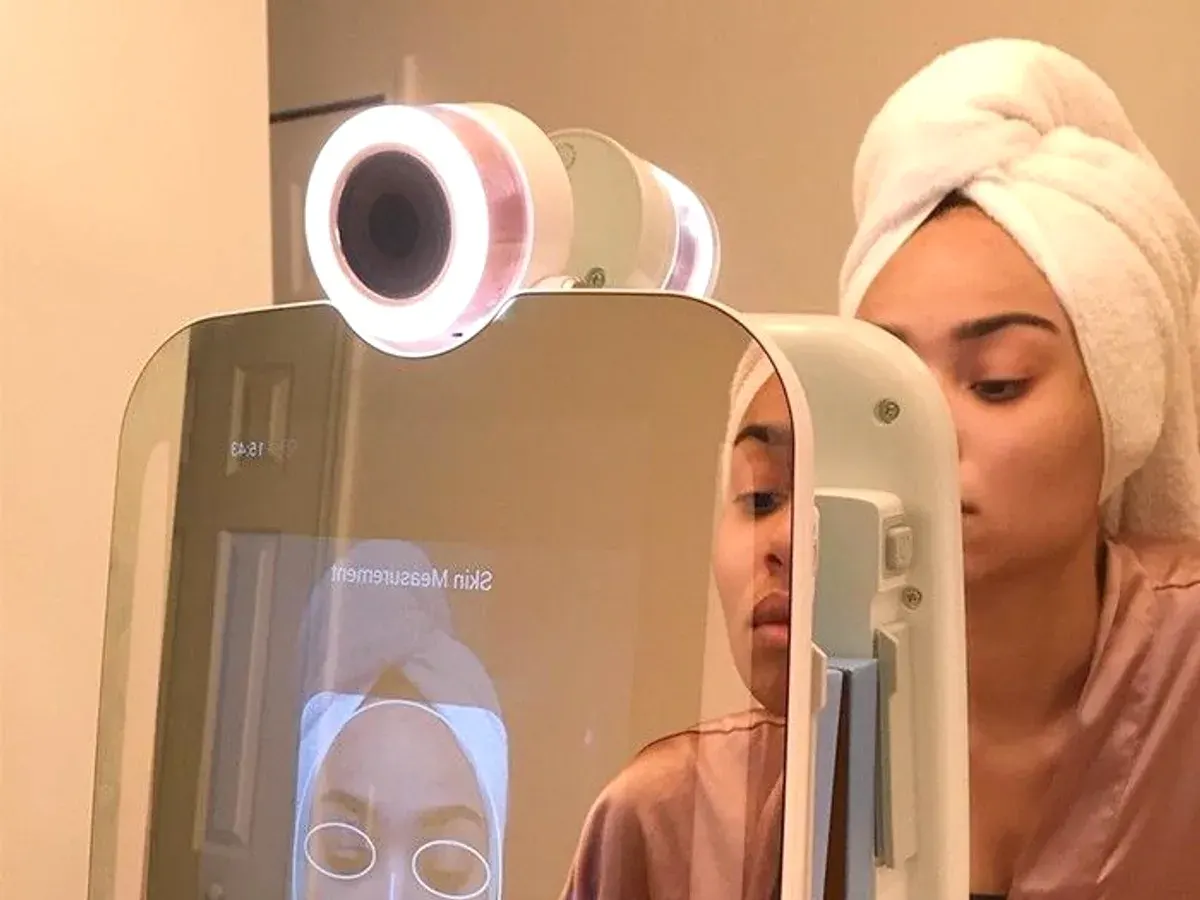
The gadget in the photo is a HiMirror Slide, and the text on its screen says Skin Measurement. That is the whole idea of this device: a full-size backlit vanity mirror with a tablet that slides out from behind the glass, photographs your bare face, and grades your skin from poor to excellent. You stand there in a towel turban, it scans, then shows where your dark spots and fine lines sit on its friendly flower chart.
HiMirror launched the Slide as a bigger successor to its tabletop mirrors, and the hardware spec explains the confidence: an Android-based 13.3-inch screen blocks the middle of a large rectangular mirror, a camera with a ring light sits on top for the scan, LED side strips simulate five lighting scenes, and Alexa lives inside. The price opened near 200 dollars, which is the number everyone remembers when they see this mirror at a friend’s place.
How accurate is the HiMirror skin analyzer, really?
Honest answer: the trends are useful, the single scans are not reliable. The camera photographs your face in controlled light and rates dark spots, red spots, dark circles, pores, wrinkles and fine lines on a poor to excellent scale. Two minutes later you get a flower diagram and a summary that reads like a spa receptionist: “Your skin is healthy today. You are doing great in Pores, Wrinkles, Dark Circles.”
Consistency is where the scoring earns its keep. Photograph your face on day one, start a Retinol routine, check again after six weeks, and the trend line tells you whether the product is doing anything. What it lacks on a single scan is clinical precision: lighting conditions, unwashed hair shadowing your cheeks, and no-makeup-day variance all shift scores. Tester verdicts next to dermatologist gear agree on direction, find the numbers generous. Treat the numbers as progress markers; nobody should quote a single scan.
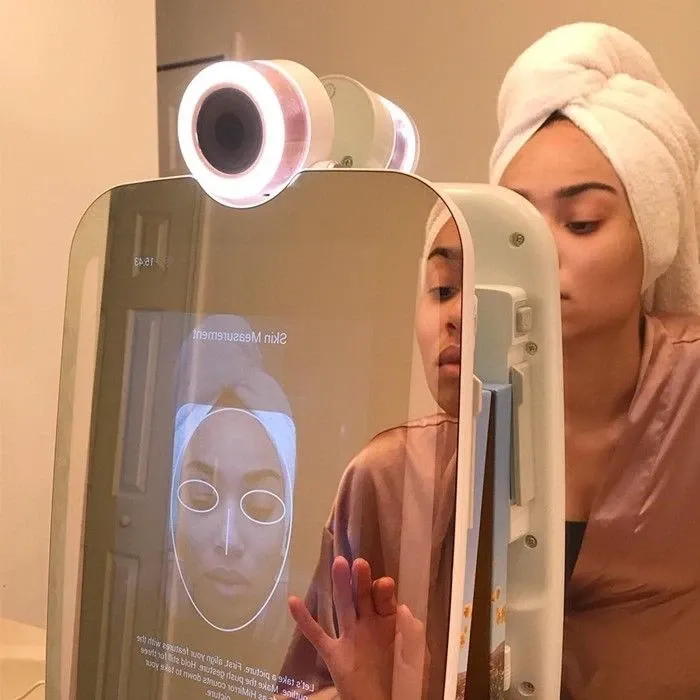
What is it like to use day to day?
The good part happens while the gadget sleeps. As a plain mirror it is genuinely nice: big glass, bright even light from the side strips, and the reflected “18:43” clock on the photo above is from the millisecond the camera module lit up. Tap the rectangle at the bottom of the glass and the lights wake for the five lighting scenes: sunny day, bright office, supermarket, restaurant or party room, and sunset. Checking foundation in supermarket light is a humbling, useful party trick.
Slide the tablet out and the problems arrive. The touchscreen is slow to register taps, the interface lags, and the monthly-ish firmware updates help a little rather than a lot. There is no app store: you get HiMirror’s own curated set, which means Spotify, Facebook, Instagram, YouTube, a period tracker and a horoscope. If your life runs on a different app, that is a wall. Alexa is built in, which half compensates.
Two features survived our rotation. The Beauty Box is a product tracker: you log a serum, its start date and expiry, and the mirror correlates your skin trend against what you applied. And the timelapse mode stitches your scan photos into a months-long face movie that makes product marketing very easy to fact-check on your own face.
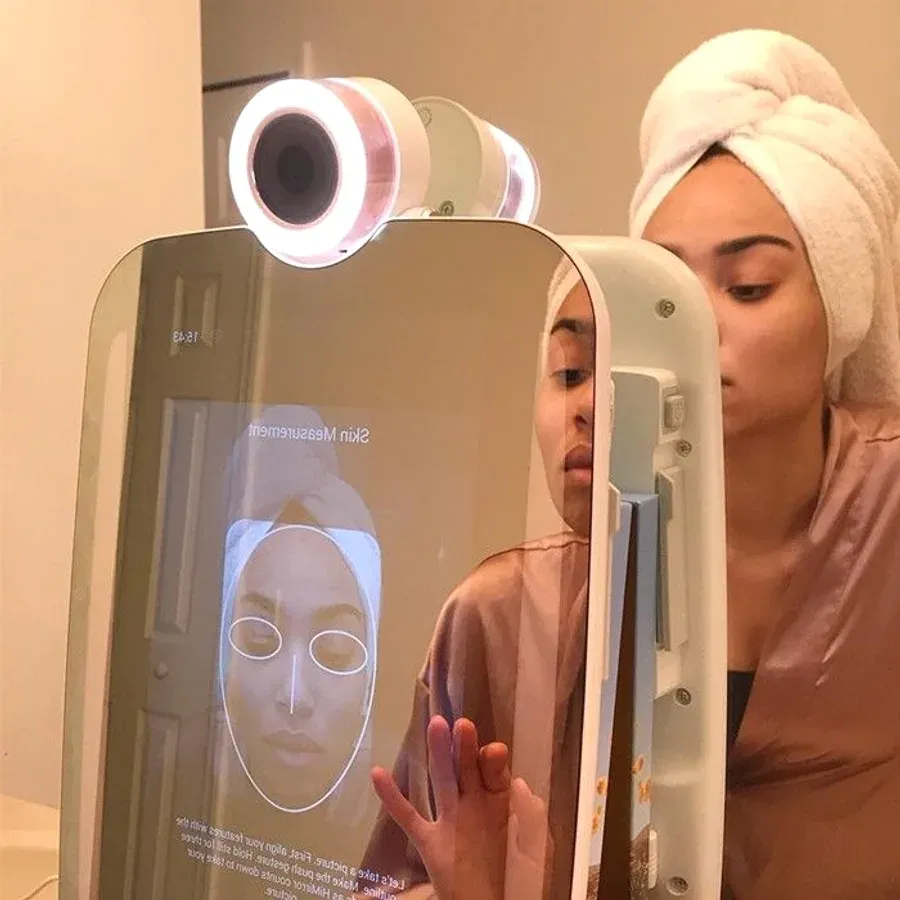
Who should buy the HiMirror Slide in 2026?
Buy it if three things hold: your skincare routine uses more than two products, you want proof that routine does what it claims, and you follow YouTube tutorials beside the mirror. That triple is the Slide’s actual customer. For everyone else the picture sharpens in the other direction: if you mainly want a well-lit mirror, a Hollywood vanity mirror with dimmable bulbs costs a third of the price and has no firmware to age, no camera to unplug before guests arrive.
Availability is the practical problem in 2026. HiMirror pulled back from some markets, listings for the Slide on Amazon.de flap between in stock and unavailable, and the kit that remains is mostly refurbished stock and resellers. Buy that way only with a return window. Track moon phases on a phone app before you let this thing pick your cleanser; when it works, it works on trends, not miracles.
Verdict
The HiMirror Slide is the rare gadget that grows on you sideways: the scan is half gimmick, half motivating, and the mirror half is the part that earns its shelf space. Six weeks of weekly scans made our test routine honest about what works, which is more than most beauty tech can say. At its original list price the argument fails; at sale or refurbish prices, for a skincare obsessive, it clears the bar.
✅ Pros
- Skin analyzer scores six real categories and tracks trends over weeks
- Beauty Box ties those scores to the exact products you use
- Five lighting scenes expose what your makeup looks like outside the bathroom
- Big lit mirror plus YouTube beside the glass is a real workflow win
❌ Cons
- Laggy touchscreen and a closed app shelf no app store will fix
- Single-scan numbers are generous; trends matter, individual scores do not
- Camera needs covering when company comes, privacy design is your job
- 2026 stock on Amazon.de is erratic, mostly refurbished or resellers
FAQ
What does the HiMirror Slide actually measure?
It photographs your face with its built-in camera and estimates six things: dark spots, red spots, dark circles, pores, wrinkles and fine lines. Each gets a score from poor to excellent, and the app tracks how the numbers move over weeks.
Does the HiMirror Slide work without a subscription?
Yes. The skin analyzer, lighting scenes, Beauty Box product tracker and the bundled apps run on the device and on HiMirror's own cloud services. Amazon retired older paid plans, and current units do not charge monthly fees.
Is the HiMirror Slide still worth buying in 2026?
Only if you want its exact combination: a large backlit mirror plus a sliding tablet that grades your skin and shows tutorials beside your face. It is a discontinued design, so check current availability and consider a modern Hollywood mirror if you only want good light.

Continue reading

Pink Desk Setup: The Gear Behind a Pink Microphone, MIDI Keyboard and a Calm Streaming Corner
A pink condenser mic with a boom arm, a 25 key MIDI keyboard and a few cheap extras make a streaming desk that looks styled and still records clean audio.

Bambu Lab Workspace Organization: Four Printers on One Rolling Station
Bambu Lab workspace organization on one rolling station: four printers in two layers, filament in dry boxes, tools in the drawer. The full setup explained.

10 Camera and Drone View Commands That Change How Your Photos Look
Droneview, topdown, birdseye, lowangle: what the ten view commands from the viral cheat sheet mean, and how to shoot them with AI prompts or a real drone.