Photo Studio Setup: Every Piece of Equipment in a Working Studio
Photo studio setup guide: backdrop system, studio light with umbrella, tripod, tethering screen, camera remote, posing stool, and camera bag. What each piece does and how they work together.
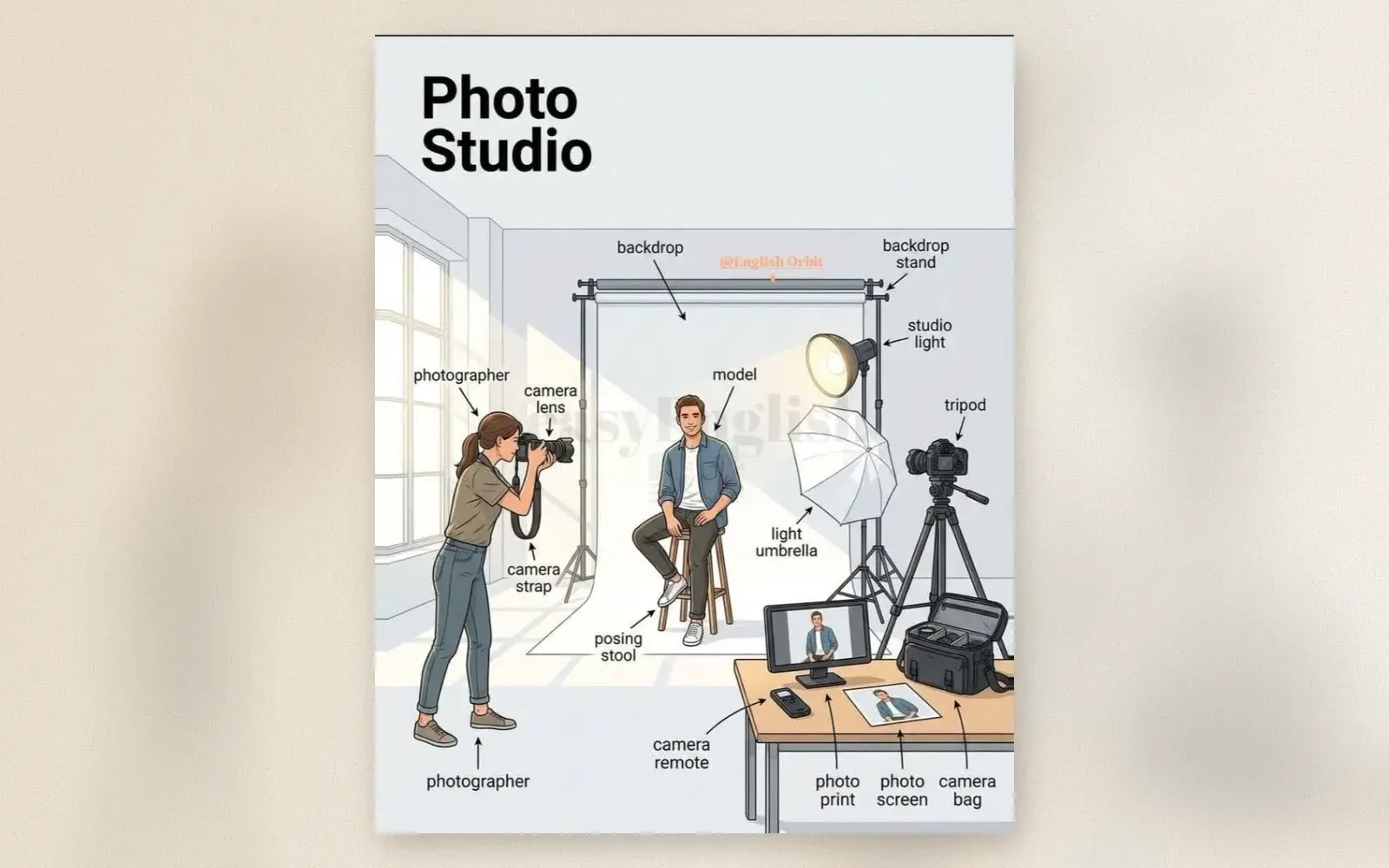
A working photo studio is seven pieces of equipment arranged in one room. The diagram below shows the standard layout: photographer on the left, model on a posing stool in front of the backdrop, studio light with an umbrella modifier to the right, and a tethering table with a screen, remote, and camera bag behind it. Each piece has a job; remove one and the session gets harder.
🏷 Core studio gear Godox Softbox 60x90 → · Backdrop System →
Backdrop and Stand: The Canvas
The backdrop is the biggest visual element in every frame. A white or grey seamless paper backdrop handles portraits, product shots, and video interviews. A support stand with two tripods and a crossbar holds it taut at any height. Paper tears and creases over time, so budget for rolls, but cloth backdrops survive years of folding.
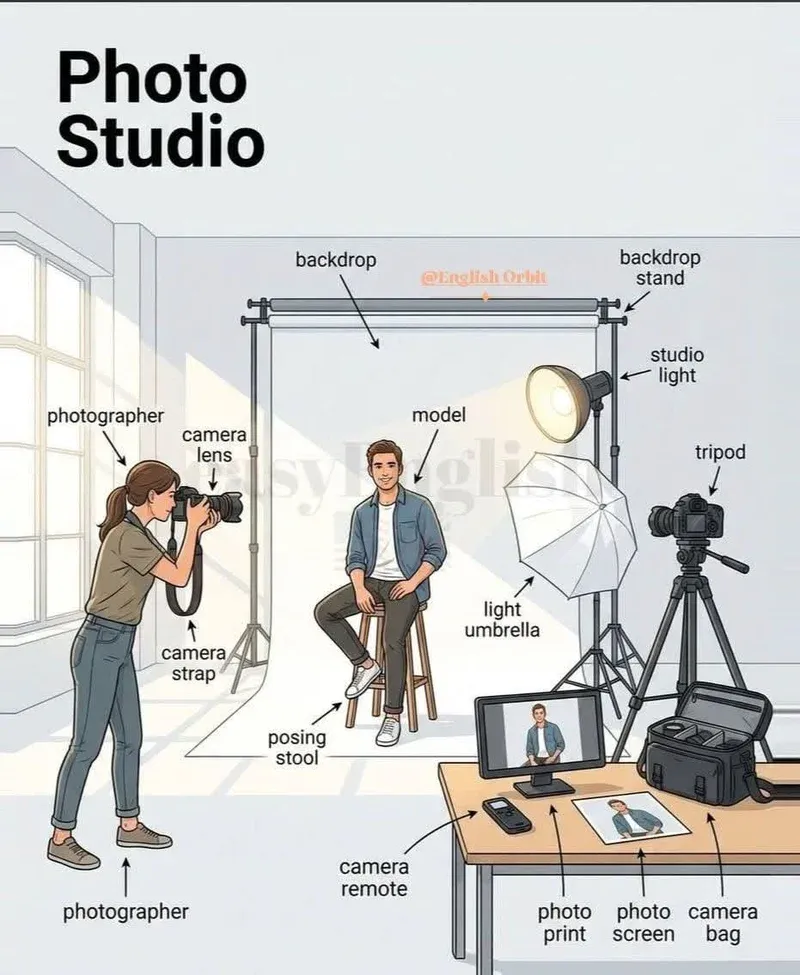
The stand system matters more than the backdrop itself. A wobbly crossbar sags mid-session and shows in wide frames. Look for stands rated above 3 kg load capacity with locking clamps that survive repeated height changes.
🏷 Backdrop stand Buy on Amazon →
Studio Light and Umbrella: The Engine
One studio flash with an umbrella modifier produces 90 percent of studio looks. The flash mounts on a stand, fires into or through the umbrella, and the umbrella spreads it into soft, wraparound illumination. A 300Ws flash is plenty for portrait work in a home studio; 400Ws handles larger rooms and darker modifiers.
Shoot-through umbrellas push light directly through white fabric: soft, broad, spilling everywhere. Reflective umbrellas bounce light back out: slightly more contrast, better control. Both set up in ten seconds, which is why working photographers still carry them alongside expensive softboxes.
🏷 Studio flash + umbrella Flash Kits →
Tripod: The Camera Anchor
The tripod in the diagram holds a second camera for behind-the-scenes angles, but its primary studio job is stability for product shots, self-portraits, and any frame that repeats with only styling changes. A tripod with a horizontal center column doubles as an overhead rig for flat-lay work.
Aluminum legs handle studio weight fine; carbon fiber saves weight that only matters on location. The head matters more: a ball head with an Arca-compatible quick-release plate swaps between handheld and tripod shooting in seconds.
🏷 Tripod Buy on Amazon →
Tethering Screen: Instant Review
The photo screen on the table shows every frame at full size seconds after capture. Tethered shooting catches soft focus, lighting falloff, and wardrobe issues while the model is still in position. Wire the camera over USB to a laptop, or use a portable HDMI monitor fed directly from the camera.
Tethering changes the client conversation too: the model sees the results live, trust builds faster, and pose adjustments happen with a pointed finger instead of a verbal description.
🏷 Tethering tools Tethering Gear →
Camera Remote: Shake-Free Trigger
A wireless remote triggers the camera without touching it. At shutter speeds under 1/60s, a finger on the shutter button transfers vibration into every frame. Remotes also fire the camera during self-portraits, group shots with the photographer included, and long exposures where any contact ruins the frame.
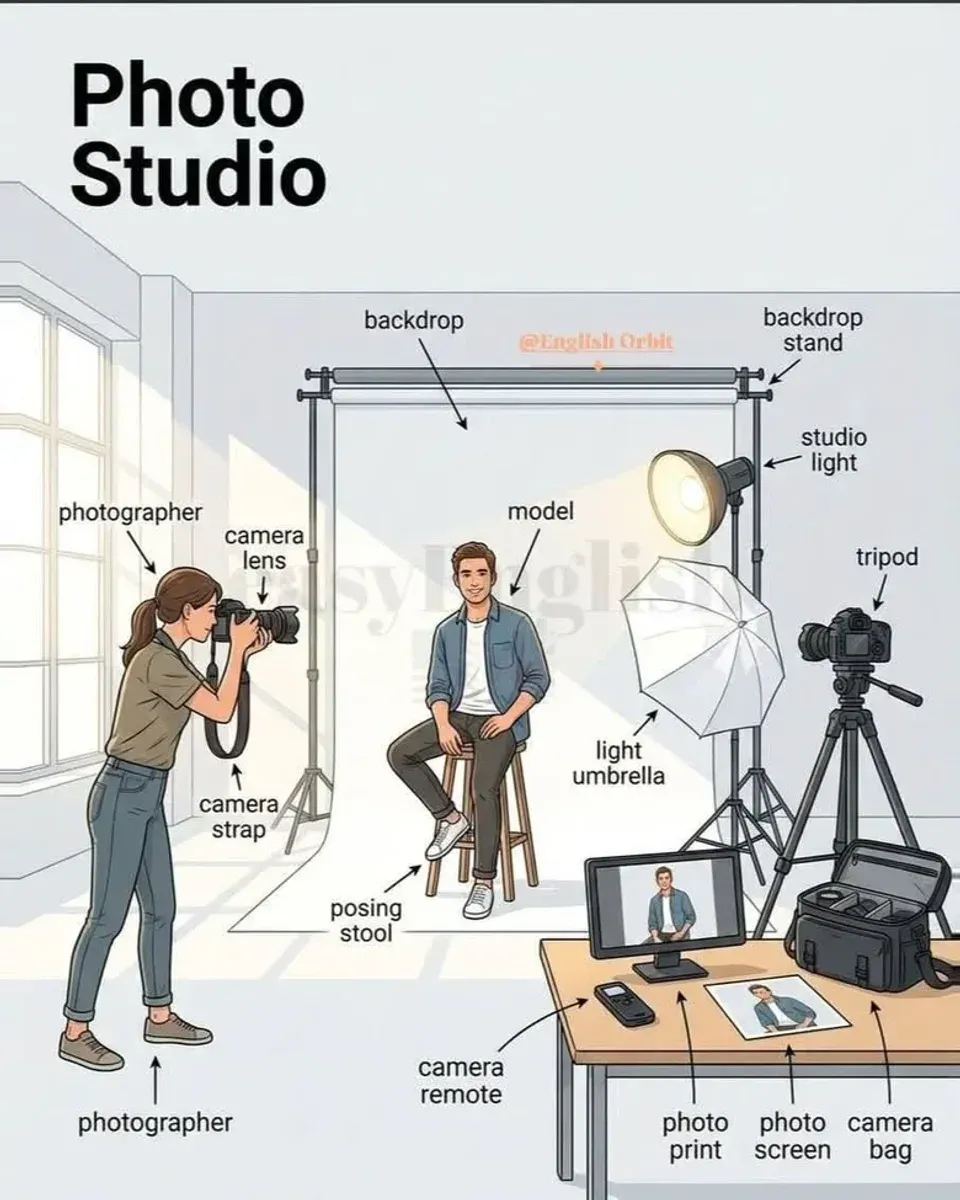
Wired remotes are more reliable and cheaper; wireless adds range and freedom of movement. Any remote matching the camera brand works. Third-party versions cost a third of the branded ones.
🏷 Camera remote Buy on Amazon →
Posing Stool: Repeatable Geometry
The posing stool fixes the model at a working height and keeps poses stable across hundreds of frames. Backless designs let the torso rotate freely for pose variety; adjustable height matches the stool to the backdrop coverage. Seated portraits hide leg positioning challenges and read as classic studio work.
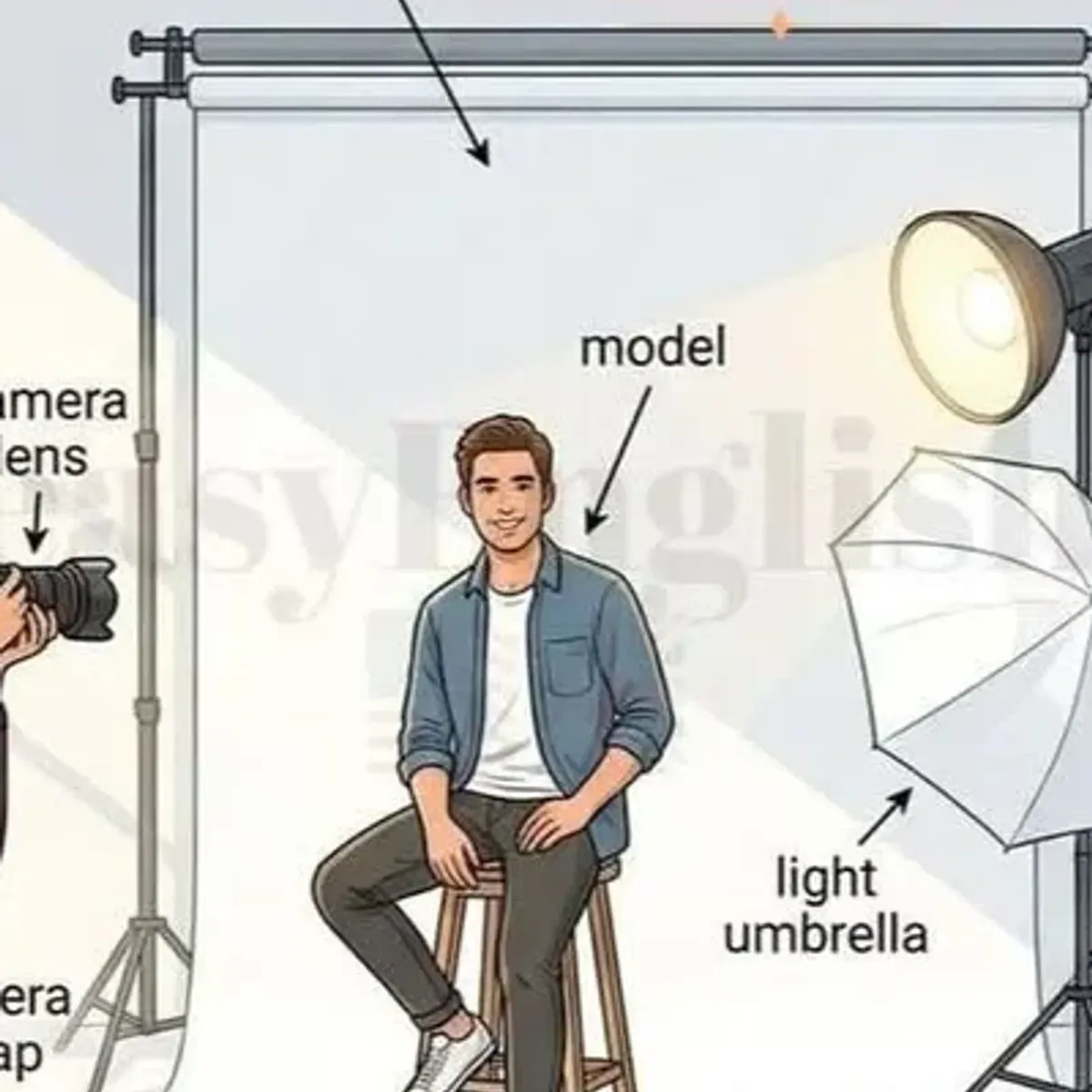
Any sturdy backless stool works. Dedicated posing stools add height adjustment and a footrest bar that gives hands and legs something natural to do.
🏷 Posing stool Buy on Amazon →
Camera Bag: Everything in Reach
The camera bag on the table keeps lenses, batteries, memory cards, and the cleaning kit within arm’s reach of the tethering station. A dedicated studio bag with a wide top opening beats a backpack here: no unzipping, no digging, no losing the good lens cap mid-session.
🏷 Camera bag Buy on Amazon →
Who should build this setup?
Photographers moving from location work to a controlled environment. The seven pieces turn any spare room into a studio that produces consistent, client-ready results regardless of weather or time of day.
Content creators shooting talking-head video, product shots, and portraits for social media. The same setup handles all three: swap the backdrop, adjust the umbrella, and the room is a new set.
Anyone who booked one too many overpriced rental studios. A home studio pays for itself in five to eight rentals, and the gear never has a booking conflict.
Verdict
✅ Pros:
- Seven pieces cover a complete working studio
- Umbrella lighting delivers 90 percent of studio looks at entry cost
- Tethering catches mistakes while the model is still in position
- Posing stool creates repeatable geometry across sessions
- Layout works in any spare room from 10 square meters
- Total cost starts around $400 with room to grow
- Everything available from Amazon without specialty retailers
❌ Cons:
- One light limits lighting pattern variety until a second is added
- Paper backdrops tear and need regular replacement
- Tethering needs a laptop or monitor beyond the seven core pieces
- Umbrellas spill light on walls in small dark rooms
- Posing stool is furniture, not camera gear: easy to postpone forever
- Home studios need ceiling height above 2.4 m for full-body work
🏷 More studio essentials Shop all →
🇩🇪 This article is also available in Deutsch:
Read in Deutsch →
FAQ
What do I need for a basic photo studio?
Seven pieces cover a working studio: a backdrop with a support stand, one studio light with an umbrella modifier, a tripod, a tethering screen for instant review, a camera remote, a posing stool, and a camera bag. Total cost starts around $400.
Why use an umbrella instead of a softbox?
Umbrellas are cheaper, lighter, and set up in seconds. A shoot-through umbrella diffuses light directly, while a reflective umbrella bounces it back. Softboxes give more controlled light, but umbrellas win on speed and value for a first studio.
What is tethered shooting?
Tethered shooting connects the camera to a screen so every shot appears at full size seconds after capture. You spot focus errors, lighting falloff, and styling issues immediately instead of after the session. Any laptop or portable monitor works.
Why does a studio need a posing stool?
A posing stool puts the model at a repeatable height, keeps poses stable during long sessions, and hides the legs when you shoot seated portraits. Backless designs let the torso rotate freely, which matters for pose variety.
Is a camera remote really necessary?
For tripod work and self-portraits, yes. A wireless remote eliminates camera shake from pressing the shutter, which matters at shutter speeds under 1/60s. Wired remotes cost under $15, wireless under $30.

Continue reading
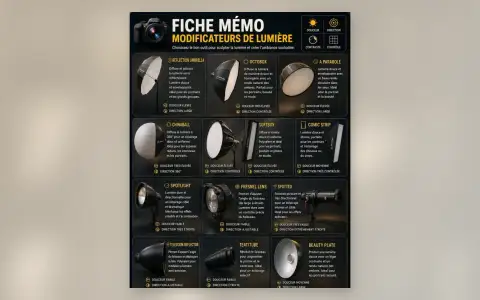
12 Light Modifiers Ranked: From Chinaball Soft to Snoot Hard
Light modifier cheat sheet: parabolic, octabox, softbox, chinaball, strip box, umbrella, beauty dish, fresnel, spotlight, telezoom, and snoot compared by softness and direction. Which modifier for which job.
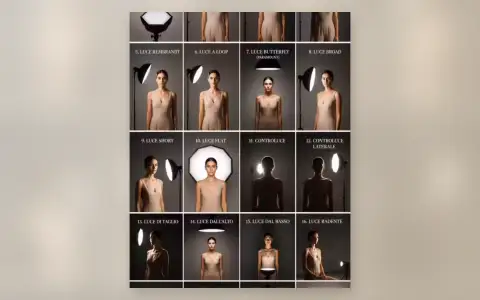
Portrait Lighting Patterns: 20 Studio Light Placements and What They Do to a Face
Portrait lighting patterns guide: Rembrandt, loop, butterfly, broad, short, split, rim, and 13 more studio light placements. How each pattern shapes a face and when to use it.
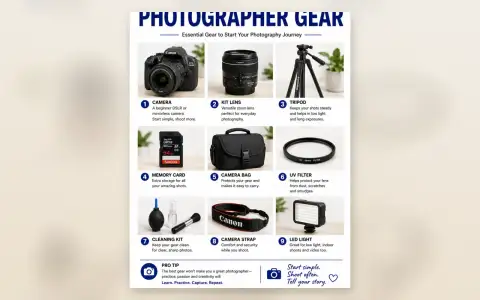
Beginner Photographer Gear: 9 Essential Items to Start Your Photography Journey
Beginner photographer gear guide: Canon EOS 2000D DSLR, 18-55mm kit lens, tripod, SanDisk 64GB memory card, camera bag, UV filter, cleaning kit, camera strap, and LED light. Everything you need to start shooting: nothing you don't.