Portrait Lighting Patterns: 20 Studio Light Placements and What They Do to a Face
Portrait lighting patterns guide: Rembrandt, loop, butterfly, broad, short, split, rim, and 13 more studio light placements. How each pattern shapes a face and when to use it.
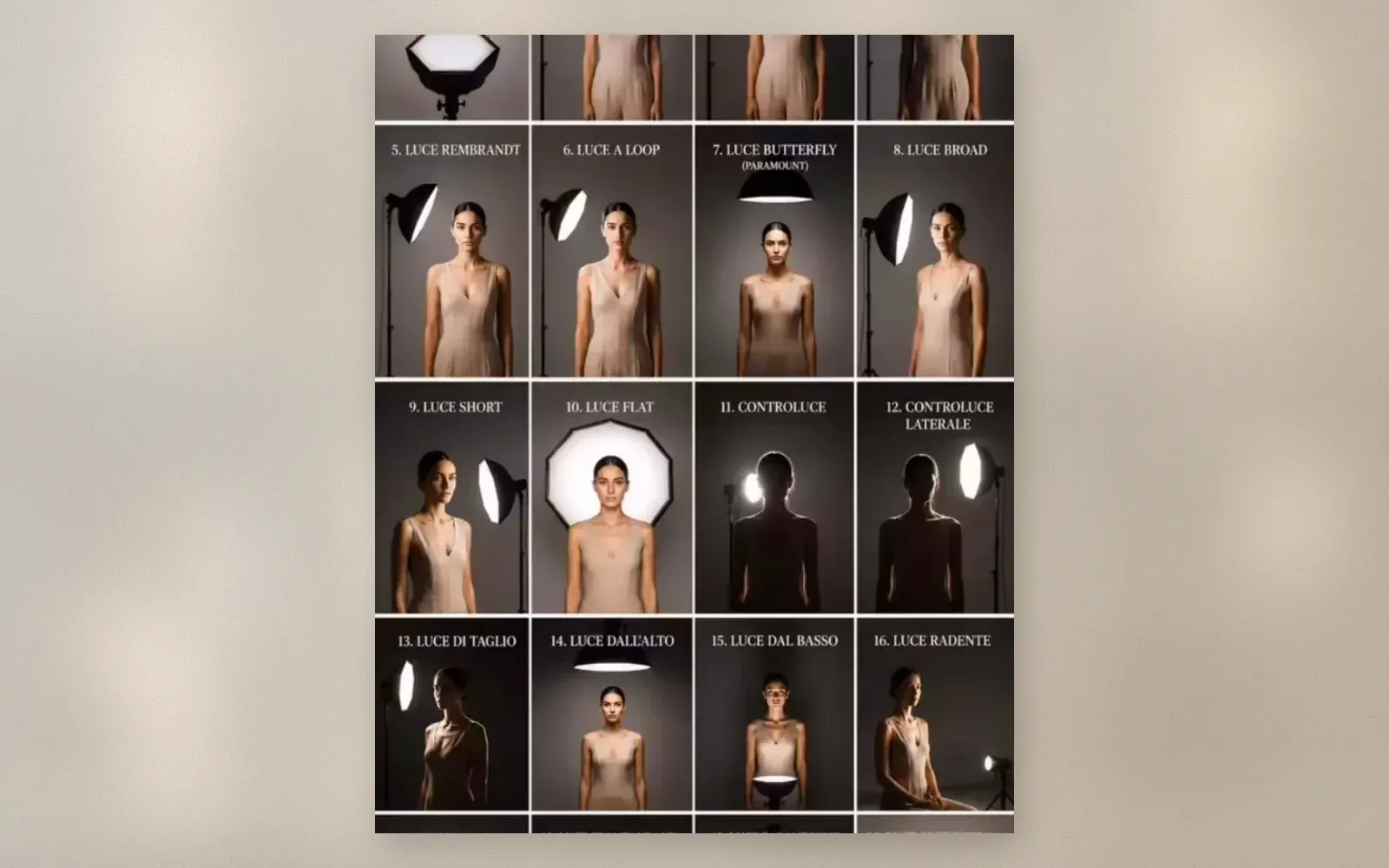
Move the light, change the face. The same model, the same softbox, the same room: light from the front gives you flat documentation, light 45 degrees off gives you Rembrandt, light from behind gives you a silhouette. Twenty lighting patterns below cover every placement worth knowing, from the flattering loop to the unforgiving raking light that exposes every pore.
🏷 Studio lighting for portraits Godox Softbox 60x90 → · Studio Flash →
The Classic Four: Flat, Loop, Rembrandt, Split
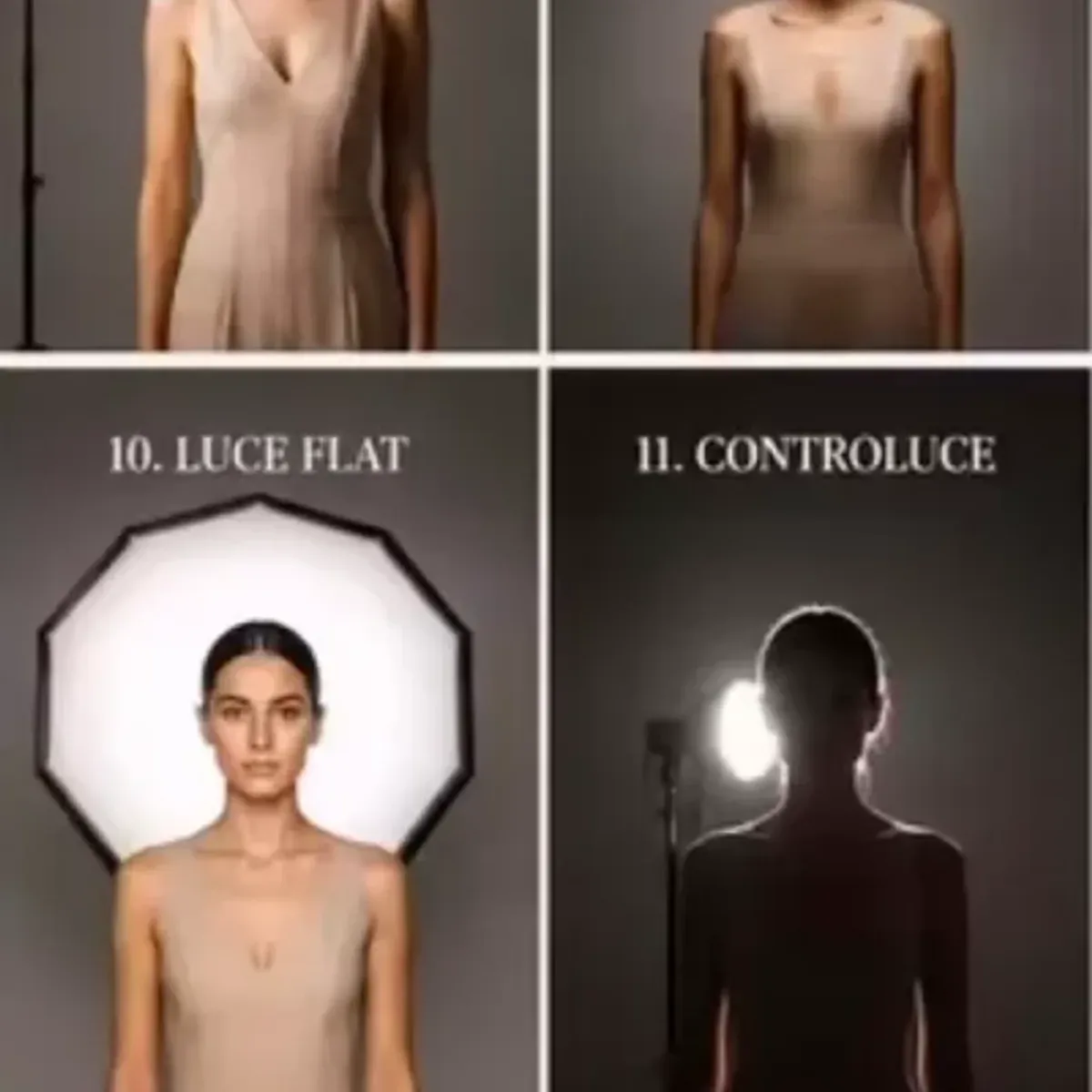
Flat lighting puts the light in front of the face, camera height. Shadows disappear, skin looks even, and every imperfection shows. Passport photos use it; glamour portraits avoid it. The grid image shows it with an octabox straight on: honest, dimensionless, useful for documentation and e-commerce.
Loop lighting moves the light 30 to 45 degrees to the side and slightly above. A small shadow loops down from the nose toward the mouth corner. This is the default portrait pattern: dimension without drama, flattering on most faces, forgiving of small placement errors. Start here.
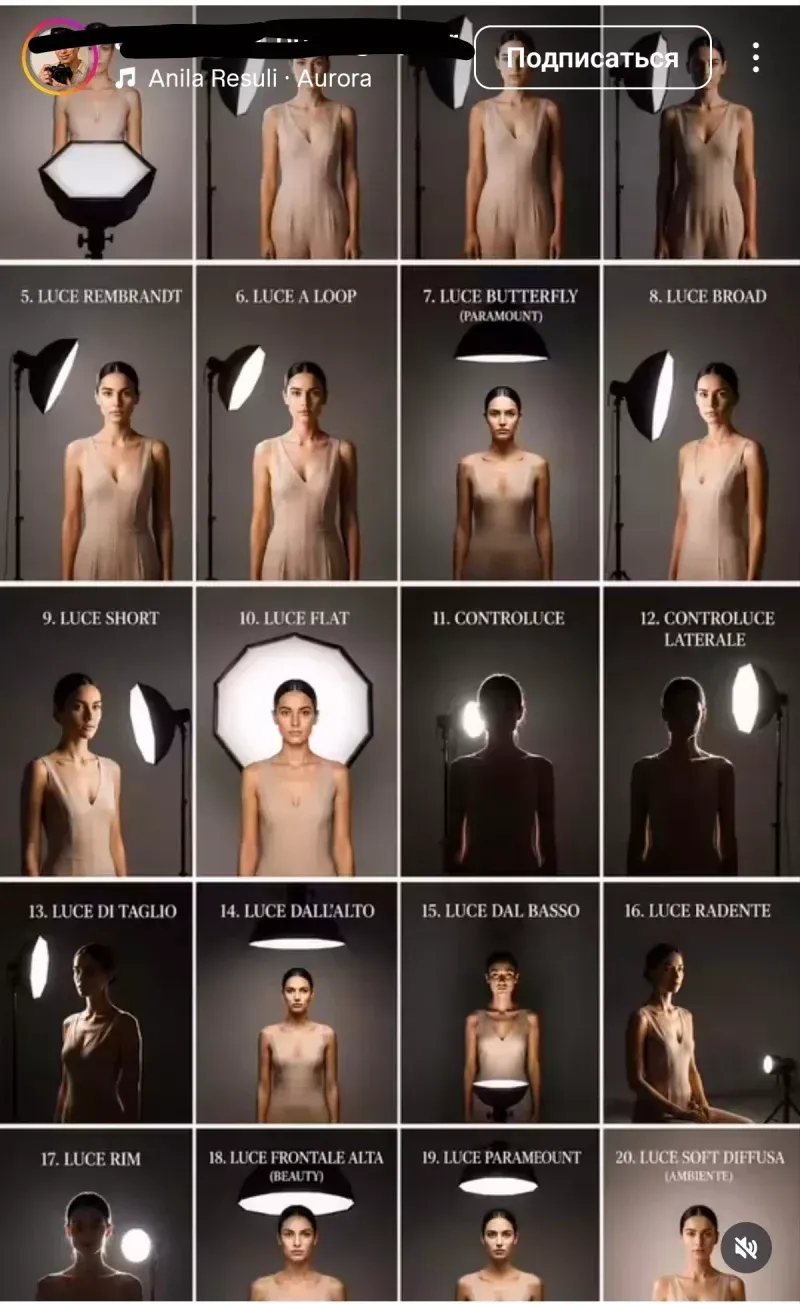
Rembrandt lighting pushes the light further to the side and higher: 45 degrees out, 45 degrees up. The shadow side of the face gets a small inverted triangle of light under the eye, and the far eye catches a catchlight. Painterly, dramatic, masculine-leaning. Named for the painter whose studio window produced it.
Split lighting places the light at 90 degrees: half the face lit, half black. The most dramatic of the standard patterns. Character portraits, album covers, and any shot that wants mystery over information.
Broad and Short: Same Light, Different Face
Broad and short lighting are not light positions. They are what happens when a side-lit setup meets a turned head. Broad lighting illuminates the side of the face visible to the camera: the face reads wider, fuller. Useful for thin faces, rarely otherwise.
Short lighting illuminates the side of the face turned away from the camera: the visible side falls into shadow, and the face reads slimmer, with more dimension. Most portrait work uses short lighting for exactly this reason. Same softbox, same angle; only the model’s head direction changes the result.
Butterfly and Beauty: Light from Above
Butterfly lighting, called Paramount lighting after the Hollywood studio, places the light directly in front of and above the face. The nose shadow drops straight down and forms a small butterfly shape under the nose. Cheekbones pop, eyes brighten, and symmetric faces look their best. glamour portraits and beauty editorials live here.
🏷 Beauty lighting gear Beauty Dish →
High frontal beauty lighting does the same job with a large beauty dish closer to the face: softer shadows, brighter catchlights, skin that glows. The pattern is everywhere in cosmetics advertising for a reason.
Backlight and Silhouette: Against the Light
Controluce, Italian for backlight, puts the light behind the subject: the face goes black, the edges of hair and shoulders glow. Silhouette is the result when the front receives no fill. Dramatic, anonymous, and unbeatable for mood.
Lateral backlight keeps the light behind but off to the side: one edge of the figure catches light while the face stays in shadow. Rim lighting is the refined version: a controlled edge of light traces the jawline and hair, separating the subject from the background. Studio portrait work uses rim light as a second or third light, rarely as the only one.
The Awkward Angles: Top, Bottom, Grazing
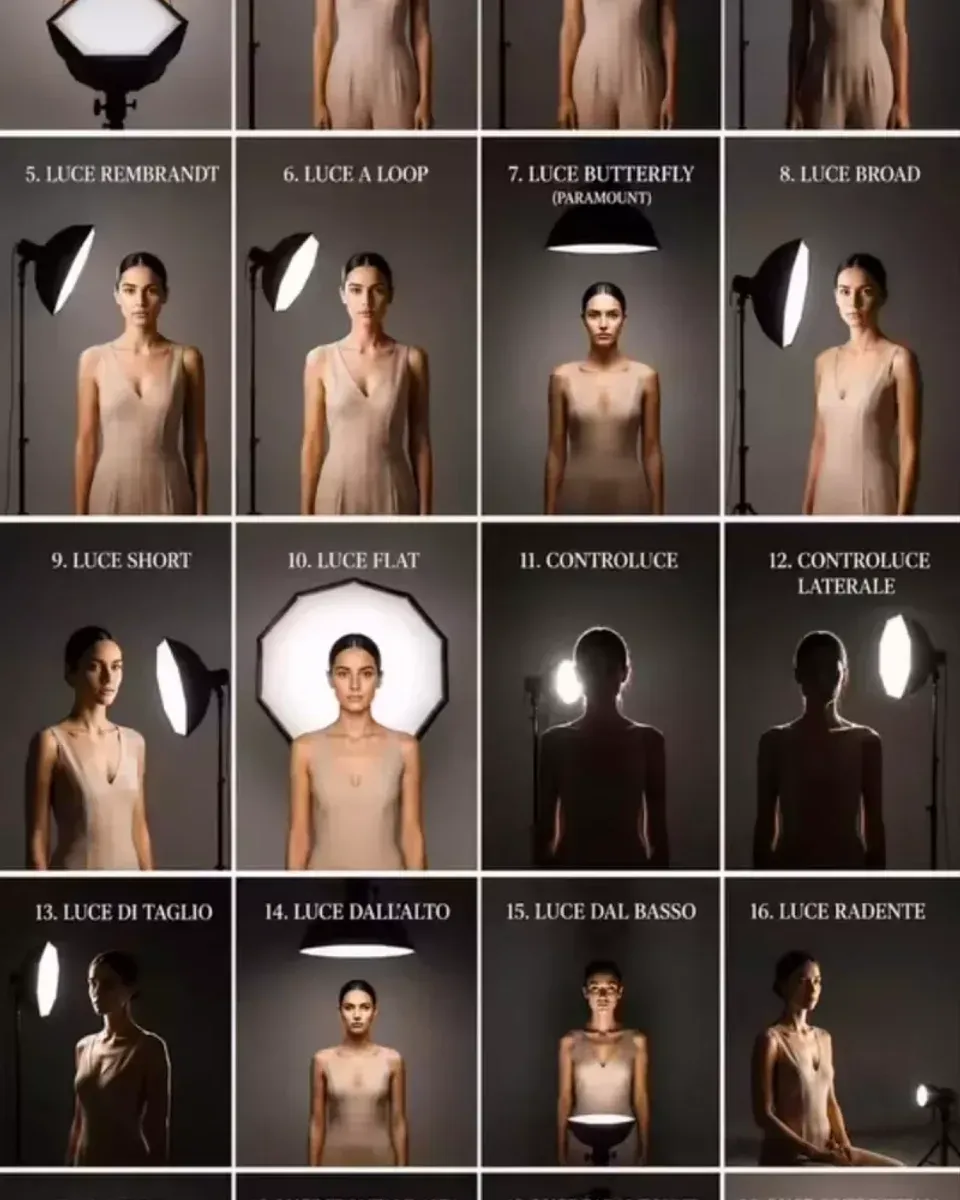
Light from directly above (luce dall’alto) produces raccoon shadows in the eye sockets: dramatic for horror and noir, unflattering almost everywhere else. Overcast days and softboxes exist to fight exactly this pattern.
Light from below (luce dal basso) inverts every shadow the face owns. Campfire tales and flashlight horror stories use it; portrait work bans it. The infographic includes it so you recognize it, not so you use it.
Grazing light (luce radente) skims across the surface at a low angle: every texture, pore, and wrinkle throws a shadow. Documentary and fine-art work uses it to show skin honestly and to photograph materials like fabric, brick, and skin texture. Beauty work avoids it absolutely.
🏷 Reflector and fill gear 5-in-1 Reflector →
Soft Ambient: The Safe Harbor
Soft diffused ambient light fills the room instead of aiming at the face. No defined shadows, no direction, gentle wrap. It is what a large octabox aimed at a white ceiling produces, and what overcast windows give for free. Safe, flattering, and forgettable: use it when the subject matters more than the light.
Who should learn these patterns?
Portrait photographers who want deliberate looks instead of whatever the light gives. The four classic patterns (loop, Rembrandt, split, butterfly) cover 90 percent of client work. Broad and short solve face-shape questions. The rest are vocabulary for specific moods.
Videographers and interview shooters: loop and soft ambient are the interview standards. Butterfly works for beauty and fashion films. Split and backlight set up drama shots and title sequences.
Strobe beginners who just bought a softbox and a flash: this list is the curriculum. One light, one stand, twenty positions to try in an afternoon with a willing friend.
Verdict
✅ Pros:
- 20 patterns cover every standard studio placement
- Classic four (flat, loop, Rembrandt, split) form the working core
- Broad vs short explained as head direction, not new gear
- Backlight family (silhouette, lateral, rim) separated cleanly
- Works with one light, one stand, any modifier
- Direct practice path: one model, one afternoon, twenty frames
❌ Cons:
- Pattern names vary between studios and languages
- Multiple-light setups combine patterns; single-pattern thinking limits combos
- Real modifiers blur pattern edges more than clean diagrams suggest
- Bottom and grazing patterns are rarely useful in client work
- Catchlight position differences between patterns take practice to see
- The graphic labels patterns in Italian; terminology mapping needed
🏷 More studio gear Octabox →
🇩🇪 This article is also available in Deutsch:
Read in Deutsch →
FAQ
What is Rembrandt lighting?
Rembrandt lighting places the key light 45 degrees to the side and 45 degrees above the subject, creating a small triangle of light on the shadowed cheek. It is dramatic, painterly, and named after the Dutch master who used it in portraits.
What is the difference between broad and short lighting?
Broad lighting illuminates the side of the face turned toward the camera, making the face look wider. Short lighting illuminates the side turned away from the camera, making the face look slimmer. Both use the same light position; only the subject's head direction changes.
When should I use butterfly lighting?
Butterfly (Paramount) lighting places the light directly above and in front of the subject, creating a butterfly-shaped shadow under the nose. It emphasizes cheekbones and works best for subjects with defined facial structure. Classic Hollywood glamour used it almost exclusively.
What is split lighting?
Split lighting (luce di taglio) places the light 90 degrees to the side, splitting the face into a lit half and a shadowed half. It creates drama and mystery, and works for character portraits, musicians, and moody editorial work.
Which lighting pattern is best for beginners?
Loop lighting. It is one small step from flat lighting: move the light slightly to the side and up, and you get a small nose shadow that adds dimension without harsh drama. It flatters most faces and forgives positioning errors.

Continue reading
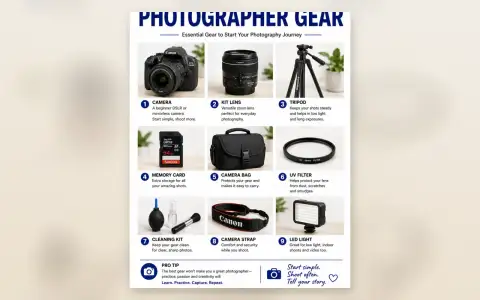
Beginner Photographer Gear: 9 Essential Items to Start Your Photography Journey
Beginner photographer gear guide: Canon EOS 2000D DSLR, 18-55mm kit lens, tripod, SanDisk 64GB memory card, camera bag, UV filter, cleaning kit, camera strap, and LED light. Everything you need to start shooting: nothing you don't.
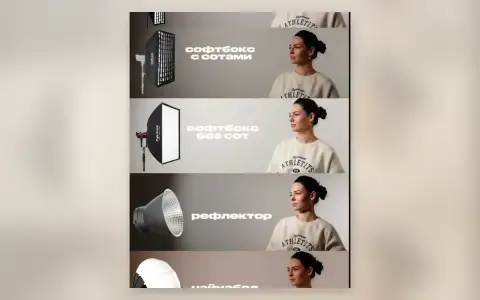
Studio Lighting Modifiers Comparison: Strip, Softbox, Reflector, China Ball, and Octabox
Studio lighting modifiers compared: strip light with grid, softbox with and without grid, reflector dish, China ball lantern, and octabox with grid. How each modifier changes light quality, spread, and mood — with the same model and the same light source.
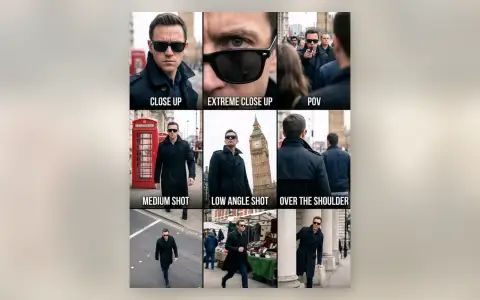
Camera Shot Types Explained: 12 Frames Every Photographer and Videographer Should Know
Camera shot types guide: Close Up, Extreme Close Up, POV, Medium Shot, Low Angle, Over the Shoulder, High Angle, Tracking, Reveal, Wide Shot, Dutch Angle, and Bird's Eye View. When to use each and why it matters.