DJI Osmo Pocket 4 Standard Combo Review: 4K at 240fps in a Pocket
DJI Osmo Pocket 4 Standard Combo review: 1-inch sensor, 4K at 240fps, 107GB built-in storage and a brighter screen. Is the upgrade from Pocket 3 worth it?
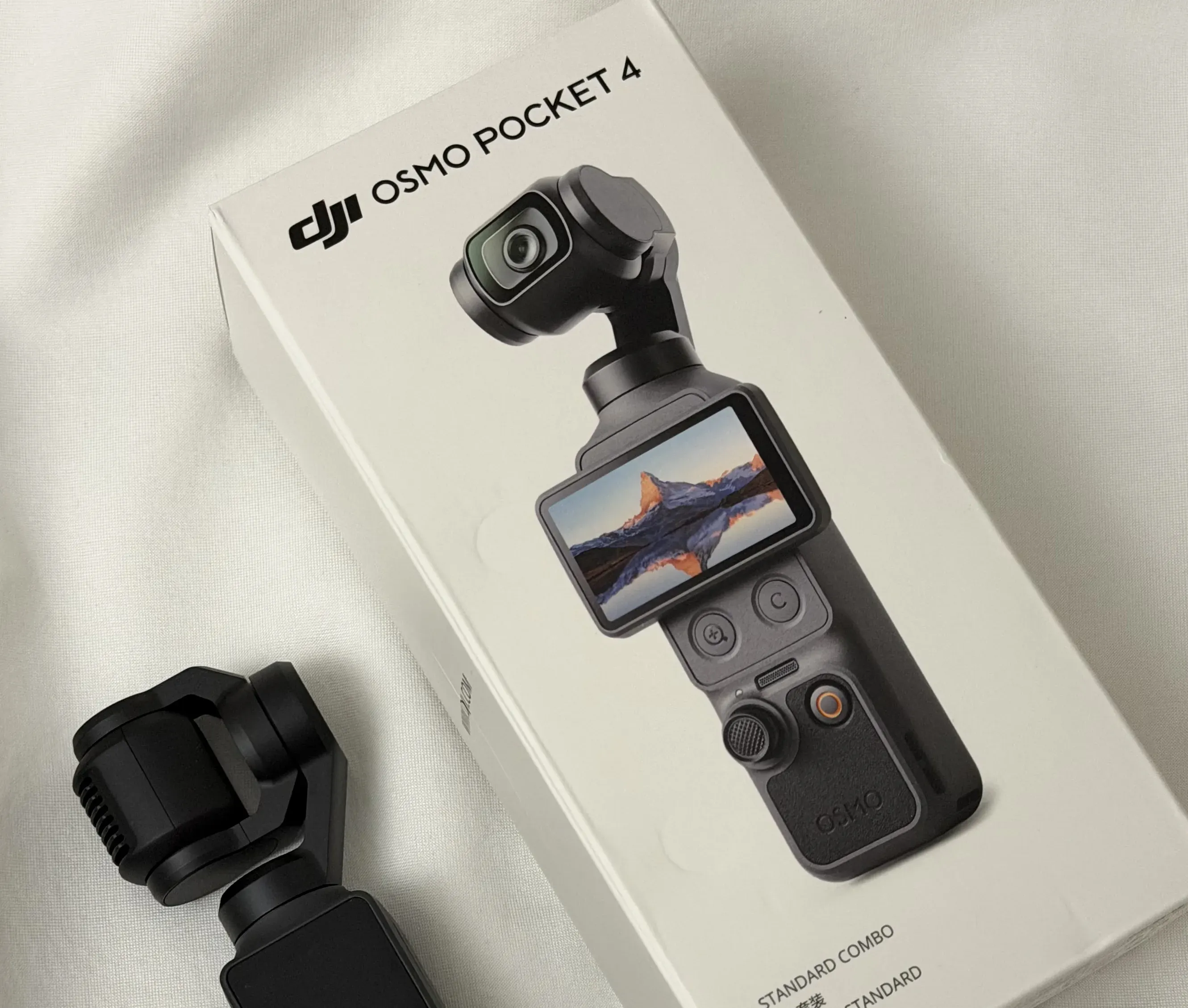
The DJI Osmo Pocket 4 Standard Combo is a pocket gimbal camera that finally removes the two compromises of the Pocket 3. Slow motion now reaches 4K at 240fps instead of 4K at 120fps, the 1-inch sensor carries 14 stops of dynamic range instead of 12, and you get 107GB of storage inside the body, so the shoots no longer die because nobody packed a microSD card. Nothing about the shape changes: it still weighs about the same as the Pocket 3 and carries the same palm-sized footprint.
What is the DJI Osmo Pocket 4 Standard Combo?
The Standard Combo is one of three retail sets for DJI’s fourth-generation pocket camera, and the middle option. You get the Pocket 4 body, a carrying pouch, the removable handle with a 1/4-inch tripod thread, a wrist strap and a gimbal clamp that locks the camera head for transport. The cheaper Essential Combo (around 479 euros) drops the strap and the clamp, while the Creator Combo (around 619 euros) adds a DJI Mic 3 transmitter, a fill light, a mini tripod and a magnetic wide-angle lens.
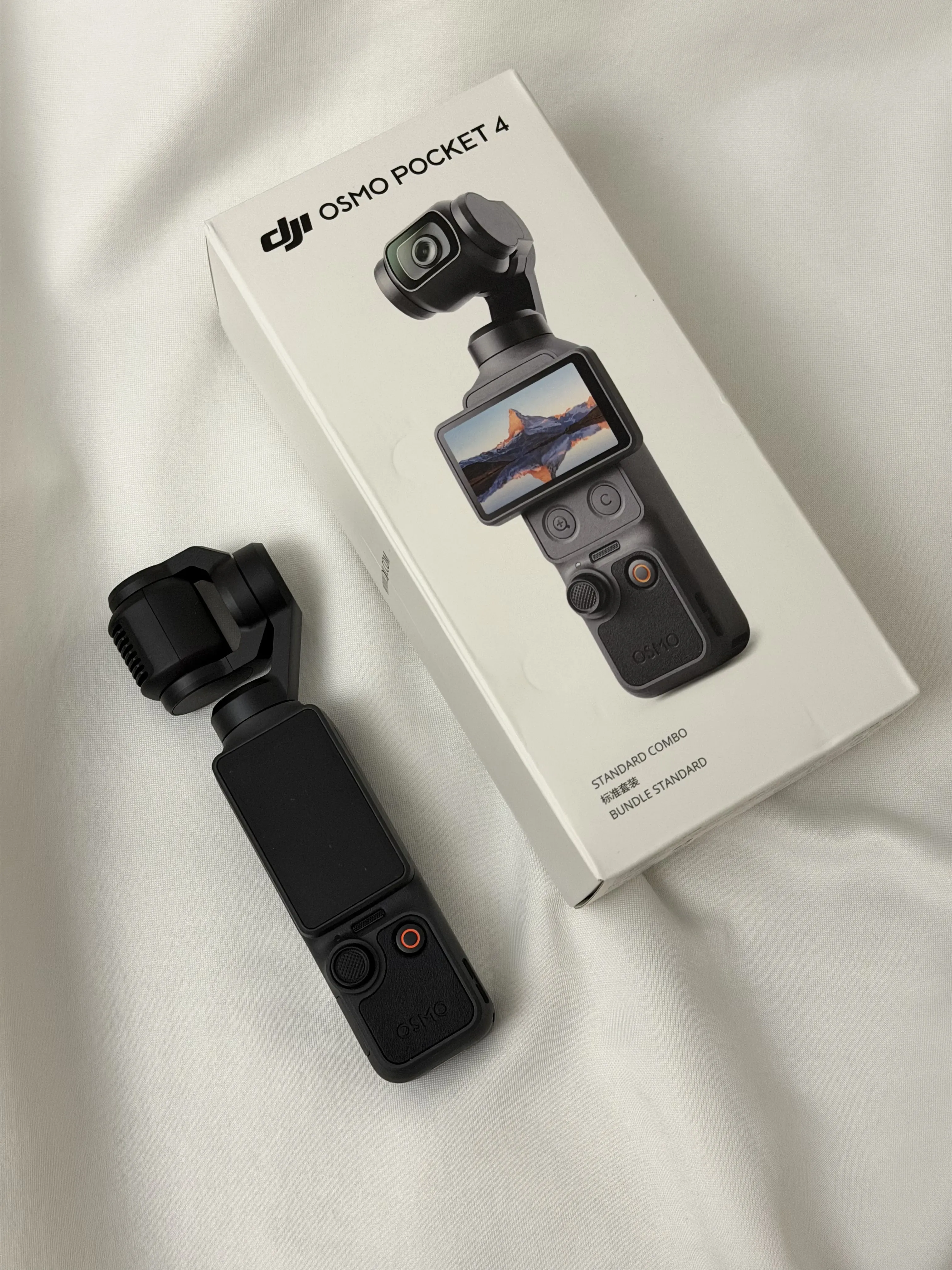
Under the housing sits a reworked 1-inch CMOS sensor. Still photos jump to 37 megapixels, video stays 4K but now has headroom for a 4x lossless zoom crop, and low-light sensitivity doubles to ISO 25600. The mechanical 3-axis gimbal is carried over unchanged from the Pocket 3, which is fine, because that mechanism was already excellent.
How good is the video quality?
The short answer: noticeably better than the Pocket 3 in every mode that matters. The 14-stop dynamic range holds detail when you shoot toward a window from inside a dim room; highlights in direct lamps still clip, and deep shadows lose some detail, but the footage stays usable. Six film simulations with adjustable strength are new in the software.
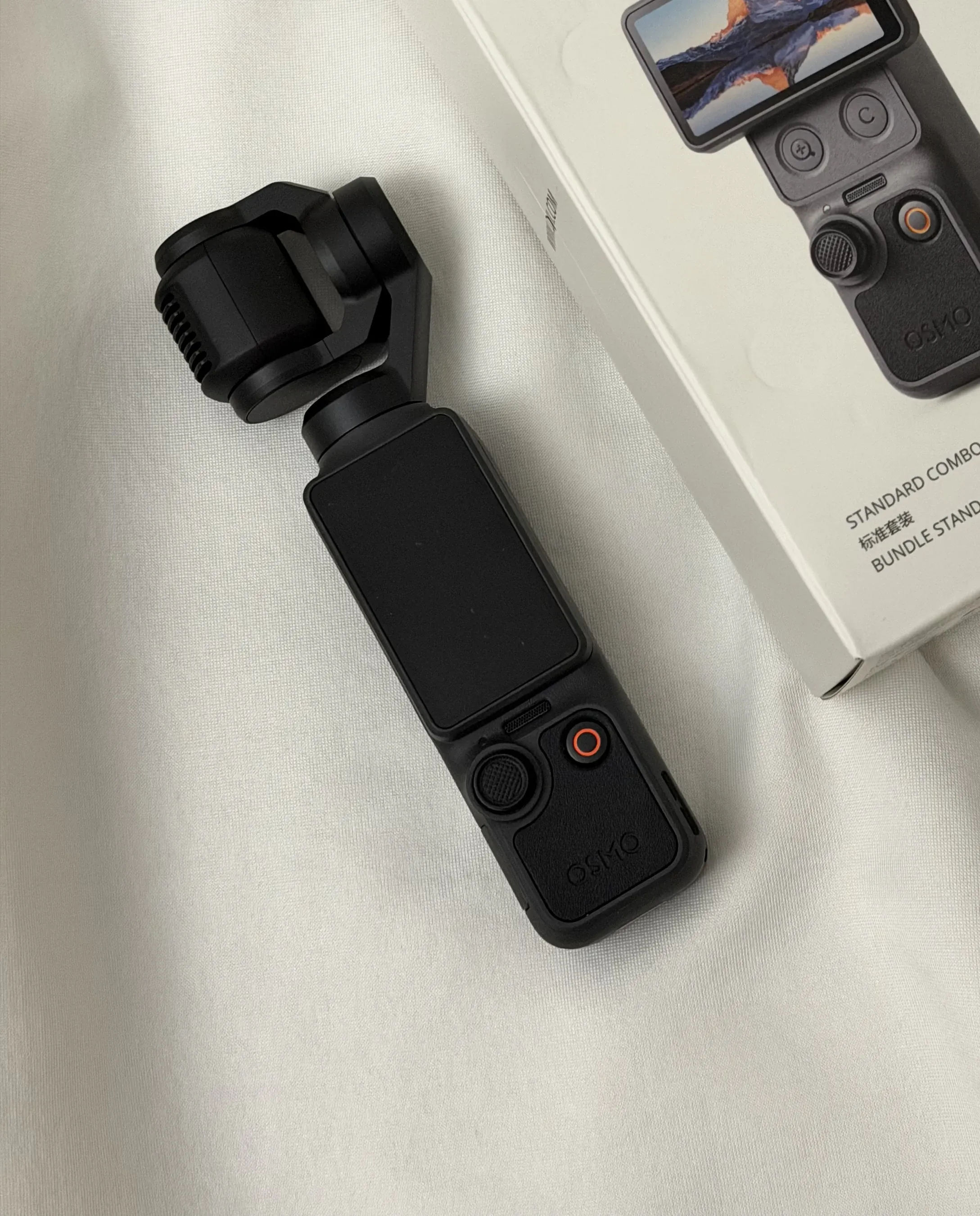
Slow motion is the headline change. 240fps slows to a clean 10 percent playback speed at 24fps, double the slow-down ceiling of the Pocket 3. The high framerate mode works in landscape orientation only, and it costs a small amount of dynamic range: skies blow out faster. For B-roll and transitions it is plenty.
Portrait shooting has a real limit worth knowing before you buy: vertical recording drops to 3K resolution. Horizontal 4K stays intact. The rotating screen and pivoting gimbal make TikTok framing trivial, but the vertical files are not as sharp.
How long does the battery last?
DJI advertises 240 minutes. Read the footnote: that figure assumes 1080p at 24fps with Wi-Fi off and the screen off. Realistic handheld vlogging at 4K with the screen on gets you about an hour of recording. Reviewers logged roughly 40 minutes of mixed 4K footage while burning through 75 percent of a charge, which matches the hour estimate.
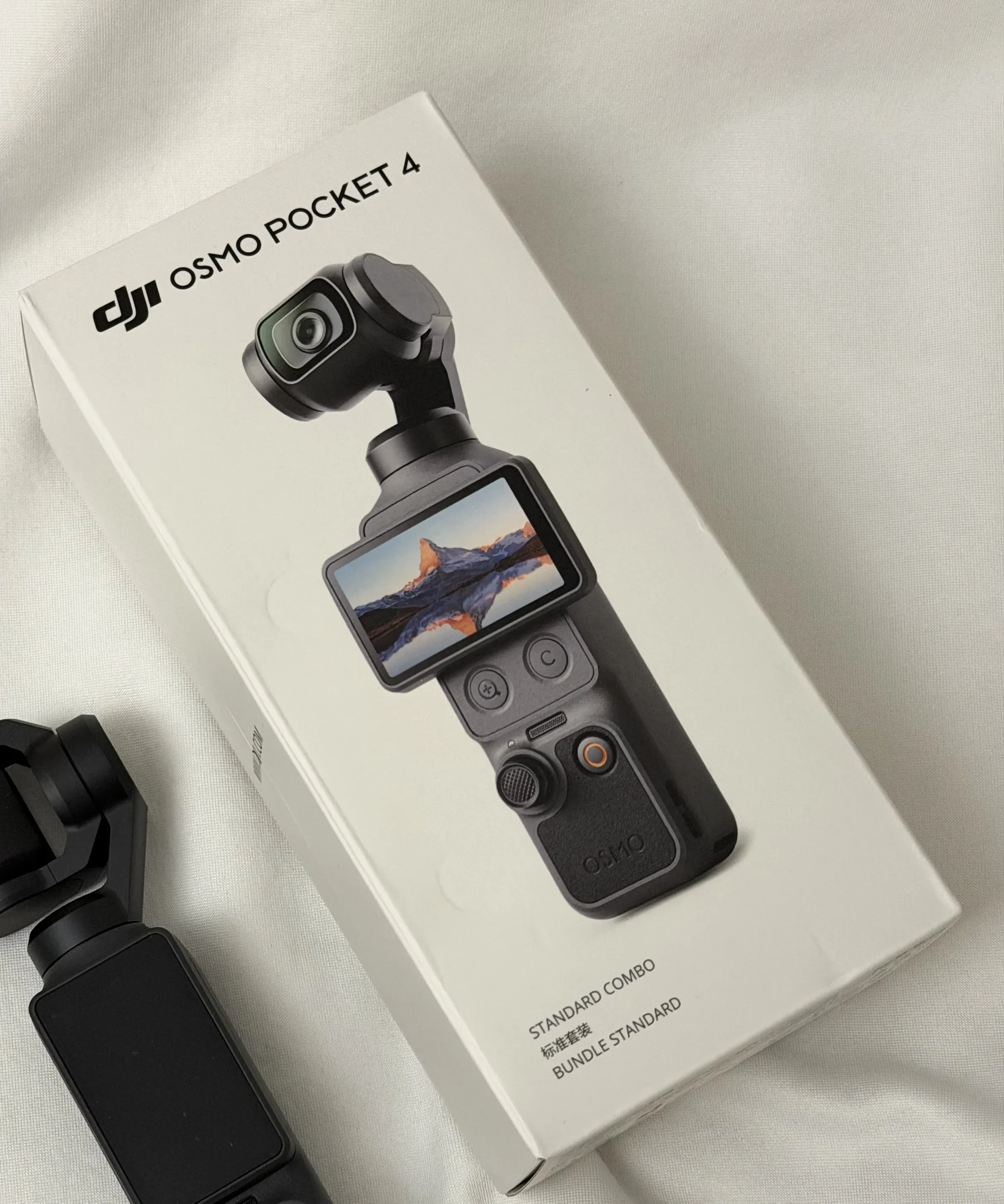
Two practical differences make that hour more pleasant. The new shortcut and customization buttons under the screen reach zoom and shooting modes without digging through the 2-inch touchscreen. And this is the first Osmo Pocket to ship with internal storage, so the forgotten-card problem mostly disappears: about four hours of 4K 60fps footage fits inside.
Who should buy it?
Anyone starting from a Pocket 2 or older, or buying their first gimbal camera. The combination of 1-inch sensor, mechanical stabilization, flip screen, built-in storage and 240fps slow motion covers what most vlogging kits do with three separate devices.
Pocket 3 owners are the harder call. The list of changes (faster slow motion, 2 extra stops of dynamic range, more storage, brighter screen, 2 new buttons) contains nothing that individually forces an upgrade. If vertical-first shooting or long-event battery life is your pain, the upgrade pays off; otherwise the Pocket 3 remains a capable camera.
Do not buy it as an action camera. A light jog already produces shake, because the gimbal is tuned for walking and speaking to the camera rather than for mounting on a bike. If that is your use case, look at a dedicated action cam instead.
Verdict
✅ Pros:
- 4K at 240fps slow motion, double the previous generation
- 1-inch sensor with 14-stop dynamic range and 37MP stills
- 107GB built-in storage plus a microSD slot
- About an hour of realistic 4K recording, 240 minutes in low-spec mode
- Brighter screen and two new physical shortcut buttons
- Same proven 3-axis mechanical gimbal as the Pocket 3
❌ Cons:
- Vertical recording tops out at 3K, high-framerate mode is landscape-only
- 240fps costs some dynamic range, most visible in skies
- No US launch at release; US buyers wait for an alternative channel
- Built-in microphone sounds thin next to a wireless kit like the Mic 3
- Creator Combo costs around 120 euros more for accessories you may not need
🏷 Compare prices for DJI Osmo Pocket 4 Find the best deal →
🇩🇪 This article is also available in Deutsch:
Read in Deutsch →
FAQ
Is the DJI Osmo Pocket 4 worth upgrading from the Pocket 3?
The Pocket 4 doubles slow motion to 4K at 240fps, raises dynamic range from 12 to 14 stops, adds 107GB of built-in storage and two more buttons, and lasts about an hour longer on a charge. Pocket 3 owners can wait; anyone on a Pocket 2 or older will feel the jump immediately.
What is the difference between the Standard, Essential and Creator Combo?
The Essential Combo is the base set with a pouch and a tripod-mountable handle. The Standard Combo adds a wrist strap and a gimbal clamp for safe transport. The Creator Combo includes a Mic 3 transmitter, fill light, mini tripod and wide-angle lens.
How long does the Osmo Pocket 4 battery last?
DJI rates it at 240 minutes, but that assumes 1080p at 24fps with Wi-Fi and screen off while shooting. Realistic continuous 4K recording gets you around an hour, and reviewers confirmed about 40 minutes of mixed footage on roughly 75 percent of a charge.
Does the DJI Osmo Pocket 4 have built-in storage?
Yes, it is the first Osmo Pocket with 107GB of internal storage plus a microSD slot. That holds roughly four hours of 4K 60fps footage, so most people never need a separate card.
Can the Osmo Pocket 4 shoot vertical video for TikTok?
Yes. The screen rotates and the gimbal pivots to portrait mode, so you frame vertical video natively. Vertical recording tops out at 3K resolution, while horizontal shoots full 4K.

Continue reading
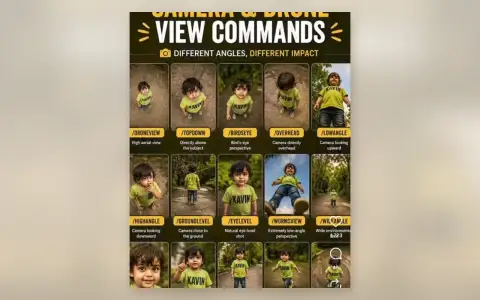
10 Camera and Drone View Commands That Change How Your Photos Look
Droneview, topdown, birdseye, lowangle: what the ten view commands from the viral cheat sheet mean, and how to shoot them with AI prompts or a real drone.
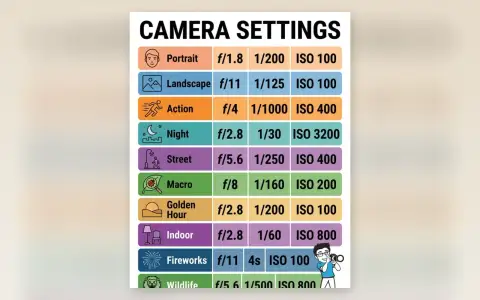
Camera Settings Cheat Sheet: 10 Scenes With Aperture, Shutter Speed, and ISO
Portrait, landscape, action, night: the ten setting combos from the widely shared camera cheat sheet, why each one works, and the camera to practice them on.
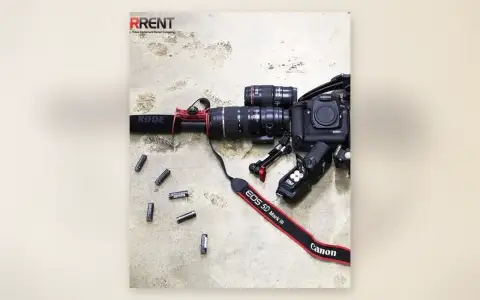
Canon 5D Mark III Video Rig: Every Piece in This Flat Lay Explained
A working Canon 5D Mark III video rig in one flat lay: Rode shotgun mic, battery grip, telephoto glass, speedlite, and the small parts that keep a shoot alive.