Y2K Pink Digital Cameras: Six Digicams Worth Hunting Down
Y2K pink digital cameras are back, from the Samsung ES9 to the Ricoh CX6. What they cost, what to check before buying, and why the photos look the way they do.
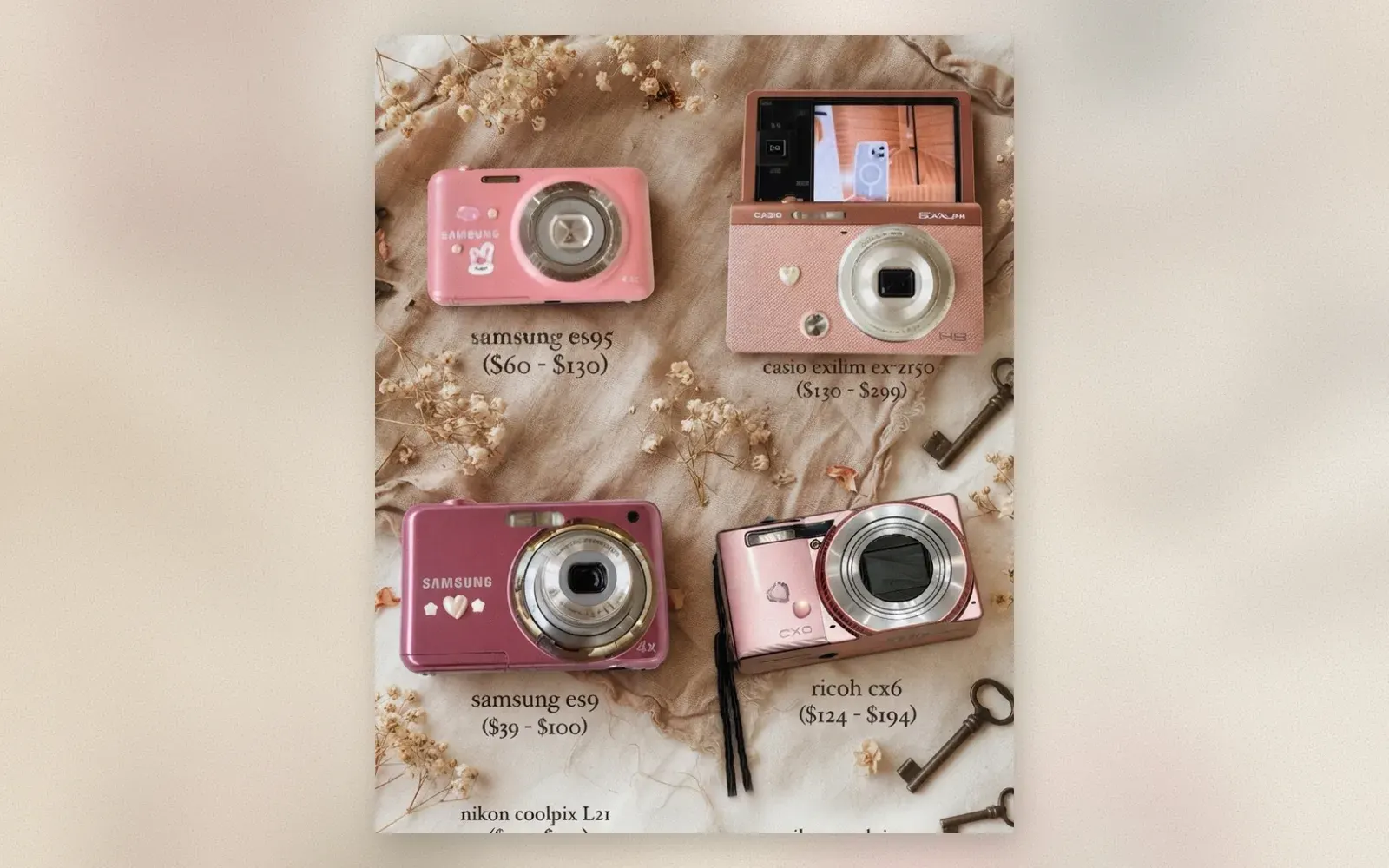
Y2K pink digital cameras are the rare trend where the gear costs less than the jeans that inspired it. The compact digicams of the early 2000s, in shades from pale rose to bubblegum, have turned into the default accessory for flash heavy party photos and that unmistakable early Instagram look. The collage below rounds up six models that collectors and TikTok accounts keep recommending, with price ranges printed right on the graphic: a Samsung ES9 for 39 to 100 dollars sits at the entry level, while a Casio Exilim EX-ZR50 in rose gold tops the list at 130 to 299 dollars.
Why are Y2K pink digital cameras popular again?
The look explains most of it. Cameras like these exposed onto small CCD sensors with a weak on camera flash, and that combination produces bright, flat, softly detailed photos with heavy highlights on skin. Phones spent two decades engineering that imperfection away, so a photo that keeps it now reads as stylish rather than broken. Most of the affordable models in the collage below used CCD sensors, while the pricier Exilim and Ricoh units had already moved to CMOS.
The experience matters just as much. A 100 gram digicam from 2010 has no apps, no notifications and no editing suggestions, so the photos stay exactly as shot until you copy them off the memory card. That one job design is a big part of the appeal for people who feel their phone turns every moment into content.
Which pink digicams should you look for?
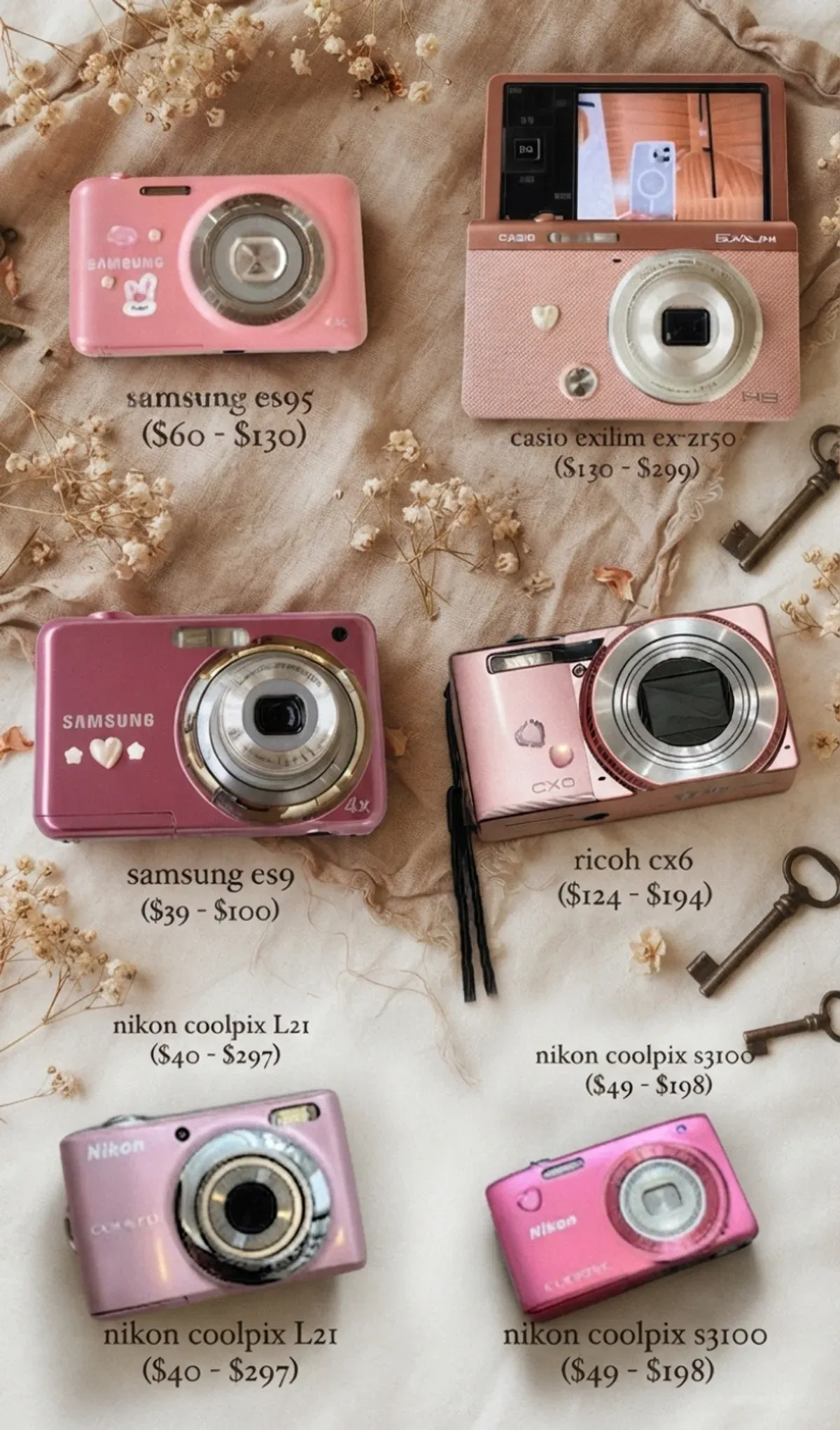
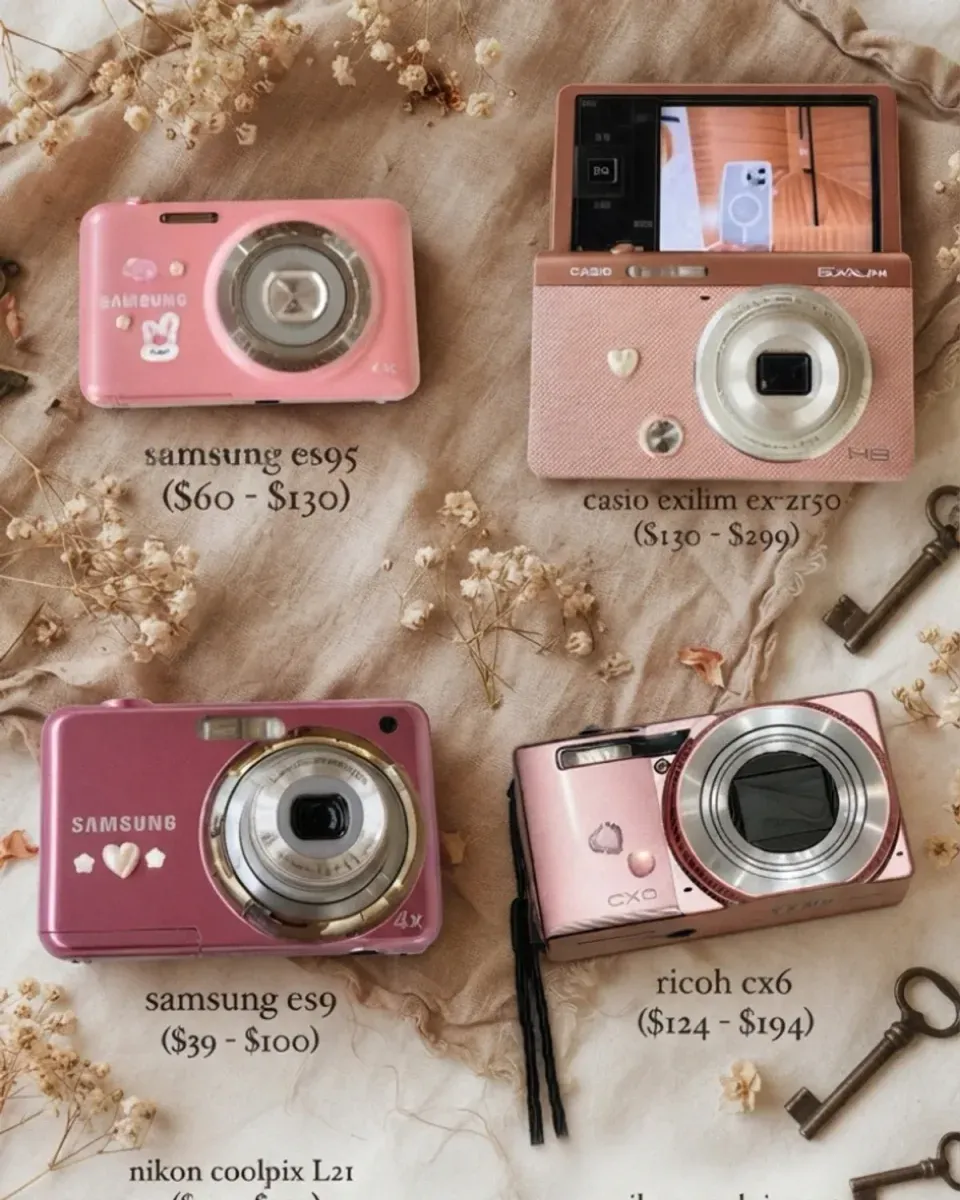
The graphic names the models worth searching for, and the price ranges it lists match what the used market asks. The Samsung ES95, the pale pink point and shoot at the top left, trades for 60 to 130 dollars. The Casio Exilim EX-ZR50 from 2014 stands out with a screen that flips upward for selfies, which made it a selfie specialist long before front cameras got good. The Samsung ES9 with 4x zoom printed on its lens barrel is the budget pick at 39 to 100 dollars.
The Ricoh CX6 lists at 124 to 194 dollars and brings a serious 10.7x zoom lens in a body barely thicker than the others. The two Nikon Coolpix models round out the field: the S3100 from 2011 shoots 14 megapixel photos through a 5x zoom and appeared in pink that suits the trend perfectly, while the older L21 is the cheapest way into a Nikon of this era. Any of them delivers the look; the differences are zoom reach, screen behavior and how much patience the menus demand.
What should you check before buying a used digicam?
Battery first. Most of these cameras shipped with proprietary packs that have spent more than a decade in drawers, so ask whether the battery still holds a charge and whether the charger is in the box. A swollen battery pack is a hard pass for safety reasons, and a camera that only powers up while plugged in means a replacement pack on top of the purchase price.
Then work through the camera itself. Extend the zoom, listen for grinding, and take a test photo with the flash forced on. Check the screen and the lens for scratches, open every photo in playback mode to spot dead pixels, and confirm a memory card is included, because the small cards these cameras take are not always in the box anymore. Sellers who can show a real sample photo taken that week are usually the ones worth paying a few dollars more for.
Are old digicams actually better than your phone?
On image quality, no, and pretending otherwise would waste your money. Every phone from the last five years outresolves these cameras, sees in the dark, and stabilizes video. The digicam wins on the qualities a spec sheet ignores: the flash fires with the casual brutality of 2009, colors shift in a way filters imitate imperfectly, and the photos arrive on your computer looking finished.
That is the honest framing for the trend. You are paying 40 to a few hundred dollars for a specific look and a specific feeling, similar to buying vinyl after streaming. If the collage prices look steep for what the hardware is, a new pink compact from Amazon.de delivers a similar result with a working battery and a warranty.
Verdict
The best Y2K pink digital camera is the one you will actually carry: a Samsung ES9 or ES95 captures the era for pocket change, the Casio Exilim EX-ZR50 adds the flip selfie screen, and the Ricoh CX6 brings a genuinely useful zoom. Check battery health before anything else on the used market, then buy the color that makes you want to take it out of the drawer.
✅ Pros
- Distinctive flash photos no current phone imitates out of the box
- Tiny, light and cheap, with entry models listed from 39 dollars
- One job design keeps photos free of instant editing loops
- New pink compacts on Amazon.de cover the look without used market risk
❌ Cons
- Technical image quality falls far behind any modern phone
- Original batteries and chargers are often worn out or missing
- Used prices for trendy colors sometimes exceed what the hardware justifies
FAQ
Why are Y2K pink digital cameras popular again?
The small CCD sensors and weak flashes of that era produce the soft, slightly grainy flash photos that now read as a deliberate aesthetic on social media. The cameras are also tiny, cheap and free of the editing loop a phone puts every photo through.
Which pink Y2K camera should I buy first?
Start with a basic model like the Samsung ES9 or ES95 if you want the look for under 100 dollars. Pick the Casio Exilim EX-ZR50 if a flip up selfie screen matters, or the Ricoh CX6 if you want a long zoom in the same pink shell.
Do old digital cameras take better photos than a phone?
No. A modern phone beats every camera in this guide on technical image quality. The appeal sits in the look and the experience: harsh on camera flash, softer detail, no instant retouching, and a pocket gadget that only does one job.

Continue reading

10 Camera and Drone View Commands That Change How Your Photos Look
Droneview, topdown, birdseye, lowangle: what the ten view commands from the viral cheat sheet mean, and how to shoot them with AI prompts or a real drone.
Camera Settings Cheat Sheet: 10 Scenes With Aperture, Shutter Speed, and ISO
Portrait, landscape, action, night: the ten setting combos from the widely shared camera cheat sheet, why each one works, and the camera to practice them on.
Canon 5D Mark III Video Rig: Every Piece in This Flat Lay Explained
A working Canon 5D Mark III video rig in one flat lay: Rode shotgun mic, battery grip, telephoto glass, speedlite, and the small parts that keep a shoot alive.